
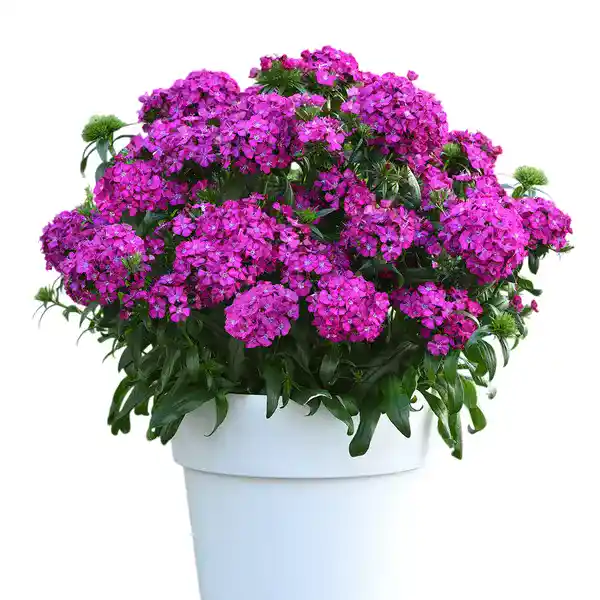
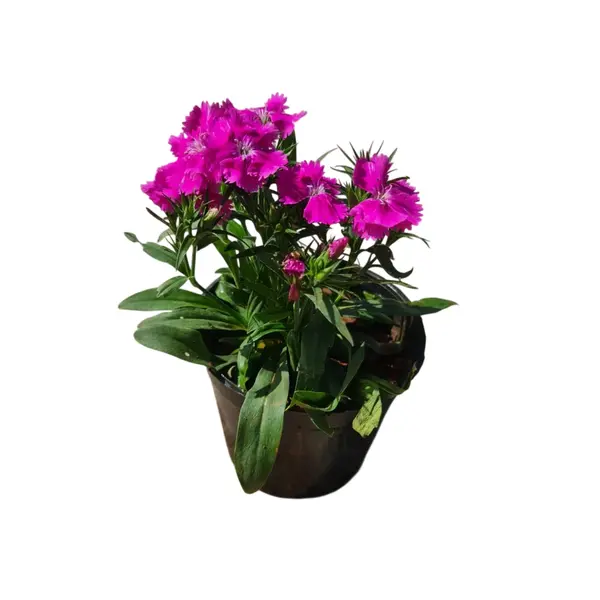
Dianthus Purple Plants
Price range: ₹149.00 through ₹199.00
Selling Size : Single Plant | Pot Included | Secure Packing
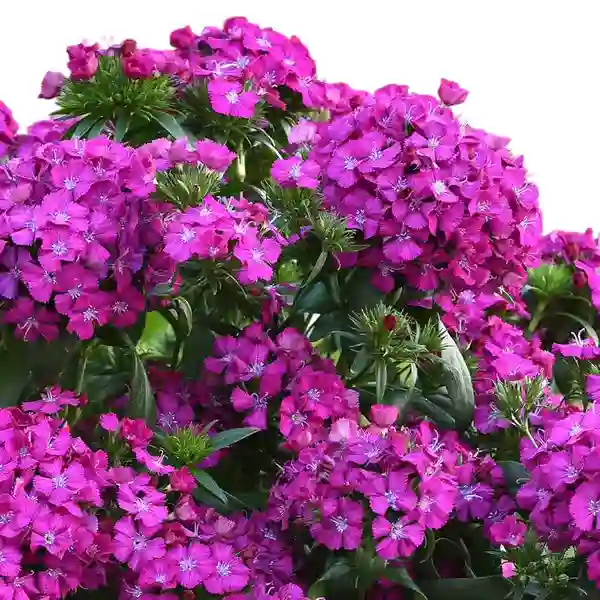
Dianthus Purple Plants varieties are loved for their vivid violet to deep magenta blooms, neat mounded growth, and spicy clove-like fragrance. Whether grown in pots, balcony planters, or garden beds, purple Dianthus adds strong seasonal color and is generally easy to maintain. With proper sunlight, well-draining soil, and careful watering, these plants bloom generously and stay compact and healthy.
Dianthus Purple Plants Care Guide :
Light Requirements
Purple Dianthus plants perform best in full sun. Provide at least 5–7 hours of direct sunlight daily for strong flowering and dense growth. Insufficient light leads to weak stems, fewer buds, and faded flower color. In very hot climates, light afternoon shade can help prevent heat stress, but too much shade will reduce bloom production. For terrace or balcony gardening, always choose the brightest available spot.
Watering
Dianthus prefers moderate and controlled watering. Keep the soil lightly moist but never soggy. Water when the top 2–3 cm of soil feels dry. Deep watering is better than frequent shallow watering because it encourages stronger roots. Ensure excess water drains freely from the pot — standing water around the roots can quickly cause rot. During cooler weather, reduce watering frequency. During hot, dry periods, you may need to water more often, but still avoid waterlogging.
Soil and Potting Mix
Excellent drainage is essential for Dianthus. Use a loose, airy mix that does not stay wet for long. A good container mix can be made from regular potting soil combined with coarse sand, perlite, or coco chips. Raised beds or sandy loam garden soil also work well. Avoid dense, clay-heavy soil unless it is amended to improve drainage. Slightly neutral to mildly alkaline soil suits Dianthus best.
Temperature and Climate
Purple Dianthus grows best in cool to moderate temperatures, roughly between 10–26°C. It is ideal for mild winter and spring seasons in many parts of India. The plant tolerates light frost but struggles in prolonged extreme heat and humidity. In hot regions, grow it during the cooler months for best flowering. Good airflow around the plant helps reduce stress and disease.
Fertilizing
Feed lightly to support flowering. Use a balanced liquid fertilizer every 2–3 weeks at half strength during the active growth and bloom period. Avoid high-nitrogen fertilizers, which produce excess leaves at the cost of flowers. A bloom-support formula with slightly higher phosphorus can improve bud formation. If planted in the ground, mixing compost before planting gives a gentle nutrient base.
Pruning and Deadheading
Deadheading is very important for continuous blooms. Remove spent purple flowers promptly by cutting just above a healthy leaf node. This directs the plant’s energy into producing new buds instead of seeds. If the plant becomes slightly leggy after a major bloom flush, trim it back lightly to encourage bushier regrowth and another flowering cycle.
Spacing and Container Growing
Space plants about 15–25 cm apart in beds so air can move freely between them. In containers, choose wide pots with drainage holes rather than very deep pots, since Dianthus has a shallow root system. Overcrowding increases disease risk and reduces bloom size.
Pest and Disease Care
Watch for aphids, thrips, and spider mites, especially around buds and tender stems. Early treatment with neem oil spray or mild insecticidal soap is usually effective. Most diseases come from excess moisture and poor airflow. Crown rot and root rot are the main risks — both are prevented by sharp drainage and careful watering. Avoid wetting the foliage late in the day.
Bloom Performance Tips
For rich purple color and heavy flowering: give strong sun, keep soil well drained, deadhead regularly, and avoid overfeeding. Cooler night temperatures often intensify flower color and extend bloom life.
With bright light, airy soil, and simple maintenance, purple Dianthus plants produce vibrant, fragrant blooms and tidy foliage, making them excellent for seasonal displays, gift pots, and colorful landscape borders.
Related products
-
Lemon Button Fern Plant
Original price was: ₹539.00.₹179.00Current price is: ₹179.00.Add to cartSelling Size: Single plant | 2.5″ Pot Included The Lemon Button Fern (Nephrolepis cordifolia ‘Duffii’) is a popular and relatively easy-to-care-for fern. It’s known for its compact, arching fronds with small, button-like leaves and a subtle, lemony scent when you brush against them. Unlike some ferns, it’s a bit more forgiving of indoor conditions, making …
-
Calathiya Rattlesnake Plant
Price range: ₹125.00 through ₹549.00Select options This product has multiple variants. The options may be chosen on the product pageSelling size: Please Choose | Secure Packing | 2.5″-4″ Pot Included Calathiya rattlesnake is a plant easy to care for. However, there are a few measures and precautions you need to take to grow and maintain yours. Here’s a comprehensive guide for rattlesnake plant : Light Calathea Lancifolia prefers bright, indirect light. Like most variegated …
-
Pilea Repens, Black Panamiga
Original price was: ₹280.00.₹149.00Current price is: ₹149.00.Add to cartSize: Single Plant | Jiffy Bag Caring for a Pilea Ripens (also known as Black Panamiga) involves understanding its specific needs to ensure it thrives. Here’s a breakdown of Pilea Repens, Black Panamiga key care aspects: Key Care Points: Light: Pilea repens prefers bright, indirect sunlight. Direct sunlight can scorch its leaves. Rotating the plant …
-
String Of Nickels (Dischidia nummularia)
Price range: ₹99.00 through ₹599.00Select options This product has multiple variants. The options may be chosen on the product pageSelling size: Well rooted plant in a Jiffy bag The Dischidia nummularia, commonly known as the String of Nickels or Button Orchid, is a delightful and easy-to-care-for trailing epiphyte. Its common name comes from its small, round, coin-shaped leaves that densely cover its long, slender stems. As a relative of the Hoya, it shares a similar …
-
Spanish Moss Air Plant
Price range: ₹49.00 through ₹1,699.00Select options This product has multiple variants. The options may be chosen on the product pageSelling size: PLEASE CHOOSE Spanish Moss Air Plant – CARE INSTRUCTIONS Scientific name: Tillandsia usneoides Synonyms: Old man’s beard, Spanish Moss, French Hair, Spanish Beard Spanish Moss is a delicate silvery-grey air plant that is often used to hang in trees or as a gorgeous decor piece without the need for soil. Despite its name, Spanish Moss …
-
Black zz plant, Raven ZZ Plant
Price range: ₹99.00 through ₹499.00Select options This product has multiple variants. The options may be chosen on the product pageSelling size: Please Choose (Single – Bushy) | 2.5″-5” Pot Included | Secure Packing The Black ZZ Plant, or Raven ZZ Plant (Zamioculcas zamiifolia ‘Raven’), is a popular, exceptionally resilient houseplant known for its striking, nearly black foliage. It shares the easy-care nature of the standard green ZZ plant, making it perfect for beginners or …
-
Pilea involucrata ‘Norfolk’ – Friendship Plant
Original price was: ₹450.00.₹199.00Current price is: ₹199.00.Add to cartSize: Single Plant | 2.5″ Pot Included | Free Shipping The Pilea involucrata ‘Norfolk’, commonly known as the Friendship Plant, is a delightful houseplant celebrated for its unique, velvety, quilted foliage. The leaves have a rich texture and a beautiful color palette, with deep green and bronze tones on the upper surface and a reddish-purple …
-
Golden Pothos
Original price was: ₹355.00.₹99.00Current price is: ₹99.00.Add to cartSelling size : Well rooted plant | 2.5″ pot included The Golden Pothos (Epipremnum aureum), also known as Devil’s Ivy, is one of the most popular and easiest houseplants to care for, making it an excellent choice for beginners. It’s a vining plant with heart-shaped leaves that are a vibrant green, often with splashes or …







 If you need any assistance, I'm always here. Have you found what you were looking for?