
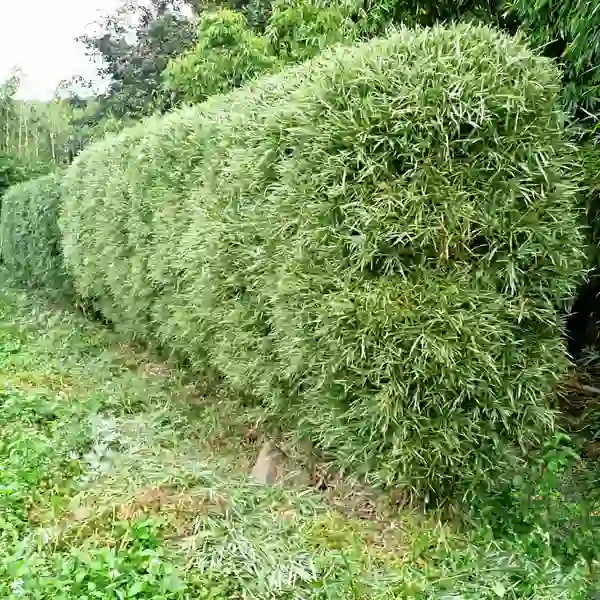

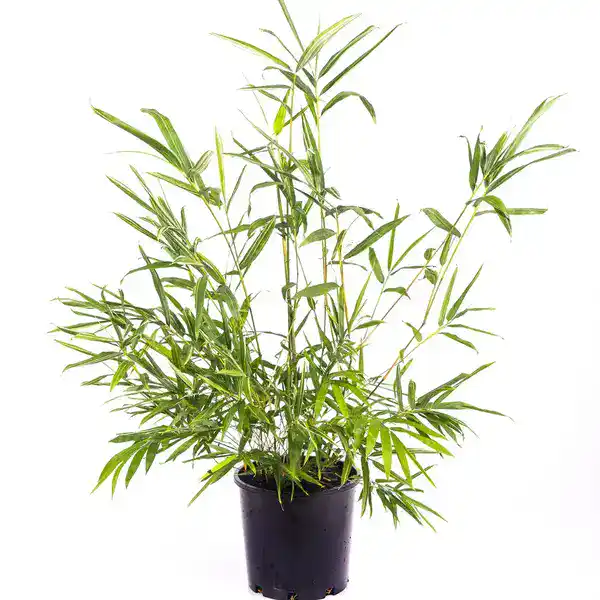
Bambusa glaucophylla – Malay Dwarf Variegated Bamboo
Original price was: ₹1,899.00.₹749.00Current price is: ₹749.00.
3 in stock
Selling Size : Single Plant | 4″ Pot Included | Secure Packing
Caring for variegated bamboo, whether it’s a traditional bamboo or a “lucky bamboo” (which is actually a Dracaena), involves a few key principles. The specific care can vary depending on the exact species, so it’s a good idea to know what kind you have.
Here’s a general guide to variegated bamboo care:
Light
- Variegated plants often need more light than their solid-green counterparts to maintain their vibrant patterns.
- Bright, indirect sunlight is generally best.
- Too much direct sun can scorch the leaves, causing the tips to turn brown.
- Too little light can cause the variegation to fade.
Water
- Keep the soil consistently moist, but not soggy. Bamboo doesn’t like to sit in water, as this can lead to root rot.
- Good drainage is essential. Ensure your pot has drainage holes or the soil is a well-draining mix.
- Lucky bamboo grown in water needs its water changed weekly to prevent algae and bacterial growth.
- Tap water can be an issue. Some bamboos are sensitive to the chlorine and fluoride in tap water, which can cause brown leaf tips. Using distilled water, rainwater, or letting tap water sit out for 24 hours can help.
Variegated Bamboo
Soil and Fertilizer
- Well-draining, rich potting soil is ideal.
- For outdoor bamboo, amending the soil with compost or manure can help with drainage and nutrients.
- For potted bamboo, a balanced fertilizer (like a 10-10-10 or 5-5-5 ratio) can be applied a few times during the growing season. Don’t over-fertilize, as this can harm the plant.
- Lucky bamboo can be fertilized with a diluted liquid houseplant fertilizer every few months.
Temperature and Humidity
- Variegated bamboo prefers warmer temperatures and is sensitive to cold drafts. A temperature range of 65–90°F (18–35°C) is often recommended.
- As a tropical plant, it thrives in high humidity. You can increase humidity by misting the leaves, using a humidifier, or placing the pot on a tray of pebbles with water.
Common Problems
- Yellowing leaves can be a sign of overwatering, nutrient deficiency, or a reaction to chemicals in tap water.
- Brown leaf tips often indicate low humidity or poor water quality (fluoride, chlorine).
- Pests like spider mites, mealybugs, and aphids can be a problem. Regularly inspect your plant and treat any infestations with insecticidal soap or neem oil.
- Root rot is a serious issue caused by overwatering. It’s crucial to ensure good drainage.
You must be logged in to post a review.
Related products
-
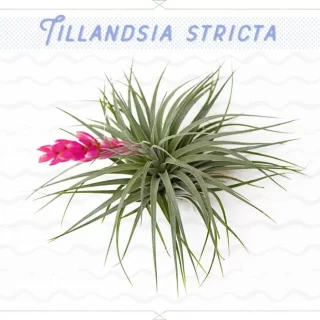
Tillandsia Stricta (Air plant)
Original price was: ₹400.00.₹199.00Current price is: ₹199.00.Add to cartSelling size: Single plant | Secure Packing The Tillandsia Stricta (Air plant) is one of the most popular and adaptable species of air plants, known for its soft, green-silver foliage and beautiful blooms. Like all air plants, it is epiphytic, meaning it absorbs all its water and nutrients through its leaves from the air, not …
-
Lemon Button Fern Plant
Original price was: ₹539.00.₹179.00Current price is: ₹179.00.Add to cartSelling Size: Single plant | 2.5″ Pot Included The Lemon Button Fern (Nephrolepis cordifolia ‘Duffii’) is a popular and relatively easy-to-care-for fern. It’s known for its compact, arching fronds with small, button-like leaves and a subtle, lemony scent when you brush against them. Unlike some ferns, it’s a bit more forgiving of indoor conditions, making …
-
Columbian Peperomia (Galaxy pepperomia)
Original price was: ₹345.00.₹183.65Current price is: ₹183.65.Read moreSelling size:Well rooted plant in a jiffy bag The Columbian Peperomia (Peperomia metallica var. columbiana) is a visually striking and relatively low-maintenance houseplant. It is also sometimes sold as “Galaxy Peperomia,” a name that hints at its unique foliage. This plant is known for its beautiful, semi-succulent leaves that have a dark green or bronze-purple …
-
Black zz plant, Raven ZZ Plant
Price range: ₹99.00 through ₹499.00Select options This product has multiple variants. The options may be chosen on the product pageSelling size: Please Choose (Single – Bushy) | 2.5″-5” Pot Included | Secure Packing The Black ZZ Plant, or Raven ZZ Plant (Zamioculcas zamiifolia ‘Raven’), is a popular, exceptionally resilient houseplant known for its striking, nearly black foliage. It shares the easy-care nature of the standard green ZZ plant, making it perfect for beginners or …
-
Philodendron Xanadu
Original price was: ₹450.00.₹199.00Current price is: ₹199.00.Add to cartSelling size:Well rooted plant | 2.5″ Pot Included | Secure Packing The Philodendron Xanadu, now officially classified as Thaumatophyllum xanadu, is a fantastic and relatively easy-to-care-for houseplant. It’s known for its compact, bushy growth habit and deeply lobed, glossy green leaves that give it a sophisticated, tropical look. Here is a complete guide to caring …
-
String Of Nickels (Dischidia nummularia)
Price range: ₹99.00 through ₹599.00Select options This product has multiple variants. The options may be chosen on the product pageSelling size: Well rooted plant in a Jiffy bag The Dischidia nummularia, commonly known as the String of Nickels or Button Orchid, is a delightful and easy-to-care-for trailing epiphyte. Its common name comes from its small, round, coin-shaped leaves that densely cover its long, slender stems. As a relative of the Hoya, it shares a similar …
-
Spanish Moss Air Plant
Price range: ₹49.00 through ₹1,699.00Select options This product has multiple variants. The options may be chosen on the product pageSelling size: PLEASE CHOOSE Spanish Moss Air Plant – CARE INSTRUCTIONS Scientific name: Tillandsia usneoides Synonyms: Old man’s beard, Spanish Moss, French Hair, Spanish Beard Spanish Moss is a delicate silvery-grey air plant that is often used to hang in trees or as a gorgeous decor piece without the need for soil. Despite its name, Spanish Moss …







 If you need any assistance, I'm always here. Have you found what you were looking for?
Reviews
There are no reviews yet.