
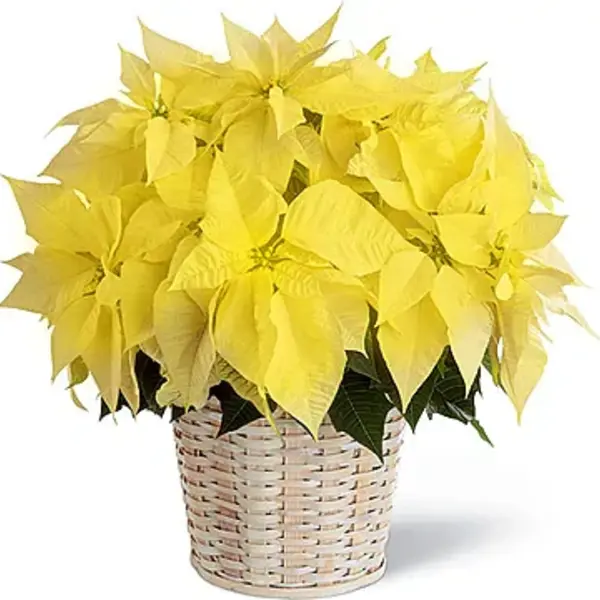
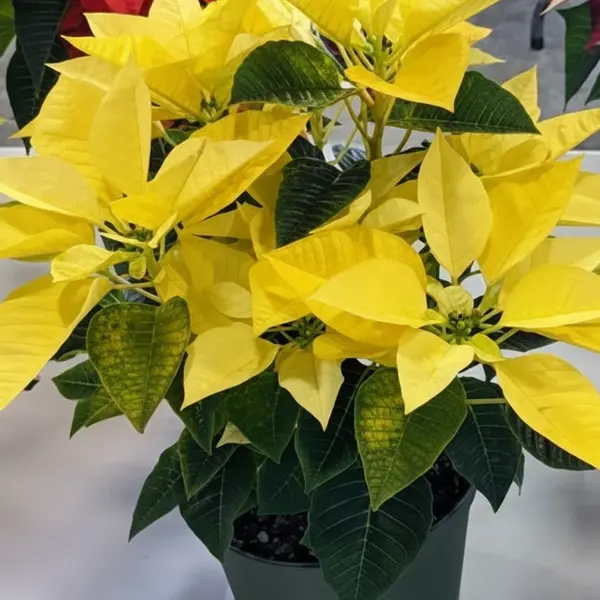
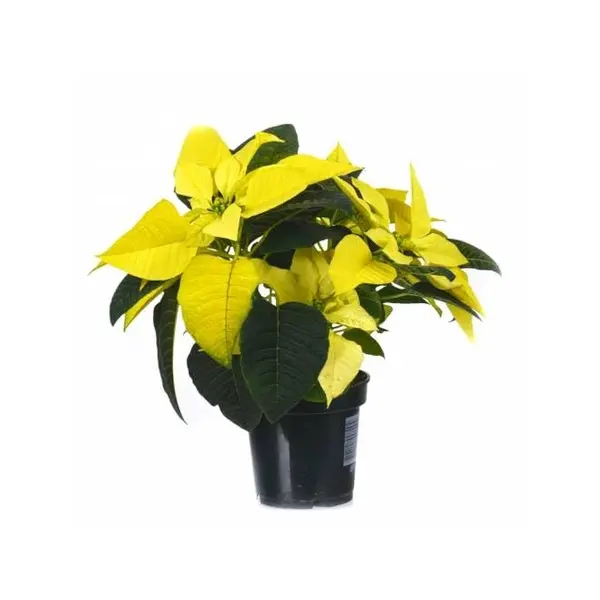
Yellow Poinsettia
Original price was: ₹799.00.₹475.00Current price is: ₹475.00.
Selling Size : Single Plant | Pot Included | Secure Packing
The Yellow Poinsettia (Euphorbia pulcherrima) is a stunning festive plant known for its bright, creamy-yellow bracts and lush green foliage. Though most people associate poinsettias with red varieties, yellow poinsettias bring a refreshing, elegant twist to holiday décor. With proper care, they can thrive for months and even rebloom the following year. Here’s a complete guide to keeping your Yellow Poinsettia healthy and vibrant.
🌼 Yellow Poinsettia Care Guide :
🌿 Light Requirements
Yellow poinsettias need bright, indirect sunlight for at least 5–6 hours a day. Place them near a window where sunlight is filtered through a curtain.
-
Ideal spots: East- or north-facing windows.
-
Avoid: Harsh afternoon sunlight as it can scorch the delicate bracts.
-
Low light problem: Insufficient light leads to leaf drop and dull bract color.
💧 Watering Needs
Watering is one of the most crucial care aspects.
-
Water the plant when the top 2–3 cm of soil feels dry.
-
Make sure excess water drains out completely—poinsettias hate soggy roots.
-
Empty the tray if water collects after watering.
Avoid:
-
Overwatering: Causes root rot and sudden leaf drop.
-
Underwatering: Makes leaves curl and edges turn brown.
Use room-temperature water and avoid splashing on bracts.
🌡️ Temperature & Humidity
Yellow Poinsettias prefer a warm and stable environment.
-
Ideal temperature: 18–24°C
-
Night temperature: Not below 15°C
-
Avoid cold drafts, AC airflow, and proximity to heaters or stoves.
They enjoy moderate humidity (around 50%). If indoor air is too dry, especially in winter, use a humidity tray or a room humidifier.
🌱 Soil & Potting Mix
A light, well-draining potting mix is essential.
-
Use a mix of garden soil + cocopeat + perlite (40:40:20).
-
Slightly acidic to neutral soil (pH 6.0–6.5) is ideal.
-
Choose a pot with good drainage holes to prevent waterlogging.
Repotting is generally needed in late spring if the plant outgrows its pot.
🌸 Fertilization
During active growth (spring to early autumn), feed your Yellow Poinsettia every 2 weeks with a balanced liquid fertilizer (NPK 10-10-10 or 14-14-14).
-
Reduce feeding in late autumn.
-
Do not fertilize when in full bloom, as it may stress the plant.
✂️ Pruning & Maintenance
Pruning helps maintain a compact, bushy shape.
-
After flowering (usually late winter), prune the plant back to 10–15 cm from the base.
-
Pinch off new tips during summer to encourage branching and fuller growth.
-
Remove yellow or damaged leaves regularly to avoid fungal problems.
🌼 Encouraging Yellow Bracts (Reblooming)
To get bright yellow bracts next season, follow a dark-treatment schedule starting from October:
-
Keep plant in complete darkness for 14 hours, and give bright light for the remaining 10 hours daily.
-
Continue this for 8–10 weeks until bracts start forming.
This light cycle mimics shorter winter days needed for poinsettias to develop color.
🐞 Common Pests & Problems
Yellow poinsettias can be affected by:
-
Whiteflies
-
Aphids
-
Mealybugs
-
Spider mites
Treat early using:
-
Neem oil spray (weekly)
-
Insecticidal soap
Common Issues:
-
Leaf drop: Caused by overwatering, low temperature, or low light.
-
Wilting: Underwatering or root rot.
-
Faded bracts: Insufficient light.
🌿 Toxicity Warning
Like all euphorbias, poinsettias contain a milky latex sap.
-
Keep away from pets and children.
-
Wear gloves when pruning.
🌟 Conclusion
The Yellow Poinsettia brings cheerful warmth to any home and can last well beyond the holiday season with proper care. Provide bright indirect light, water carefully, maintain warm temperatures, and follow seasonal pruning and light-cycle routines. With this care, your poinsettia will reward you with vibrant yellow bracts year after year.
Related products
-
Scindapsus Pictus Exotica
Original price was: ₹380.00.₹99.00Current price is: ₹99.00.Add to cartSelling size: Single Plant | 2.5″ Pot Included The Scindapsus Pictus Exotica, also known as the silver pothos, is a houseplant with large, dark green leaves that have silver spots and mottling. Here’s a guide to caring for your Scindapsus pictus Exotica plant: Light: Prefers bright, indirect light. An east or west-facing window that’s about …
-
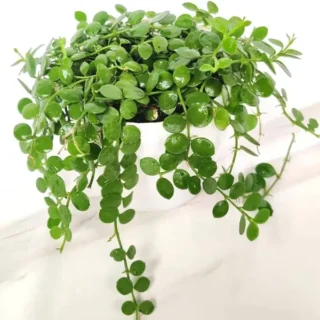
Dischidia Oiantha plant
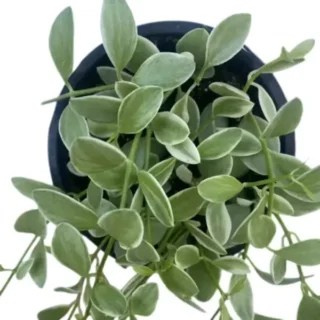
Price range: ₹99.00 through ₹599.00Select options This product has multiple variants. The options may be chosen on the product pagePlant Size: Single plant | Secure Packing The Dischidia oiantha, often referred to as a “Hoya cousin,” is a charming, easy-to-care-for epiphyte with trailing vines and small, oval, succulent-like leaves. It’s a great choice for hanging baskets or for adding a touch of whimsy to a shelf. Here is a comprehensive guide to caring for …
-
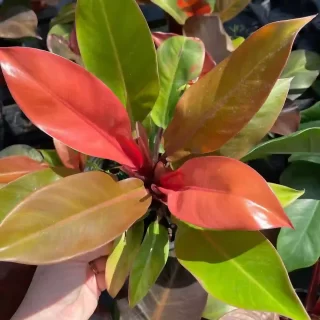
Philodendron ‘Prince of Orange’
Price range: ₹199.00 through ₹620.00Select options This product has multiple variants. The options may be chosen on the product pageSelling Size : Single Plant | Pot Included | Secure Packing The Philodendron ‘Prince of Orange’ is a stunning and popular hybrid known for its vibrant, ever-changing leaf colors. New leaves emerge as a brilliant orange or coppery color, and as they mature, they transition to a lime green, then a deep, glossy green. It …
-
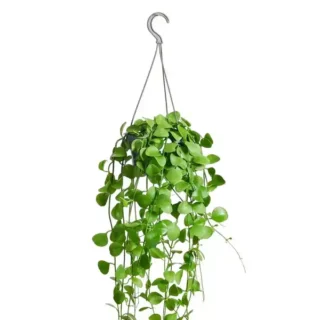
String Of Nickels (Dischidia nummularia)
Price range: ₹99.00 through ₹599.00Select options This product has multiple variants. The options may be chosen on the product pageSelling size: Well rooted plant in a Jiffy bag The Dischidia nummularia, commonly known as the String of Nickels or Button Orchid, is a delightful and easy-to-care-for trailing epiphyte. Its common name comes from its small, round, coin-shaped leaves that densely cover its long, slender stems. As a relative of the Hoya, it shares a similar …
-
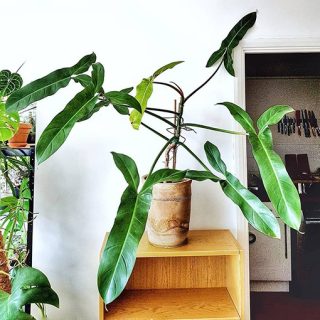
Philodendron Mexicanum
Original price was: ₹1,090.00.₹749.00Current price is: ₹749.00.Add to cartSelling size: Single Plant | Pot included The Philodendron mexicanum is a beautiful vining plant known for its long, arrow-shaped leaves with a striking deep maroon or reddish underside. As its name suggests, it is native to the tropical forests of Mexico. It’s a relatively easy-to-care-for plant, especially for those familiar with other vining philodendrons. …
-
Pellionia repens var. pulchra
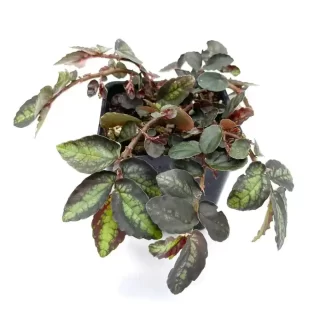
Original price was: ₹325.00.₹149.00Current price is: ₹149.00.Add to cartSelling size: Well rooted plant in a jiffy bag | Secure Packing The Pellionia repens var. pulchra, often called the Trailing Watermelon Begonia, is a beautiful and easy-to-care-for trailing plant. Its common name comes from the striking, patterned leaves that resemble the rind of a watermelon. Despite the name, it is not a true begonia …
-
Lemon Button Fern Plant
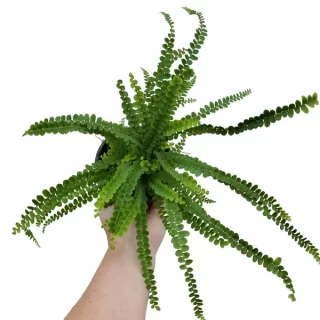
Original price was: ₹539.00.₹179.00Current price is: ₹179.00.Add to cartSelling Size: Single plant | 2.5″ Pot Included The Lemon Button Fern (Nephrolepis cordifolia ‘Duffii’) is a popular and relatively easy-to-care-for fern. It’s known for its compact, arching fronds with small, button-like leaves and a subtle, lemony scent when you brush against them. Unlike some ferns, it’s a bit more forgiving of indoor conditions, making …
 If you need any assistance, I'm always here. Have you found what you were looking for?