

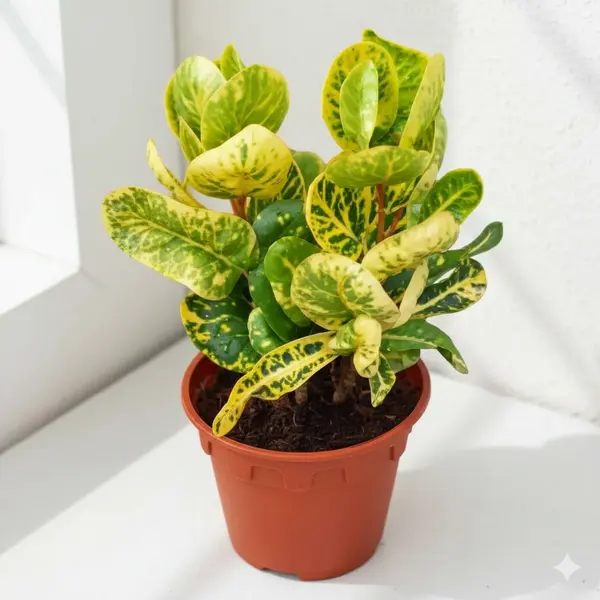
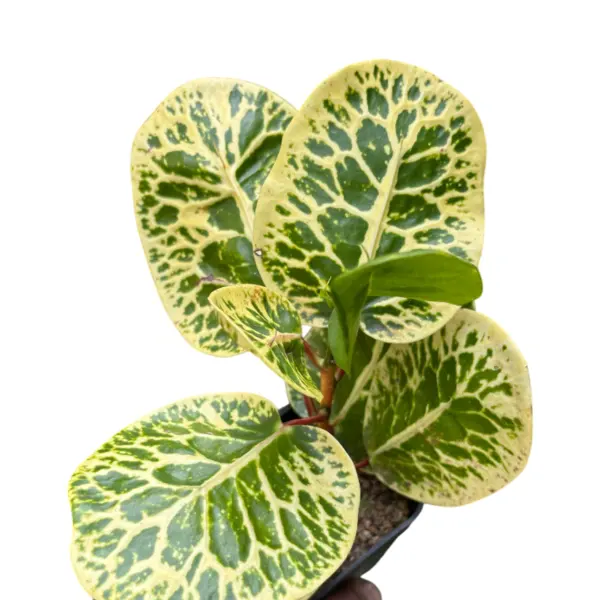
Yellow Croton – Codiaeum variegatum Yellow
Original price was: ₹399.00.₹175.00Current price is: ₹175.00.
Selling Size : Single Plant | Pot Included |Secure Packing
The term Yellow Croton – Codiaeum variegatum Yellow can refer to a few different cultivars, but the care instructions are largely the same. Often, the plant is a variety of , such as ‘Gold Dust’ or ‘Eleanor Roosevelt’, which are known for their striking yellow and green foliage.
Here’s a comprehensive guide to caring for your Yellow Croton – Codiaeum variegatum Yellow:
Light
- Bright, indirect light is a must. This is the most important factor for maintaining the plant’s vibrant yellow coloration. Without enough light, the leaves will revert to a less colorful green.
- Avoid direct, harsh sun. While they love bright light, intense, unfiltered sunlight can burn the leaves and cause them to look faded or scorched. A good spot is a few feet away from a south-facing window, or in an east-facing window where it gets morning sun.
- Rotate your plant regularly to ensure all sides receive adequate light for even growth.
Water
- Keep the soil consistently moist, but not soggy. Crotons are tropical plants that don’t like to dry out completely.
- Water when the top inch (about 2.5 cm) of the soil feels dry to the touch.
- Ensure the pot has good drainage. Overwatering is a common problem that leads to root rot and leaf drop. Empty any excess water from the saucer after watering.
- Adjust your watering schedule with the seasons. The plant will need more water in the summer (growing season) and less in the winter.
Humidity
- High humidity is crucial for a healthy croton. They are native to humid climates.
- If your indoor air is dry, you can increase humidity by:
- Misting the leaves regularly.
- Using a room humidifier.
- Placing the plant on a tray of pebbles filled with water.
- Grouping it with other plants.
Soil and Fertilizer
- Use a well-draining, fertile potting mix. A standard mix with good aeration, such as one with perlite or peat moss, is ideal.
- Fertilize during the spring and summer. Use a balanced, water-soluble fertilizer, diluted to half-strength, once a month.
- Do not fertilize in the fall and winter, as the plant’s growth slows down.
Temperature
- Crotons are sensitive to cold. They thrive in warm conditions, with an ideal temperature range of 60-85°F (15-29°C).
- Protect the plant from cold drafts. Avoid placing it near air conditioning vents, cold windows, or doors that open frequently. Sudden temperature drops are a common cause of leaf drop.
Common Problems
- Leaf drop: This is the most common symptom of stress. It can be caused by a sudden change in its environment, too much or too little water, or cold drafts. Don’t panic if your plant loses some leaves after you bring it home; it’s a normal adjustment.
- Fading color: This is almost always a sign that the plant is not getting enough light.
- Pests: Crotons can be susceptible to spider mites, mealybugs, and scale insects. Regularly wiping the leaves with a damp cloth can help prevent infestations.
Toxicity
Like all crotons, the yellow varieties contain a milky sap that can be a skin irritant. It is also toxic if ingested, so keep the plant away from pets and children.
You must be logged in to post a review.
Related products
-
String of Bananas
Original price was: ₹450.00.₹249.00Current price is: ₹249.00.Add to cartSelling size: Mentioned in last Picture | Secure Packing The String of Bananas (Curio radicans or Senecio radicans) is a charming trailing succulent known for its long, cascading stems covered in plump, banana-shaped leaves. It’s a popular choice for hanging baskets and is generally easy to care for, especially for those who are new …
-
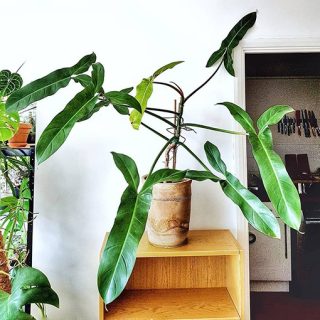
Philodendron Burle Marx Plant
Original price was: ₹485.00.₹149.00Current price is: ₹149.00.Add to cartSelling size: Single plant | Pot Included | Secure Packing The Philodendron Burle Marx is a fantastic and relatively easy-to-care-for plant, known for its glossy, spade-shaped leaves and dense, clumping growth. It’s often recommended as a great choice for beginner houseplant owners. Here is a comprehensive care guide for your Philodendron Burle Marx: Light …
-
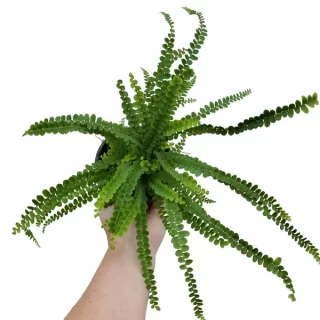
Lemon Button Fern Plant
Original price was: ₹539.00.₹179.00Current price is: ₹179.00.Add to cartSelling Size: Single plant | 2.5″ Pot Included The Lemon Button Fern (Nephrolepis cordifolia ‘Duffii’) is a popular and relatively easy-to-care-for fern. It’s known for its compact, arching fronds with small, button-like leaves and a subtle, lemony scent when you brush against them. Unlike some ferns, it’s a bit more forgiving of indoor conditions, making …
-
Dischidia Oiantha plant
Price range: ₹99.00 through ₹599.00Select options This product has multiple variants. The options may be chosen on the product pagePlant Size: Single plant | Secure Packing The Dischidia oiantha, often referred to as a “Hoya cousin,” is a charming, easy-to-care-for epiphyte with trailing vines and small, oval, succulent-like leaves. It’s a great choice for hanging baskets or for adding a touch of whimsy to a shelf. Here is a comprehensive guide to caring for …
-
Philodendron Mexicanum
Original price was: ₹1,090.00.₹749.00Current price is: ₹749.00.Add to cartSelling size: Single Plant | Pot included The Philodendron mexicanum is a beautiful vining plant known for its long, arrow-shaped leaves with a striking deep maroon or reddish underside. As its name suggests, it is native to the tropical forests of Mexico. It’s a relatively easy-to-care-for plant, especially for those familiar with other vining philodendrons. …
-
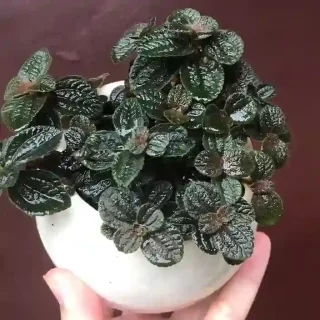
Pilea Repens, Black Panamiga
Original price was: ₹280.00.₹149.00Current price is: ₹149.00.Add to cartSize: Single Plant | Jiffy Bag Caring for a Pilea Ripens (also known as Black Panamiga) involves understanding its specific needs to ensure it thrives. Here’s a breakdown of Pilea Repens, Black Panamiga key care aspects: Key Care Points: Light: Pilea repens prefers bright, indirect sunlight. Direct sunlight can scorch its leaves. Rotating the plant …
-
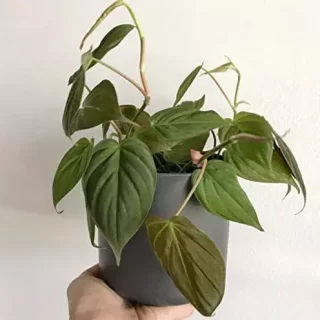
Philodendron Mican plant
Original price was: ₹650.00.₹99.00Current price is: ₹99.00.Add to cartSelling size: A well rooted plant | 2.5″ Pot Included The Philodendron Micans (Philodendron hederaceum ‘Micans’), also known as the Velvet-Leaf Philodendron, is a popular, easy-care trailing or climbing houseplant prized for its unique, velvety, heart-shaped leaves that emerge a beautiful chartreuse/pink and mature to a deep, iridescent, bronze-green with hints of purple. Here is …
-
Pilea involucrata ‘Norfolk’ – Friendship Plant
Original price was: ₹450.00.₹199.00Current price is: ₹199.00.Add to cartSize: Single Plant | 2.5″ Pot Included | Free Shipping The Pilea involucrata ‘Norfolk’, commonly known as the Friendship Plant, is a delightful houseplant celebrated for its unique, velvety, quilted foliage. The leaves have a rich texture and a beautiful color palette, with deep green and bronze tones on the upper surface and a reddish-purple …

 If you need any assistance, I'm always here. Have you found what you were looking for?
Reviews
There are no reviews yet.