

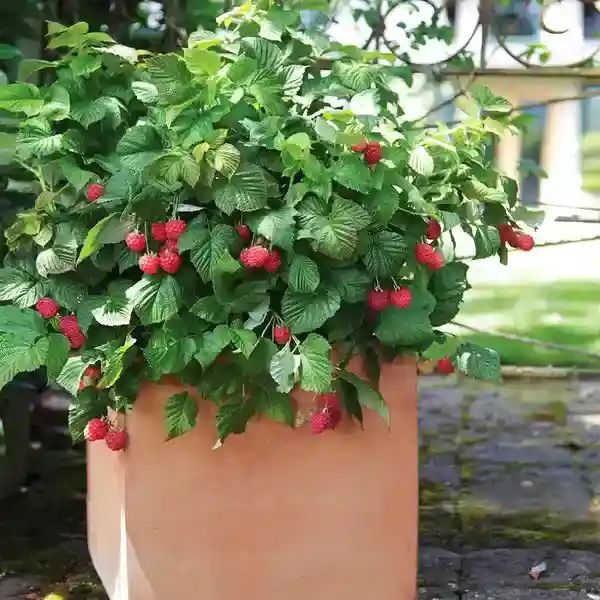
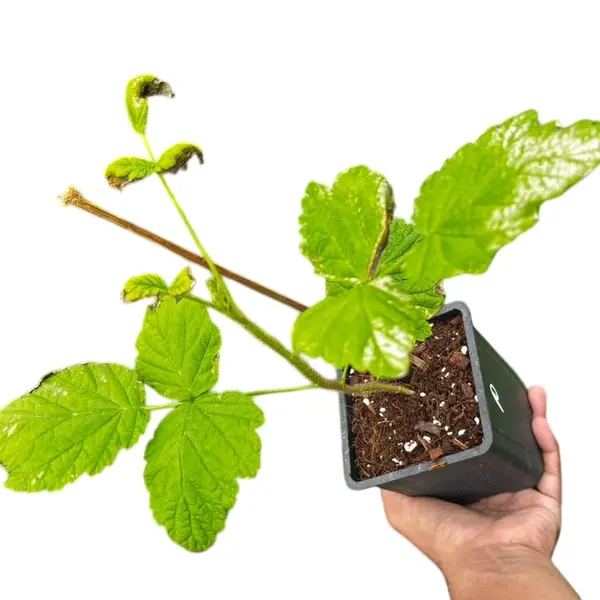
Raspberry Plant – Rare
Original price was: ₹2,899.00.₹1,299.00Current price is: ₹1,299.00.
Selling Size : Single Plant | Pot Included | Secure Packing | Free delivery
Caring for Raspberry Plant involves providing them with the right environment and, most importantly, following a specific pruning schedule based on the type of raspberry you are growing.
Here is a comprehensive guide to raspberry plant care:
1. Light,Soil, and Support
2. Mulching and Fertilizing Raspberry Plant
- Mulching: Apply a to inch layer of organic mulch (compost, well-rotted manure, or wood chips) around the plants in late winter/early spring.
- Benefits: Retains moisture, suppresses weeds, and adds organic matter to the soil.
- Caution: Leave a small gap around the base of the canes to prevent rot.
- Fertilizing: Raspberries are not heavy feeders if the soil is amended with compost, but they respond well to a balanced feed.
- When to Fertilize: Annually in early spring before new growth begins.
- What to Use: A balanced fertilizer like or is commonly used.
- Application: Apply granular fertilizer around the base of the plants, avoiding direct contact with the canes (which can cause burn).
- Avoid Late-Season Fertilizing: Do not fertilize in late summer or fall, as this encourages tender new growth that will be susceptible to winter kill.
3. Pruning (Essential Care)
Raspberries have perennial roots but biennial canes. Canes grow for one year (as a primocane) and fruit the next year (as a floricane), and then they die.
The pruning method depends entirely on the type you are growing:
A. Summer-Bearing Raspberries (Floricane-Fruiting)
These varieties produce one large crop in early summer (June/July) on second-year wood (floricanes).
B. Fall-Bearing Raspberries (Primocane-Fruiting or Everbearing)
These varieties produce fruit on the tips of the current year’s growth (primocanes) in the late summer/fall. They can be pruned for one or two crops.
C. Black and Purple Raspberries
These types also fruit on floricanes (second-year wood) but require a special summer tipping to encourage side branching.
You must be logged in to post a review.
You may also like…
-
Blueberry Fruit Plant For Colder Climate
Original price was: ₹2,499.00.₹1,299.00Current price is: ₹1,299.00.Add to cartSelling Size : Single Plant | Pot Included | Secure Packing Growing Blueberry For Colder Climate in colder regions can be highly rewarding. These hardy shrubs not only produce delicious, antioxidant-rich fruits but also bring ornamental beauty with their white spring flowers and vibrant red fall foliage. While blueberries prefer cool winters, extreme cold or …
-
Blueberry Fruit Plant For Tropical Climate
Original price was: ₹2,499.00.₹1,299.00Current price is: ₹1,299.00.Add to cartSelling Size : Single Plant | Pot Included | Secure Packing Caring for Blueberry Fruit Plant centers on two critical factors: highly acidic soil and consistent moisture. They are relatively straightforward to maintain once these needs are met. Here is a comprehensive guide to Blueberry Fruit Plant care: 1. Soil and pH (The Most …


Related products
-
String Of Nickels (Dischidia nummularia)
Price range: ₹99.00 through ₹599.00Select options This product has multiple variants. The options may be chosen on the product pageSelling size: Well rooted plant in a Jiffy bag The Dischidia nummularia, commonly known as the String of Nickels or Button Orchid, is a delightful and easy-to-care-for trailing epiphyte. Its common name comes from its small, round, coin-shaped leaves that densely cover its long, slender stems. As a relative of the Hoya, it shares a similar …
-
Philodendron Mexicanum
Original price was: ₹1,090.00.₹749.00Current price is: ₹749.00.Add to cartSelling size: Single Plant | Pot included The Philodendron mexicanum is a beautiful vining plant known for its long, arrow-shaped leaves with a striking deep maroon or reddish underside. As its name suggests, it is native to the tropical forests of Mexico. It’s a relatively easy-to-care-for plant, especially for those familiar with other vining philodendrons. …
-
Calathiya Rattlesnake Plant
Price range: ₹125.00 through ₹549.00Select options This product has multiple variants. The options may be chosen on the product pageSelling size: Please Choose | Secure Packing | 2.5″-4″ Pot Included Calathiya rattlesnake is a plant easy to care for. However, there are a few measures and precautions you need to take to grow and maintain yours. Here’s a comprehensive guide for rattlesnake plant : Light Calathea Lancifolia prefers bright, indirect light. Like most variegated …
-
Spanish Moss Air Plant
Price range: ₹49.00 through ₹1,699.00Select options This product has multiple variants. The options may be chosen on the product pageSelling size: PLEASE CHOOSE Spanish Moss Air Plant – CARE INSTRUCTIONS Scientific name: Tillandsia usneoides Synonyms: Old man’s beard, Spanish Moss, French Hair, Spanish Beard Spanish Moss is a delicate silvery-grey air plant that is often used to hang in trees or as a gorgeous decor piece without the need for soil. Despite its name, Spanish Moss …
-
Golden Sedum Plant
Original price was: ₹549.00.₹349.00Current price is: ₹349.00.Add to cartSelling size: Well rooted plan | 2.5″ pot included The Golden Sedum (Sedum adolphii) is a popular succulent known for its bright, fleshy, evergreen leaves that can take on a beautiful golden-yellow or even reddish-pink tint in bright sun. It has a trailing or spreading growth habit, making it a great choice for hanging baskets, …
-
Dischidia Ruscifolia (Million Hearts)
Price range: ₹199.00 through ₹499.00Select options This product has multiple variants. The options may be chosen on the product pagePlant Size: Single plant | 2.5″-6″ Pot Included The Dischidia Ruscifolia (Million Hearts), commonly known as the Million Hearts plant, is a delightful and easy-to-care-for trailing epiphyte. Its name comes from the abundance of small, heart-shaped leaves that densely cover its slender stems. As a member of the same family as Hoyas, its care …
-
Pellionia repens var. pulchra
Original price was: ₹325.00.₹149.00Current price is: ₹149.00.Add to cartSelling size: Well rooted plant in a jiffy bag | Secure Packing The Pellionia repens var. pulchra, often called the Trailing Watermelon Begonia, is a beautiful and easy-to-care-for trailing plant. Its common name comes from the striking, patterned leaves that resemble the rind of a watermelon. Despite the name, it is not a true begonia …
-
Philodendron Burle Marx Plant
Original price was: ₹485.00.₹149.00Current price is: ₹149.00.Add to cartSelling size: Single plant | Pot Included | Secure Packing The Philodendron Burle Marx is a fantastic and relatively easy-to-care-for plant, known for its glossy, spade-shaped leaves and dense, clumping growth. It’s often recommended as a great choice for beginner houseplant owners. Here is a comprehensive care guide for your Philodendron Burle Marx: Light …





 If you need any assistance, I'm always here. Have you found what you were looking for?
Reviews
There are no reviews yet.