
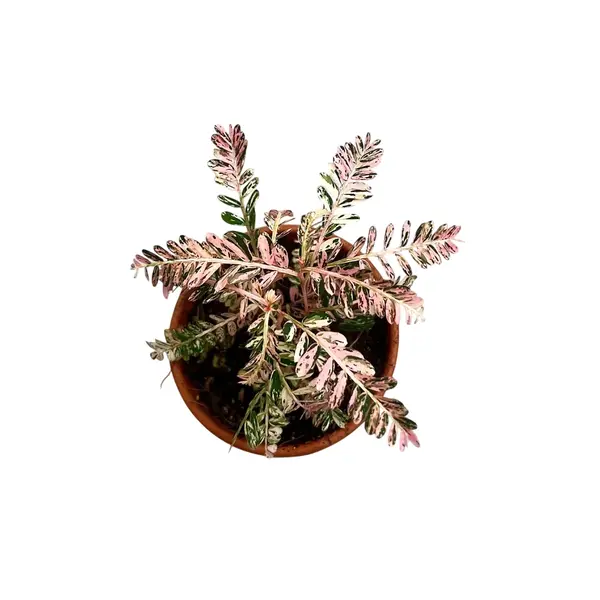
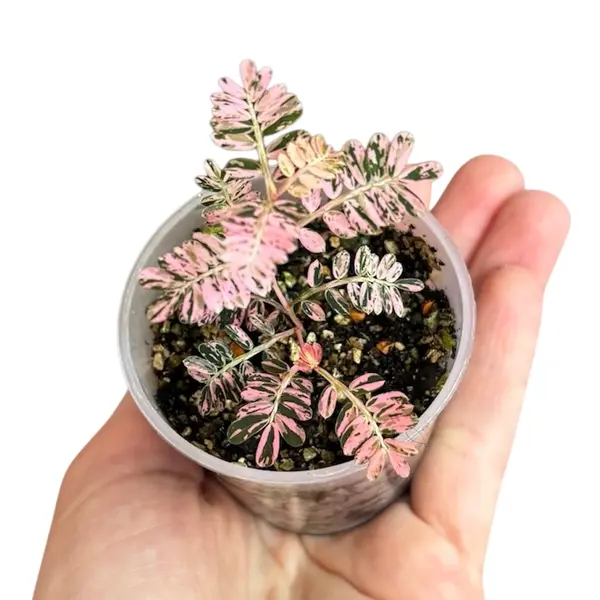
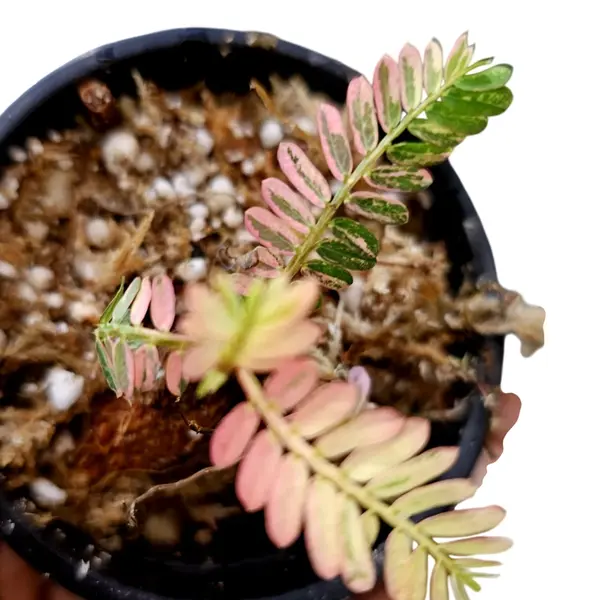
Phyllanthus Urinaria Pink Variegated
₹1.00
Out of stock
Email when stock available
Selling Size : Single Plant | Pot Included | Secure Packing | Free Delivery
Phyllanthus Urinaria Pink Variegated is a rare and eye-catching ornamental plant prized for its delicate, fern-like foliage splashed with soft pink, cream, and green tones. The pink variegation becomes more vivid in good light, making this plant a standout in collectors’ gardens, balconies, and tropical landscapes. Despite its exotic look, it is surprisingly adaptable when its basic needs are met.
Phyllanthus Urinaria Pink Variegated Care Guide :
Light Requirements
Bright light is essential for maintaining strong pink variegation. Phyllanthus urinaria ‘Pink Variegated’ grows best in bright indirect light to gentle morning sun. About 3–5 hours of soft sunlight daily is ideal. Harsh afternoon sun can scorch the leaves and fade the variegation, while low light causes the plant to turn greener and leggy. On balconies or terraces, place it where it receives filtered sunlight or partial shade.
Watering
This plant prefers evenly moist soil, but it does not tolerate waterlogging. Water thoroughly when the top 2–3 cm of soil feels dry. During warm and active growth periods, watering every 2–4 days may be required, while in cooler or rainy seasons, reduce frequency.
Good drainage is critical. Excess water sitting in the pot can lead to root rot and leaf yellowing. Always allow excess water to drain out completely, and never let the pot sit in standing water.
Soil & Potting Mix
A loose, well-draining yet moisture-retentive soil mix works best. Use a blend of garden soil, coco peat, compost or vermicompost, and perlite or river sand. This mix provides both nutrients and aeration, which keeps the roots healthy.
Phyllanthus urinaria grows well in pots or directly in the ground. For containers, choose pots with multiple drainage holes. Repot once the plant becomes root-bound or if growth slows noticeably.
Temperature & Humidity
Being a tropical plant, it thrives in warm conditions. The ideal temperature range is 20–35°C. It is sensitive to cold and should be protected if temperatures drop below 15°C.
Moderate to high humidity supports lush foliage and vibrant color. In dry conditions, occasional misting in the morning helps, especially during hot summers. However, ensure good airflow to prevent fungal issues.
Feeding & Fertilization
Regular feeding encourages healthy growth and brighter variegation. Apply a balanced liquid fertilizer at half strength every 2–3 weeks during the growing season. Organic options such as seaweed extract or diluted vermicompost tea are excellent choices.
Avoid overfertilizing, as excess nutrients—especially nitrogen—can reduce pink coloration and promote overly green growth.
Pruning & Growth Habit
Phyllanthus urinaria ‘Pink Variegated’ has a compact, bushy growth habit with fine leaflets arranged along thin stems. Light pruning helps maintain shape and encourages branching. Pinch back leggy stems to keep the plant dense and attractive.
Remove yellow or damaged leaves regularly to keep the plant healthy and pest-free.
Common Problems
-
Fading pink color: Insufficient light
-
Yellowing leaves: Overwatering or poor drainage
-
Leaf drop: Sudden temperature changes or underwatering
-
Pests: Occasionally aphids or spider mites; treat with neem oil if needed
Final Thoughts
Phyllanthus urinaria ‘Pink Variegated’ is a beautiful, low-maintenance tropical plant that adds soft color and texture to any space. With bright light, consistent moisture, warm temperatures, and light feeding, it rewards growers with stunning pink-tinted foliage throughout the growing season.
Related products
-
Dischidia nummularia (Pebble Beach/ Button Orchid)
Price range: ₹99.00 through ₹599.00Select options This product has multiple variants. The options may be chosen on the product pagePlant Size: Single plant | 2.5″ Pot Included he Dischidia nummularia, commonly known as the String of Nickels, Pebble Beach plant, or Button Orchid, is a charming epiphyte with trailing stems covered in small, round, succulent-like leaves. It’s a great choice for hanging baskets and is known for being relatively easy to care for, especially …
-
Tillandsia Stricta (Air plant)
Original price was: ₹400.00.₹199.00Current price is: ₹199.00.Add to cartSelling size: Single plant | Secure Packing The Tillandsia Stricta (Air plant) is one of the most popular and adaptable species of air plants, known for its soft, green-silver foliage and beautiful blooms. Like all air plants, it is epiphytic, meaning it absorbs all its water and nutrients through its leaves from the air, not …
-
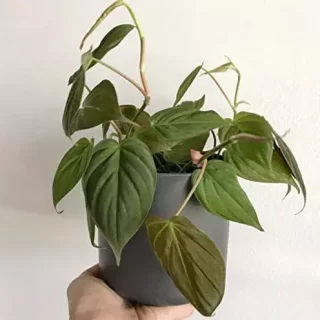
Philodendron Mican plant
Original price was: ₹650.00.₹99.00Current price is: ₹99.00.Add to cartSelling size: A well rooted plant | 2.5″ Pot Included The Philodendron Micans (Philodendron hederaceum ‘Micans’), also known as the Velvet-Leaf Philodendron, is a popular, easy-care trailing or climbing houseplant prized for its unique, velvety, heart-shaped leaves that emerge a beautiful chartreuse/pink and mature to a deep, iridescent, bronze-green with hints of purple. Here is …
-
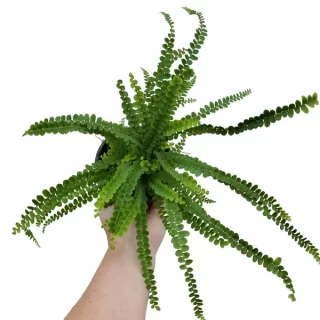
Lemon Button Fern Plant
Original price was: ₹539.00.₹179.00Current price is: ₹179.00.Add to cartSelling Size: Single plant | 2.5″ Pot Included The Lemon Button Fern (Nephrolepis cordifolia ‘Duffii’) is a popular and relatively easy-to-care-for fern. It’s known for its compact, arching fronds with small, button-like leaves and a subtle, lemony scent when you brush against them. Unlike some ferns, it’s a bit more forgiving of indoor conditions, making …
-
Philodendron Xanadu
Original price was: ₹450.00.₹199.00Current price is: ₹199.00.Add to cartSelling size:Well rooted plant | 2.5″ Pot Included | Secure Packing The Philodendron Xanadu, now officially classified as Thaumatophyllum xanadu, is a fantastic and relatively easy-to-care-for houseplant. It’s known for its compact, bushy growth habit and deeply lobed, glossy green leaves that give it a sophisticated, tropical look. Here is a complete guide to caring …
-
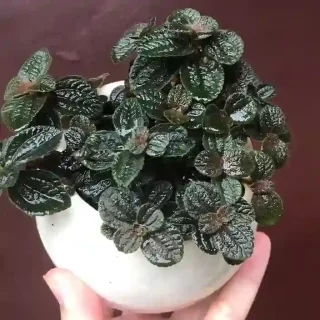
Pilea Repens, Black Panamiga
Original price was: ₹280.00.₹149.00Current price is: ₹149.00.Add to cartSize: Single Plant | Jiffy Bag Caring for a Pilea Ripens (also known as Black Panamiga) involves understanding its specific needs to ensure it thrives. Here’s a breakdown of Pilea Repens, Black Panamiga key care aspects: Key Care Points: Light: Pilea repens prefers bright, indirect sunlight. Direct sunlight can scorch its leaves. Rotating the plant …
-
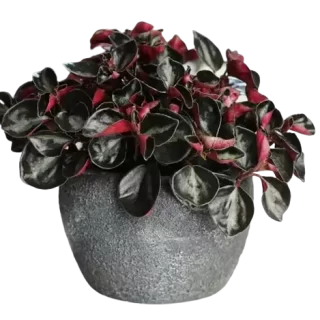
Columbian Peperomia (Galaxy pepperomia)
Original price was: ₹345.00.₹183.65Current price is: ₹183.65.Read moreSelling size:Well rooted plant in a jiffy bag The Columbian Peperomia (Peperomia metallica var. columbiana) is a visually striking and relatively low-maintenance houseplant. It is also sometimes sold as “Galaxy Peperomia,” a name that hints at its unique foliage. This plant is known for its beautiful, semi-succulent leaves that have a dark green or bronze-purple …
-
Dischidia Oiantha plant
Price range: ₹99.00 through ₹599.00Select options This product has multiple variants. The options may be chosen on the product pagePlant Size: Single plant | Secure Packing The Dischidia oiantha, often referred to as a “Hoya cousin,” is a charming, easy-to-care-for epiphyte with trailing vines and small, oval, succulent-like leaves. It’s a great choice for hanging baskets or for adding a touch of whimsy to a shelf. Here is a comprehensive guide to caring for …



 If you need any assistance, I'm always here. Have you found what you were looking for?