
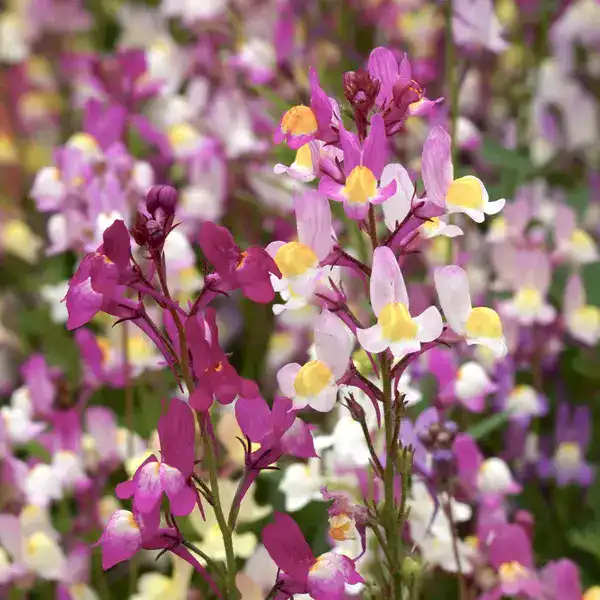
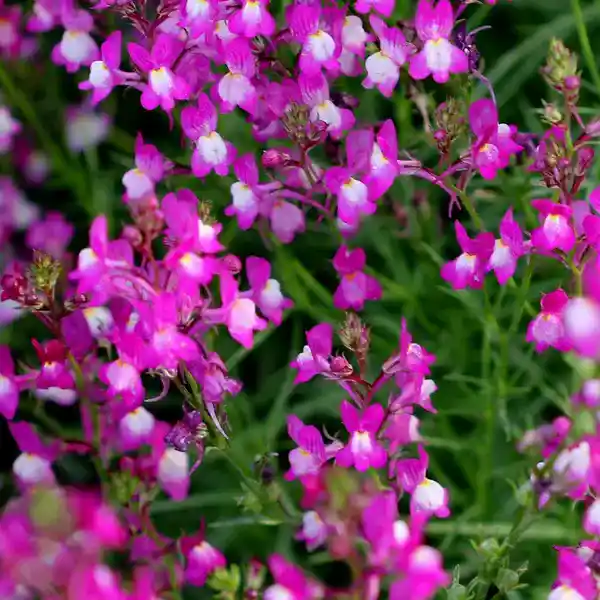
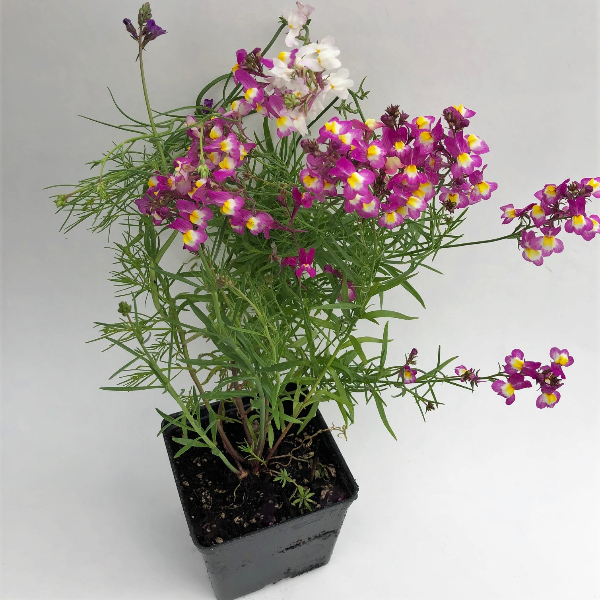
Linaria Maroccana (Cultivated)
Original price was: ₹699.00.₹149.00Current price is: ₹149.00.
Out of stock
Email when stock available
Selling Size : Single Plant | 2.5″ Pot Included | Secure Packing
Linaria maroccana, commonly known as Moroccan Toadflax or Annual Toadflax, is an excellent, low-maintenance flowering annual. It’s cherished for its miniature, snapdragon-like flowers and is often sold as the colorful ‘Fairy Bouquet’ mix.
Here is a guide for the optimal care of this cultivated annual :
Linaria Maroccana Care Guide
Light
- Full Sun is Best: For the most abundant flowers, plant it where it will receive at least 6 hours of direct sunlight daily.
- Tolerates Part Shade: In regions with very hot summers, a location that receives afternoon shade can help prolong the blooming period. Less sun, however, means fewer flowers.
Soil
- Well-Drained Soil is Key: This plant is adaptable to various soil types (sandy, loamy, etc.) but must have excellent drainage. It is susceptible to root rot if the soil stays waterlogged.
- Soil Quality: It tolerates average to poor soil but will benefit from soil amended with some organic matter.
- pH: Prefers a slightly acidic to slightly alkaline pH (6.0 to 7.5).
Water
- Moderate and Consistent: While established plants are somewhat drought-tolerant, they prefer consistent moisture for the best bloom.
- Water regularly to keep the soil evenly moist, but allow the top inch or two of soil to dry out between waterings. Avoid overwatering.
Fertilizer
- Light Feeding: If planted in rich soil, it may not need any extra fertilizer.
- In average soil, you can apply a balanced liquid fertilizer once a month during the active growing season (spring and summer) to boost flowering.
Maintenance and Growing Tips
Sowing and Planting
- Planting Time: As a cool-weather annual, Linaria maroccana is best planted in early spring as soon as the soil is workable. In very mild winter climates (like USDA Zones 8-9), you can sow seeds in the fall for winter/early spring bloom.
- Propagation: It is very easy to grow from seed.
- Direct Sow: Sow the tiny seeds directly into the garden after the danger of hard frost has passed.
- Indoors: For an earlier start, sow seeds indoors 6-8 weeks before the last expected frost.
- Surface Sow: The seeds need light to germinate, so only press them lightly onto the soil surface; do not cover them deeply. Keep the soil consistently moist until germination occurs (about 1-3 weeks).
- Self-Seeding: If you leave the spent flowers, the plant will readily self-seed, often coming back reliably year after year.
Pruning and Deadheading
- Deadhead for More Blooms: Deadheading (pinching or clipping off spent flower spikes) is the most important maintenance step. This will prevent the plant from going to seed and encourage it to produce continuous new blooms, extending the flowering season.
- Cut Back: If the plant begins to look tired or leggy in mid-summer, you can cut it back by about one-third. This can encourage a flush of new growth and a second round of flowering.
Tolerances and Problems
- It’s a great choice for areas with deer, as they typically leave it alone.
- It has few serious problems, but watch out for aphids.
- The plant thrives in cooler temperatures and will often start to fade and die back when the hot, humid weather of mid-summer fully sets in.
It works wonderfully in masses, along borders, in rock gardens, and in containers and window boxes.
You must be logged in to post a review.
Related products
-
Scindapsus Pictus Exotica
Original price was: ₹380.00.₹99.00Current price is: ₹99.00.Add to cartSelling size: Single Plant | 2.5″ Pot Included The Scindapsus Pictus Exotica, also known as the silver pothos, is a houseplant with large, dark green leaves that have silver spots and mottling. Here’s a guide to caring for your Scindapsus pictus Exotica plant: Light: Prefers bright, indirect light. An east or west-facing window that’s about …
-
Golden Pothos
Original price was: ₹355.00.₹99.00Current price is: ₹99.00.Add to cartSelling size : Well rooted plant | 2.5″ pot included The Golden Pothos (Epipremnum aureum), also known as Devil’s Ivy, is one of the most popular and easiest houseplants to care for, making it an excellent choice for beginners. It’s a vining plant with heart-shaped leaves that are a vibrant green, often with splashes or …
-
Philodendron Moonshine
Original price was: ₹1,250.00.₹249.00Current price is: ₹249.00.Add to cartSelling size: Single plant | Pot included | Secure Packing The Philodendron Moonshine (often also called ‘Moonlight’) is a popular hybrid known for its vibrant, almost glowing, chartreuse-colored leaves. It has an upright, self-heading growth habit, so unlike many vining philodendrons, it doesn’t need a trellis or pole. Here is a comprehensive guide to caring …
-
Calathiya Rattlesnake Plant
Price range: ₹125.00 through ₹549.00Select options This product has multiple variants. The options may be chosen on the product pageSelling size: Please Choose | Secure Packing | 2.5″-4″ Pot Included Calathiya rattlesnake is a plant easy to care for. However, there are a few measures and precautions you need to take to grow and maintain yours. Here’s a comprehensive guide for rattlesnake plant : Light Calathea Lancifolia prefers bright, indirect light. Like most variegated …
-
Columbian Peperomia (Galaxy pepperomia)
Original price was: ₹345.00.₹183.65Current price is: ₹183.65.Read moreSelling size:Well rooted plant in a jiffy bag The Columbian Peperomia (Peperomia metallica var. columbiana) is a visually striking and relatively low-maintenance houseplant. It is also sometimes sold as “Galaxy Peperomia,” a name that hints at its unique foliage. This plant is known for its beautiful, semi-succulent leaves that have a dark green or bronze-purple …
-
Spanish Moss Air Plant
Price range: ₹49.00 through ₹1,699.00Select options This product has multiple variants. The options may be chosen on the product pageSelling size: PLEASE CHOOSE Spanish Moss Air Plant – CARE INSTRUCTIONS Scientific name: Tillandsia usneoides Synonyms: Old man’s beard, Spanish Moss, French Hair, Spanish Beard Spanish Moss is a delicate silvery-grey air plant that is often used to hang in trees or as a gorgeous decor piece without the need for soil. Despite its name, Spanish Moss …
-
Pellionia repens var. pulchra
Original price was: ₹325.00.₹149.00Current price is: ₹149.00.Add to cartSelling size: Well rooted plant in a jiffy bag | Secure Packing The Pellionia repens var. pulchra, often called the Trailing Watermelon Begonia, is a beautiful and easy-to-care-for trailing plant. Its common name comes from the striking, patterned leaves that resemble the rind of a watermelon. Despite the name, it is not a true begonia …
-
Pilea involucrata ‘Norfolk’ – Friendship Plant
Original price was: ₹450.00.₹199.00Current price is: ₹199.00.Add to cartSize: Single Plant | 2.5″ Pot Included | Free Shipping The Pilea involucrata ‘Norfolk’, commonly known as the Friendship Plant, is a delightful houseplant celebrated for its unique, velvety, quilted foliage. The leaves have a rich texture and a beautiful color palette, with deep green and bronze tones on the upper surface and a reddish-purple …







 If you need any assistance, I'm always here. Have you found what you were looking for?
Reviews
There are no reviews yet.