
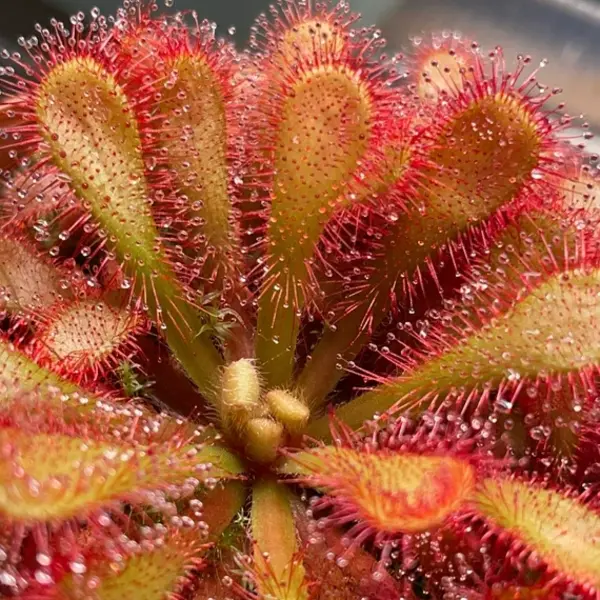
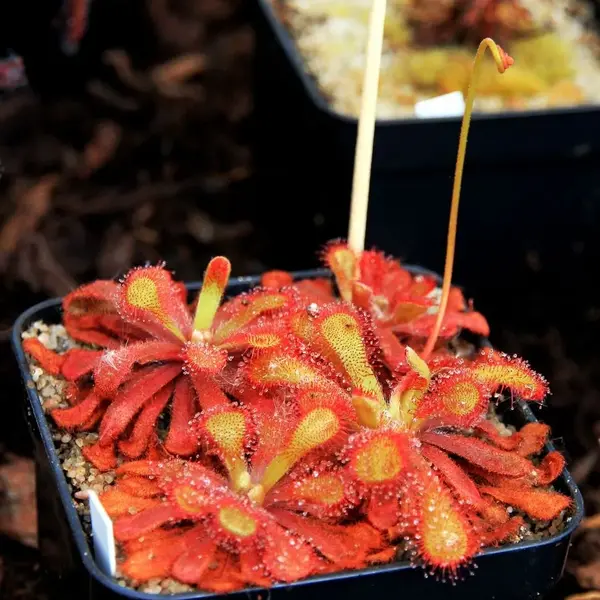
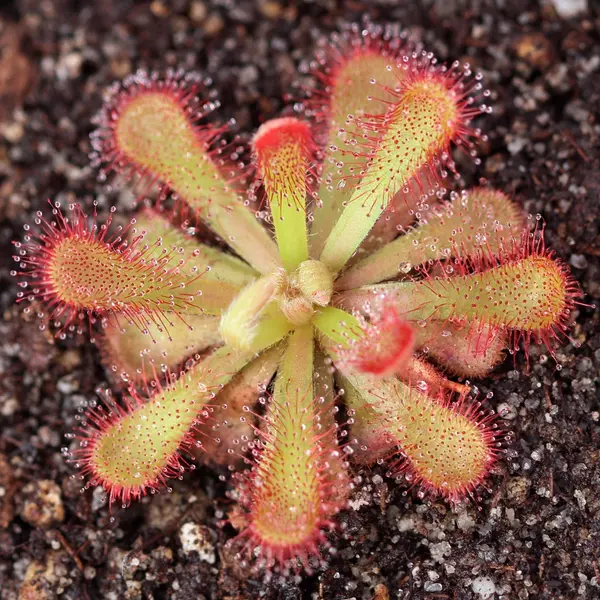
Drosera venusta
Original price was: ₹3,559.00.₹2,499.00Current price is: ₹2,499.00.
Selling Size : Single Plant | Pot Included | Secure Packing | Free Shipping
Drosera venusta is a beautiful and vigorous carnivorous plant known for its upright rosette of long, narrow leaves covered in glistening, sticky tentacles. Closely related to Drosera capensis, this species is native to South Africa and is valued for its elegant form, fast growth, and ease of care. Its sparkling dew and active insect-trapping ability make it a captivating plant for both beginners and experienced growers.
Drosera venusta (Cape Sundew) Care Guide:
Light Requirements
Bright light is essential for healthy growth and abundant dew production. Drosera venusta thrives in bright indirect light to full sun. Ideally, provide 4–6 hours of direct sunlight daily, especially gentle morning sun. Under strong grow lights, the plant develops compact growth and intense red coloration in the tentacles. In low light conditions, leaves may become pale, elongated, and produce little dew.
Watering
Pure, mineral-free water is critical for this species. Always use rainwater, distilled water, or reverse osmosis (RO) water. Minerals present in tap water can accumulate in the soil and damage the roots over time. Keep the growing medium consistently moist using the tray method by placing the pot in 1–2 cm of water. Never allow the soil to dry out completely, especially in warm weather.
Soil and Potting
Drosera venusta requires a nutrient-poor, acidic growing medium. A standard mix of sphagnum peat moss and perlite or silica sand in a 1:1 ratio works very well. Do not use regular potting soil, compost, or fertilizer-enriched mixes, as these will kill the plant. Use plastic or glazed ceramic pots to prevent mineral leaching. Repot every 1–2 years to refresh the medium and support healthy growth.
Temperature and Humidity
This sundew prefers moderate to warm temperatures between 18°C and 30°C. It can tolerate slightly cooler nights but should be protected from frost. Drosera venusta adapts well to a wide range of humidity levels, from 40% to 80%. While higher humidity improves dew production, the plant grows well in normal indoor conditions if light and water are adequate. Good airflow helps prevent fungal issues.
Feeding
Drosera venusta feeds naturally by trapping small insects such as flies, mosquitoes, and fungus gnats. Outdoors, it usually catches sufficient prey on its own. Indoors, occasional feeding with tiny insects or crushed dried insects can promote faster growth. Feeding is optional, and the plant should never be fertilized through the soil, as nutrients can burn the roots.
Dormancy
Drosera venusta does not require a true winter dormancy. Growth may slow slightly during cooler or lower-light periods, but the plant remains active year-round. Continue watering and providing adequate light throughout the year.
Flowering and Propagation
This species flowers readily, producing tall flower stalks with small pink to lavender blooms. Flowering does not usually weaken the plant. Drosera venusta is easy to propagate from seeds or leaf cuttings. It may also self-seed under favorable conditions, producing seedlings around the parent plant.
Common Problems
A lack of dew usually indicates insufficient light, poor water quality, or inconsistent watering. Browning or blackened leaves can be normal as older leaves die off, but widespread damage suggests mineral buildup or drying out. Pests are uncommon, though aphids may occasionally attack flower stalks.
Toxicity
Drosera venusta is non-toxic to humans and pets, making it safe for households with children and animals.
Conclusion
With bright light, pure water, consistently moist nutrient-poor soil, and moderate temperatures, Drosera venusta is an easy and rewarding carnivorous plant. Its fast growth, graceful form, and sparkling dew make it an excellent choice for beginners and collectors alike.
Related products
-
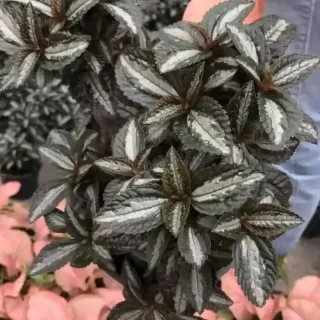
Pilea Repens, Black Panamiga
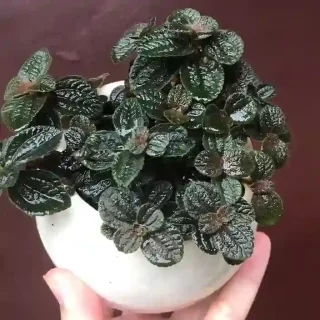
Original price was: ₹280.00.₹149.00Current price is: ₹149.00.Add to cartSize: Single Plant | Jiffy Bag Caring for a Pilea Ripens (also known as Black Panamiga) involves understanding its specific needs to ensure it thrives. Here’s a breakdown of Pilea Repens, Black Panamiga key care aspects: Key Care Points: Light: Pilea repens prefers bright, indirect sunlight. Direct sunlight can scorch its leaves. Rotating the plant …
-
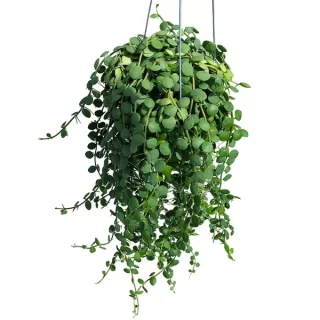
Dischidia nummularia (Pebble Beach/ Button Orchid)
Price range: ₹99.00 through ₹599.00Select options This product has multiple variants. The options may be chosen on the product pagePlant Size: Single plant | 2.5″ Pot Included he Dischidia nummularia, commonly known as the String of Nickels, Pebble Beach plant, or Button Orchid, is a charming epiphyte with trailing stems covered in small, round, succulent-like leaves. It’s a great choice for hanging baskets and is known for being relatively easy to care for, especially …
-
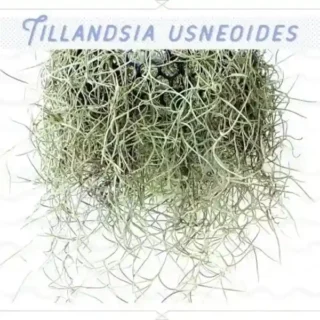
Spanish Moss Air Plant
Price range: ₹49.00 through ₹1,699.00Select options This product has multiple variants. The options may be chosen on the product pageSelling size: PLEASE CHOOSE Spanish Moss Air Plant – CARE INSTRUCTIONS Scientific name: Tillandsia usneoides Synonyms: Old man’s beard, Spanish Moss, French Hair, Spanish Beard Spanish Moss is a delicate silvery-grey air plant that is often used to hang in trees or as a gorgeous decor piece without the need for soil. Despite its name, Spanish Moss …
-
Chlorophytum Spider Live Plant
Original price was: ₹249.00.₹99.00Current price is: ₹99.00.Add to cartSelling size: Well rooted Single plant | 2.5″ Pot included Chlorophytum Spider, also the Spider Plant is an impressive houseplant which is the perfect plant for any beginner. A NASA certified air purifier, its long, green foliage with white variegations look good in both hanging planters and as desktop setups. In favourable conditions, it blooms …
-
String Of Nickels (Dischidia nummularia)
Price range: ₹99.00 through ₹599.00Select options This product has multiple variants. The options may be chosen on the product pageSelling size: Well rooted plant in a Jiffy bag The Dischidia nummularia, commonly known as the String of Nickels or Button Orchid, is a delightful and easy-to-care-for trailing epiphyte. Its common name comes from its small, round, coin-shaped leaves that densely cover its long, slender stems. As a relative of the Hoya, it shares a similar …
-
Black zz plant, Raven ZZ Plant
Price range: ₹99.00 through ₹499.00Select options This product has multiple variants. The options may be chosen on the product pageSelling size: Please Choose (Single – Bushy) | 2.5″-5” Pot Included | Secure Packing The Black ZZ Plant, or Raven ZZ Plant (Zamioculcas zamiifolia ‘Raven’), is a popular, exceptionally resilient houseplant known for its striking, nearly black foliage. It shares the easy-care nature of the standard green ZZ plant, making it perfect for beginners or …
-
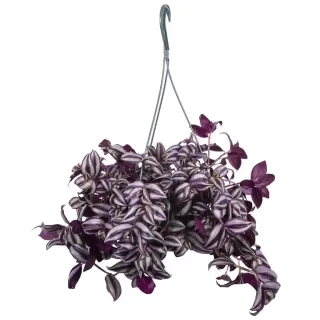
Wandering Jew Plant
Original price was: ₹305.00.₹149.00Current price is: ₹149.00.Add to cartSelling size: This plant comes in a 2.5″ Square pot The Wandering Jew Plant, also known as the Tradescantia! They’re such vibrant and easy-to-love plants. To keep yours thriving, here’s a rundown of Wandering Jew Plant care needs: Light: They absolutely love bright, indirect sunlight. Think of a spot near an east- or west-facing window …



 If you need any assistance, I'm always here. Have you found what you were looking for?