
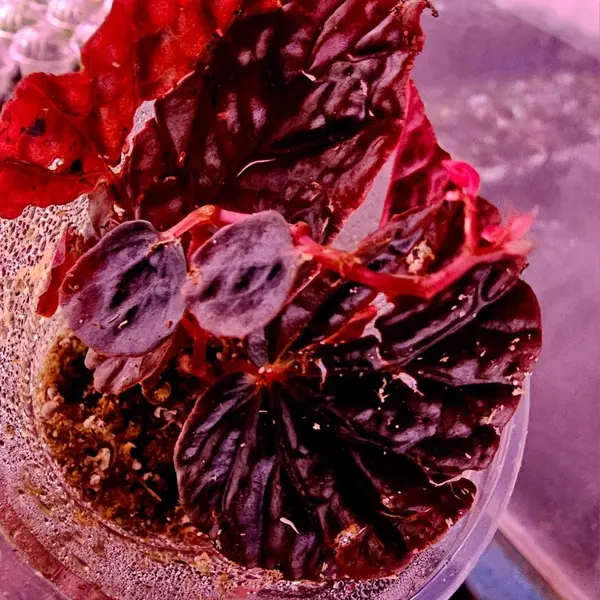
Begonia Blood moon
Original price was: ₹6,999.00.₹2,899.00Current price is: ₹2,899.00.
Selling Size : Single Plant | Pot Included | Secure Packing
Begonia Blood moon is a striking rex begonia hybrid loved for its deep burgundy, red, and metallic foliage that resembles a glowing moon in the night sky. Known for its dramatic colours, compact growth, and lush leaves, this variety is ideal for indoor collections, terrariums, and shaded balconies. Though stunning, it needs attentive care to maintain its vibrant colours and avoid leaf issues. With the right environment, Begonia Blood Moon becomes an eye-catching ornamental plant that thrives year-round.
Begonia Blood moon Care Guide:
1. Light Requirements
Begonia Blood Moon prefers bright, indirect light. Direct sunlight can scorch its sensitive leaves, causing fading or crispy edges. Place the plant near an east- or north-facing window, or behind a sheer curtain in a brighter room. Insufficient light makes the colours dull and causes legginess. To enhance the metallic sheen and deep red tones, provide filtered bright light for 4–6 hours daily. Avoid dark corners and harsh afternoon sun.
2. Temperature and Humidity
This begonia thrives in warm, stable environments with temperatures between 18–28°C. It dislikes cold drafts, sudden temperature fluctuations, and exposure to air conditioners. High humidity is very important. The ideal humidity level is 60–75%. Low humidity leads to brown tips, crispy leaves, and slowed growth. Increase humidity by using a humidifier, placing the plant on a pebble tray, or grouping it with other plants. Avoid misting directly on the leaves, as excess surface moisture can encourage fungus or powdery mildew.
3. Watering Needs
Begonia Blood Moon is sensitive to overwatering. The soil should remain slightly moist but never soggy. Allow the top 1–2 cm of soil to dry before watering again. Watering frequency will vary with climate—usually once in 4–6 days in warm weather and once in 7–10 days in cooler months. Always water at the base and avoid splashing water on the leaves. Use room-temperature water, as cold water can shock the plant. Ensure that extra water drains out immediately.
4. Soil Mix
A fast-draining, airy soil mix is essential. The best mix contains:
-
40% cocopeat or peat moss
-
30% perlite or pumice
-
20% compost or vermicompost
-
10% orchid bark
This combination prevents waterlogging while maintaining slight moisture. Adding activated charcoal also helps prevent fungal growth and improves root health.
5. Pot Selection
Choose a shallow, wide pot with excellent drainage. Ceramic or plastic pots work well, but ensure they have multiple holes to prevent root rot. Repot the plant every 1–2 years when the roots fill the pot or the soil becomes compact.
6. Fertilizing
Feed Begonia Blood Moon with a balanced liquid fertilizer (NPK 10-10-10 or 20-20-20) diluted to half strength once every 15–20 days during the growing season (March to October). Avoid strong fertilizers as they burn the roots. You can also use organic tonics like seaweed extract or humic acid once a month. Reduce fertilizing during winter when the plant’s growth naturally slows.
7. Pruning and Maintenance
Regular pruning helps maintain fullness and prevents legginess. Remove yellow, dried, or damaged leaves to improve airflow and reduce disease risk. Pinching the tips of new growth encourages bushier foliage. Always use clean, sterilized scissors to prevent infection.
8. Pests and Diseases
Common pests include mealybugs, thrips, aphids, and spider mites. Inspect the plant regularly, especially on the underside of leaves. Spray neem oil weekly as a preventive measure. For severe infestations, use an organic pesticide. Fungal diseases like powdery mildew, root rot, and leaf spot can occur if humidity is high or airflow is poor. Ensure proper spacing and avoid wet leaves.
9. Propagation
Begonia Blood Moon is easy to propagate through leaf cuttings or stem cuttings. Cut a healthy leaf with its petiole and place it in moist soil or water. Keep in high humidity and indirect light for best results.
10. General Care Tips
-
Never expose the plant to direct sun.
-
Rotate the pot every week for even growth.
-
Maintain stable humidity and avoid cold nights.
-
Do not keep the soil soggy—rotting is the most common issue.
Related products
-
String of Bananas
Original price was: ₹450.00.₹249.00Current price is: ₹249.00.Add to cartSelling size: Mentioned in last Picture | Secure Packing The String of Bananas (Curio radicans or Senecio radicans) is a charming trailing succulent known for its long, cascading stems covered in plump, banana-shaped leaves. It’s a popular choice for hanging baskets and is generally easy to care for, especially for those who are new …
-
Heliconia Variegated – Super Rare
Original price was: ₹2,599.00.₹1,099.00Current price is: ₹1,099.00.Add to cartPlant size: Single plant | Pot Included | Free shipping The Variegated Heliconia (often a cultivar of Heliconia psittacorum, like ‘Lady Di’ or ‘Golden Torch’) is a striking tropical plant known for its banana-like leaves splashed with stripes of cream, yellow, or white. It is a demanding plant, requiring specific tropical conditions to thrive, especially …
-
Scindapsus Pictus Exotica
Original price was: ₹380.00.₹99.00Current price is: ₹99.00.Add to cartSelling size: Single Plant | 2.5″ Pot Included The Scindapsus Pictus Exotica, also known as the silver pothos, is a houseplant with large, dark green leaves that have silver spots and mottling. Here’s a guide to caring for your Scindapsus pictus Exotica plant: Light: Prefers bright, indirect light. An east or west-facing window that’s about …
-
Pellionia repens var. pulchra
Original price was: ₹325.00.₹149.00Current price is: ₹149.00.Add to cartSelling size: Well rooted plant in a jiffy bag | Secure Packing The Pellionia repens var. pulchra, often called the Trailing Watermelon Begonia, is a beautiful and easy-to-care-for trailing plant. Its common name comes from the striking, patterned leaves that resemble the rind of a watermelon. Despite the name, it is not a true begonia …
-
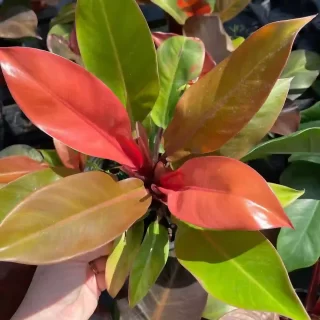
Philodendron ‘Prince of Orange’
Price range: ₹199.00 through ₹620.00Select options This product has multiple variants. The options may be chosen on the product pageSelling Size : Single Plant | Pot Included | Secure Packing The Philodendron ‘Prince of Orange’ is a stunning and popular hybrid known for its vibrant, ever-changing leaf colors. New leaves emerge as a brilliant orange or coppery color, and as they mature, they transition to a lime green, then a deep, glossy green. It …
-
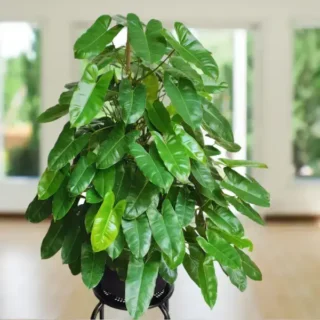
Philodendron Burle Marx Plant
Original price was: ₹485.00.₹149.00Current price is: ₹149.00.Add to cartSelling size: Single plant | Pot Included | Secure Packing The Philodendron Burle Marx is a fantastic and relatively easy-to-care-for plant, known for its glossy, spade-shaped leaves and dense, clumping growth. It’s often recommended as a great choice for beginner houseplant owners. Here is a comprehensive care guide for your Philodendron Burle Marx: Light …
-
Spanish Moss Air Plant
Price range: ₹49.00 through ₹1,699.00Select options This product has multiple variants. The options may be chosen on the product pageSelling size: PLEASE CHOOSE Spanish Moss Air Plant – CARE INSTRUCTIONS Scientific name: Tillandsia usneoides Synonyms: Old man’s beard, Spanish Moss, French Hair, Spanish Beard Spanish Moss is a delicate silvery-grey air plant that is often used to hang in trees or as a gorgeous decor piece without the need for soil. Despite its name, Spanish Moss …
-
Philodendron Moonshine
Original price was: ₹1,250.00.₹249.00Current price is: ₹249.00.Add to cartSelling size: Single plant | Pot included | Secure Packing The Philodendron Moonshine (often also called ‘Moonlight’) is a popular hybrid known for its vibrant, almost glowing, chartreuse-colored leaves. It has an upright, self-heading growth habit, so unlike many vining philodendrons, it doesn’t need a trellis or pole. Here is a comprehensive guide to caring …






 If you need any assistance, I'm always here. Have you found what you were looking for?