
Marcgravia Umbellata
Original price was: ₹1,600.00.₹1,352.00Current price is: ₹1,352.00.
Selling Size : Single Plant | Secure Packing | Free Delivery
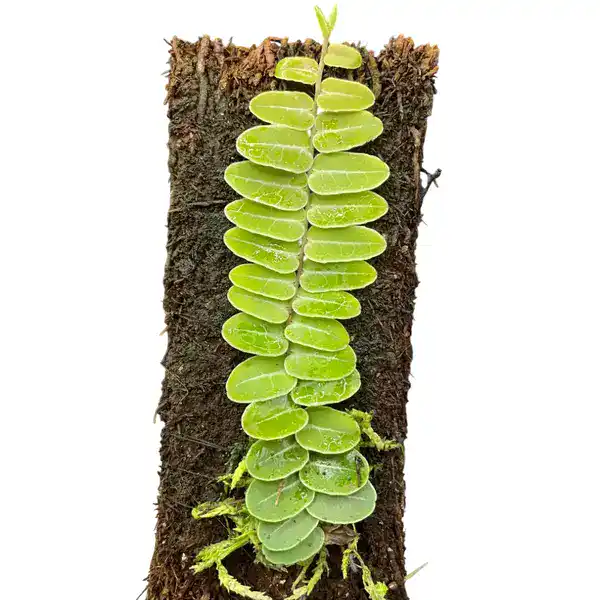
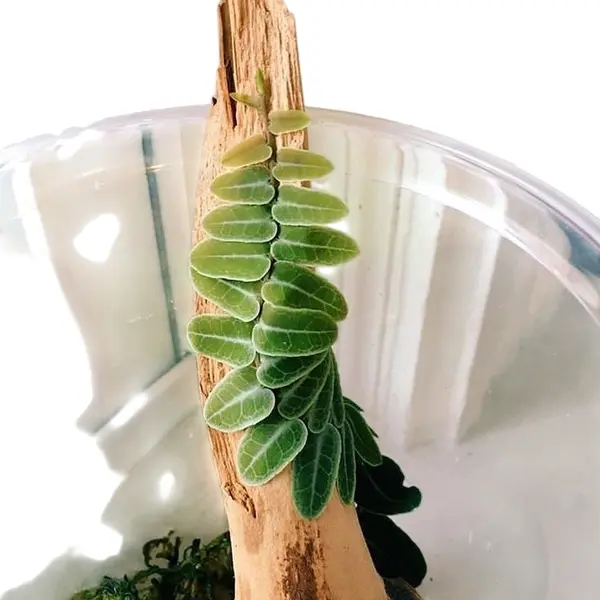
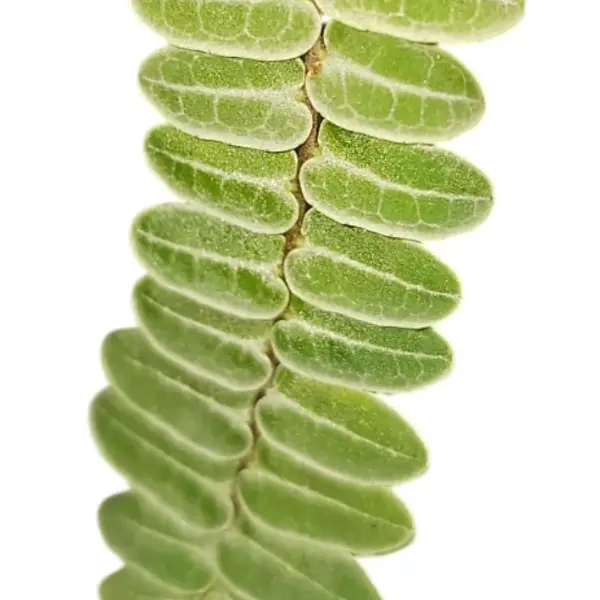
Marcgravia umbellata is a rare and fascinating tropical climbing plant known for its round, coin-like leaves that often shingle tightly against surfaces as it grows. Native to Central and South American rainforests, this plant is highly valued by terrarium growers and collectors of unusual foliage plants. With the right environment, it can grow beautifully indoors or in controlled setups like terrariums and greenhouse cabinets.
Marcgravia umbellata Care Guide :
Light Requirements
Marcgravia umbellata prefers bright, indirect light. In its natural habitat, it grows under forest canopies where sunlight is filtered. Provide medium to bright indirect light for best growth and compact leaf form. Too little light can result in slow growth and wider spacing between leaves. Direct harsh sunlight should be avoided, as it can scorch the delicate foliage. Under grow lights, keep it at a moderate distance and maintain consistent exposure for 10–12 hours daily.
Temperature
This plant thrives in warm conditions. Ideal temperatures range between 20–28°C. It does not tolerate cold drafts or sudden temperature drops. Keep it away from air conditioners, open windows at night, or cold indoor corners. Temperatures below 15°C can stress the plant and slow its growth significantly.
Humidity
High humidity is one of the most important factors for Marcgravia umbellata. Aim for humidity levels above 70% for best results. It performs exceptionally well in terrariums, plant cabinets, or greenhouses where humidity can be maintained consistently. In normal rooms, growth may be slower unless you use a humidifier or place the plant near a humidity tray. Low humidity can cause leaf curling, drying edges, or stunted growth.
Watering
Keep the growing medium consistently moist but never soggy. Marcgravia likes even moisture around its roots. Allow only the top thin layer of the medium to slightly dry before watering again. Overwatering in dense soil can lead to root rot, while letting it dry out too much can cause leaf drop and stress. Use clean, room-temperature water. In terrarium setups, monitor moisture carefully since evaporation is slower.
Growing Medium
A loose, airy, and moisture-retentive mix works best. Use a mix designed for aroids or terrarium plants — for example: coco chips, sphagnum moss, perlite, orchid bark, and a bit of peat or coco peat. Good aeration is essential because the roots like oxygen while still having access to moisture. Avoid heavy garden soil.
Support & Growth Habit
Marcgravia umbellata is a natural climber and shingling plant. It grows best when given a vertical surface such as cork bark, moss poles, tree fern fiber, or textured wood. When attached to a surface, the leaves will grow flatter and more overlapping, which is highly desirable. Without support, it may grow leggy and lose its signature shingling appearance.
Fertilizing
Feed lightly during the active growing season (spring and summer). Use a diluted balanced liquid fertilizer at about one-quarter strength every 3–4 weeks. Over-fertilizing can damage the roots and cause salt buildup, especially in terrarium environments. Reduce or stop feeding during slower winter growth.
Pruning & Maintenance
Minimal pruning is required. You can trim overly long runners to maintain shape or encourage branching. Healthy cuttings can be used for propagation. Keep leaves clean and remove any dead or decaying material quickly to prevent fungal issues in humid setups.
Propagation
Marcgravia umbellata propagates easily from stem cuttings. Take a cutting with at least one node and attach it to moist sphagnum moss or a propagation mix. High humidity and warmth greatly improve success rates. Rooting usually occurs within a few weeks.
Common Problems
Main issues include low humidity stress, overwatering, and poor airflow. Watch for fungal growth in very wet, stagnant conditions. Pests are uncommon but may include mealybugs or mites in dry environments.
With high humidity, warm temperatures, gentle light, and a climbing surface, Marcgravia umbellata becomes a stunning and unique addition to any tropical plant collection.
Related products
-
Spanish Moss Air Plant
Price range: ₹49.00 through ₹1,699.00Select options This product has multiple variants. The options may be chosen on the product pageSelling size: PLEASE CHOOSE Spanish Moss Air Plant – CARE INSTRUCTIONS Scientific name: Tillandsia usneoides Synonyms: Old man’s beard, Spanish Moss, French Hair, Spanish Beard Spanish Moss is a delicate silvery-grey air plant that is often used to hang in trees or as a gorgeous decor piece without the need for soil. Despite its name, Spanish Moss …
-
Scindapsus Pictus Exotica
Original price was: ₹380.00.₹99.00Current price is: ₹99.00.Add to cartSelling size: Single Plant | 2.5″ Pot Included The Scindapsus Pictus Exotica, also known as the silver pothos, is a houseplant with large, dark green leaves that have silver spots and mottling. Here’s a guide to caring for your Scindapsus pictus Exotica plant: Light: Prefers bright, indirect light. An east or west-facing window that’s about …
-
Dischidia nummularia (Pebble Beach/ Button Orchid)
Price range: ₹99.00 through ₹599.00Select options This product has multiple variants. The options may be chosen on the product pagePlant Size: Single plant | 2.5″ Pot Included he Dischidia nummularia, commonly known as the String of Nickels, Pebble Beach plant, or Button Orchid, is a charming epiphyte with trailing stems covered in small, round, succulent-like leaves. It’s a great choice for hanging baskets and is known for being relatively easy to care for, especially …
-
Dischidia Oiantha plant
Price range: ₹99.00 through ₹599.00Select options This product has multiple variants. The options may be chosen on the product pagePlant Size: Single plant | Secure Packing The Dischidia oiantha, often referred to as a “Hoya cousin,” is a charming, easy-to-care-for epiphyte with trailing vines and small, oval, succulent-like leaves. It’s a great choice for hanging baskets or for adding a touch of whimsy to a shelf. Here is a comprehensive guide to caring for …
-
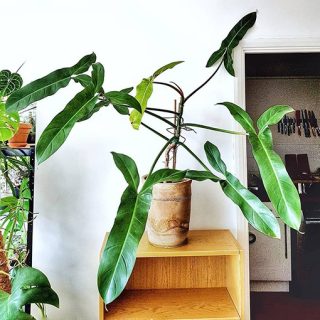
Philodendron Mexicanum
Original price was: ₹1,090.00.₹749.00Current price is: ₹749.00.Add to cartSelling size: Single Plant | Pot included The Philodendron mexicanum is a beautiful vining plant known for its long, arrow-shaped leaves with a striking deep maroon or reddish underside. As its name suggests, it is native to the tropical forests of Mexico. It’s a relatively easy-to-care-for plant, especially for those familiar with other vining philodendrons. …
-
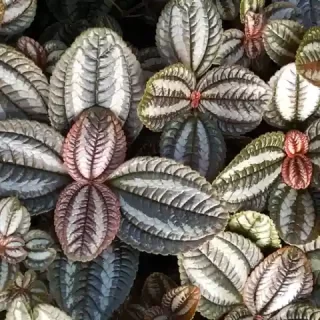
Pilea involucrata ‘Norfolk’ – Friendship Plant
Original price was: ₹450.00.₹199.00Current price is: ₹199.00.Add to cartSize: Single Plant | 2.5″ Pot Included | Free Shipping The Pilea involucrata ‘Norfolk’, commonly known as the Friendship Plant, is a delightful houseplant celebrated for its unique, velvety, quilted foliage. The leaves have a rich texture and a beautiful color palette, with deep green and bronze tones on the upper surface and a reddish-purple …
-
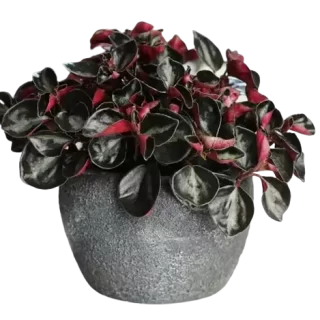
Columbian Peperomia (Galaxy pepperomia)
Original price was: ₹345.00.₹183.65Current price is: ₹183.65.Read moreSelling size:Well rooted plant in a jiffy bag The Columbian Peperomia (Peperomia metallica var. columbiana) is a visually striking and relatively low-maintenance houseplant. It is also sometimes sold as “Galaxy Peperomia,” a name that hints at its unique foliage. This plant is known for its beautiful, semi-succulent leaves that have a dark green or bronze-purple …
-
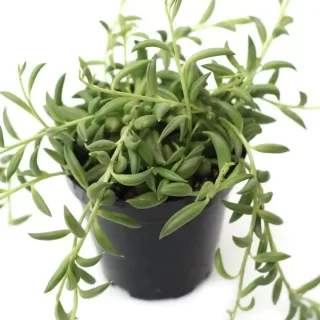
String of Bananas
Original price was: ₹450.00.₹249.00Current price is: ₹249.00.Add to cartSelling size: Mentioned in last Picture | Secure Packing The String of Bananas (Curio radicans or Senecio radicans) is a charming trailing succulent known for its long, cascading stems covered in plump, banana-shaped leaves. It’s a popular choice for hanging baskets and is generally easy to care for, especially for those who are new …



 If you need any assistance, I'm always here. Have you found what you were looking for?