

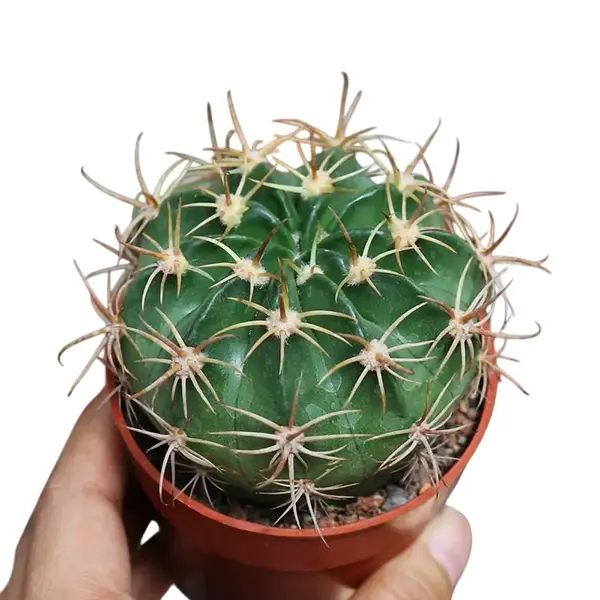
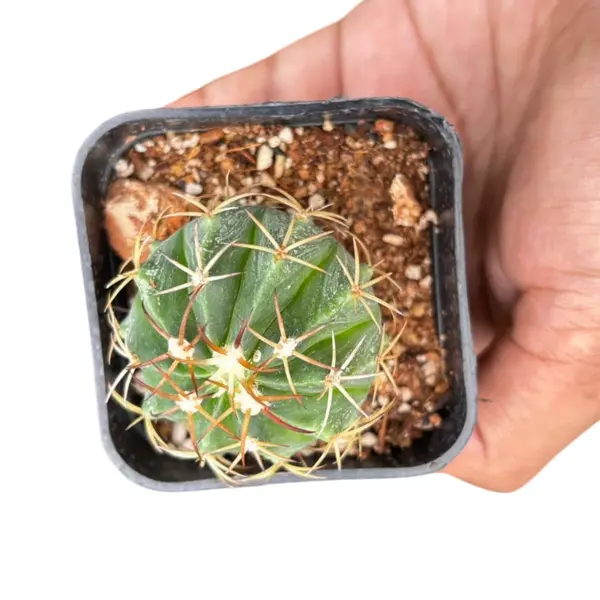
Discocactus cactus
Original price was: ₹766.00.₹425.00Current price is: ₹425.00.
Selling Size : Single Plant | Pot Included | Secure Packing
The Discocactus cactus genus is highly prized by cactus collectors, known for its flattened, globular shape and large, fragrant, nocturnal white flowers that emerge from a woolly structure on its crown called a cephalium when the plant matures.
Discocactus are often considered one of the more challenging cacti to cultivate, as they are native to warm, tropical areas of South America (Brazil, Paraguay, Bolivia) and are highly sensitive to cold and overwatering.
Here is a detailed care guide for the Discocactus cactus :
1. Light Requirements
- Bright Light: Discocactus requires bright light. They do best with several hours of direct sun in the morning and afternoon.
- Protection from Scorch: In extremely hot climates, provide light shade during the intense midday sun (12 PM to 3 PM) to prevent scorching. A slightly reddish or purplish blush on the body is often a sign of healthy, bright light exposure.
- Optimal Location: A warm, well-lit greenhouse or a sunny windowsill is ideal.
2. Watering
- Warmth and Moisture: Unlike typical desert cacti, Discocactus often comes from rocky areas with higher humidity and requires more consistent moisture during the growing season, but cannot tolerate wet feet or cold, wet soil.
- Growing Season (Spring to Early Autumn): Water moderately. Wait until the soil has mostly dried out (but not bone-dry for an extended period) before watering again. For some growers, this may be every 1-2 weeks in hot weather.
- Dormancy (Winter): This is the most critical period. Keep the plant dry and warm. Drastically reduce or stop watering completely. If your winter temperatures are slightly warmer (above ), you can give a very occasional light “sip” of water to prevent the fine roots from dying back completely, but the goal is to keep the soil mostly dry.
3. Soil and Potting
- Extremely Well-Draining and Porous: The soil must be highly aerated to prevent root rot.
- Mix: Use a very gritty, mineral-rich mix. A good ratio is to inorganic material (pumice, lava rock, coarse sand, decomposed granite) and only to organic material (like a quality cactus potting mix or decomposed leaf mold).
- Pot: Use a container with excellent drainage. Clay/Terracotta pots are highly recommended as they allow the soil to dry out faster.
- Repotting: Discocactus can be sensitive to root disturbance. Repot sparingly, only when necessary, and do it during the warmest part of the growing season.
4. Temperature
- Warmth is Essential: Discocactus are tropical cacti and demand warmth year-round.
- Growing Temperature: They thrive in temperatures between and ( and ).
- Minimum Winter Temperature: Never expose them to frost. They generally should be kept above to ( to ), especially if on their own roots. Grafted plants may tolerate slightly lower temperatures, but the warmer, the better.
5. Fertilizing
- Sparingly: Feed lightly during the active growing season (late spring to mid-summer).
- Type: Use a low-nitrogen, high-potassium (P and K) liquid fertilizer formulated for cacti and succulents, diluted to half or quarter strength, about once a month.
6. Cephalium and Flowering
- Maturity: A Discocactus will only begin to flower once it reaches maturity and develops its characteristic woolly growth on its crown, called the cephalium.
- Blooms: The flowers are typically large, white, and very fragrant. They are nocturnal (open at night) to attract moth pollinators and usually close by the following morning.
- Encouraging Blooms: Providing a consistently warm, bright, and slightly moist environment during the growing season, followed by a dry, warm winter rest, will encourage cephalium development and flowering.
Note on Grafting: Because some species (like D. horstii) can be very sensitive to root rot and slow-growing on their own roots, they are often grown as grafted plants in cultivation. A grafted plant may have slightly more resilience but still requires the same high warmth and care.
You must be logged in to post a review.
Related products
-
Scindapsus Pictus Exotica
Original price was: ₹380.00.₹99.00Current price is: ₹99.00.Add to cartSelling size: Single Plant | 2.5″ Pot Included The Scindapsus Pictus Exotica, also known as the silver pothos, is a houseplant with large, dark green leaves that have silver spots and mottling. Here’s a guide to caring for your Scindapsus pictus Exotica plant: Light: Prefers bright, indirect light. An east or west-facing window that’s about …
-
Spanish Moss Air Plant
Price range: ₹49.00 through ₹1,699.00Select options This product has multiple variants. The options may be chosen on the product pageSelling size: PLEASE CHOOSE Spanish Moss Air Plant – CARE INSTRUCTIONS Scientific name: Tillandsia usneoides Synonyms: Old man’s beard, Spanish Moss, French Hair, Spanish Beard Spanish Moss is a delicate silvery-grey air plant that is often used to hang in trees or as a gorgeous decor piece without the need for soil. Despite its name, Spanish Moss …
-
Dischidia Oiantha plant
Price range: ₹99.00 through ₹599.00Select options This product has multiple variants. The options may be chosen on the product pagePlant Size: Single plant | Secure Packing The Dischidia oiantha, often referred to as a “Hoya cousin,” is a charming, easy-to-care-for epiphyte with trailing vines and small, oval, succulent-like leaves. It’s a great choice for hanging baskets or for adding a touch of whimsy to a shelf. Here is a comprehensive guide to caring for …
-
Pellionia repens var. pulchra
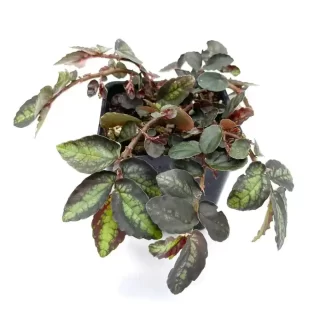
Original price was: ₹325.00.₹149.00Current price is: ₹149.00.Add to cartSelling size: Well rooted plant in a jiffy bag | Secure Packing The Pellionia repens var. pulchra, often called the Trailing Watermelon Begonia, is a beautiful and easy-to-care-for trailing plant. Its common name comes from the striking, patterned leaves that resemble the rind of a watermelon. Despite the name, it is not a true begonia …
-
Philodendron Mexicanum
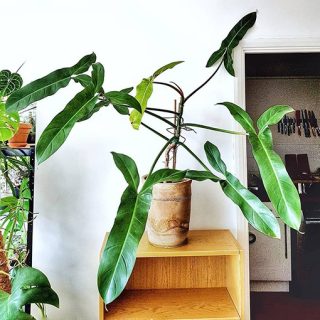
Original price was: ₹1,090.00.₹749.00Current price is: ₹749.00.Add to cartSelling size: Single Plant | Pot included The Philodendron mexicanum is a beautiful vining plant known for its long, arrow-shaped leaves with a striking deep maroon or reddish underside. As its name suggests, it is native to the tropical forests of Mexico. It’s a relatively easy-to-care-for plant, especially for those familiar with other vining philodendrons. …
-
Philodendron Xanadu
Original price was: ₹450.00.₹199.00Current price is: ₹199.00.Add to cartSelling size:Well rooted plant | 2.5″ Pot Included | Secure Packing The Philodendron Xanadu, now officially classified as Thaumatophyllum xanadu, is a fantastic and relatively easy-to-care-for houseplant. It’s known for its compact, bushy growth habit and deeply lobed, glossy green leaves that give it a sophisticated, tropical look. Here is a complete guide to caring …
-
Dischidia Ruscifolia (Million Hearts)
Price range: ₹199.00 through ₹499.00Select options This product has multiple variants. The options may be chosen on the product pagePlant Size: Single plant | 2.5″-6″ Pot Included The Dischidia Ruscifolia (Million Hearts), commonly known as the Million Hearts plant, is a delightful and easy-to-care-for trailing epiphyte. Its name comes from the abundance of small, heart-shaped leaves that densely cover its slender stems. As a member of the same family as Hoyas, its care …
-
Dischidia nummularia (Pebble Beach/ Button Orchid)
Price range: ₹99.00 through ₹599.00Select options This product has multiple variants. The options may be chosen on the product pagePlant Size: Single plant | 2.5″ Pot Included he Dischidia nummularia, commonly known as the String of Nickels, Pebble Beach plant, or Button Orchid, is a charming epiphyte with trailing stems covered in small, round, succulent-like leaves. It’s a great choice for hanging baskets and is known for being relatively easy to care for, especially …






 If you need any assistance, I'm always here. Have you found what you were looking for?
Reviews
There are no reviews yet.