
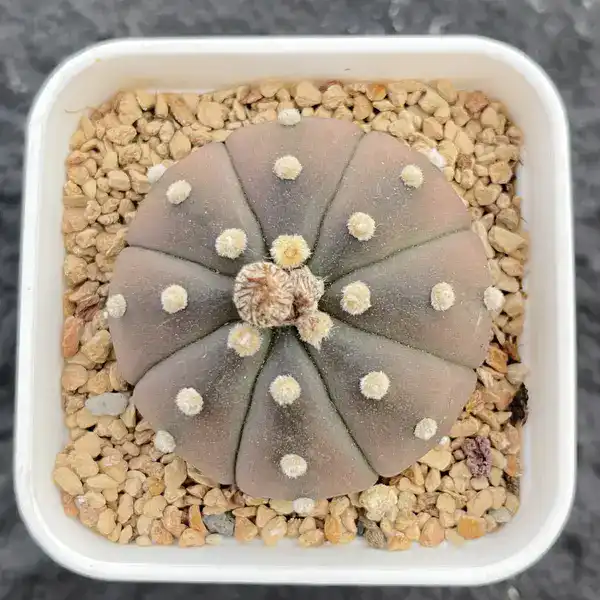
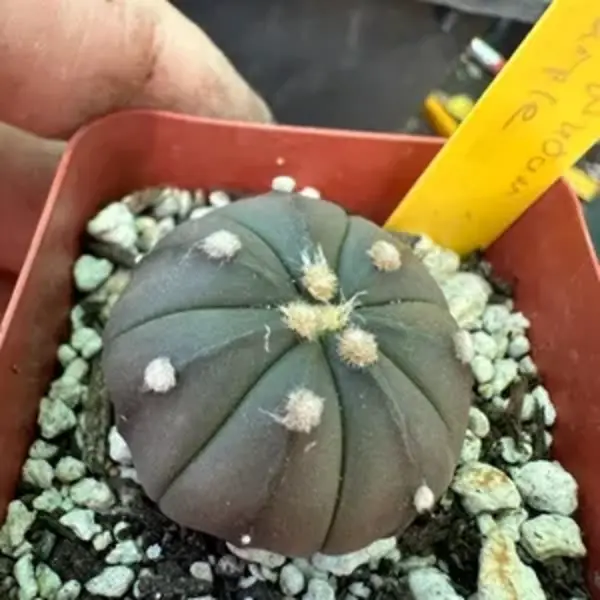
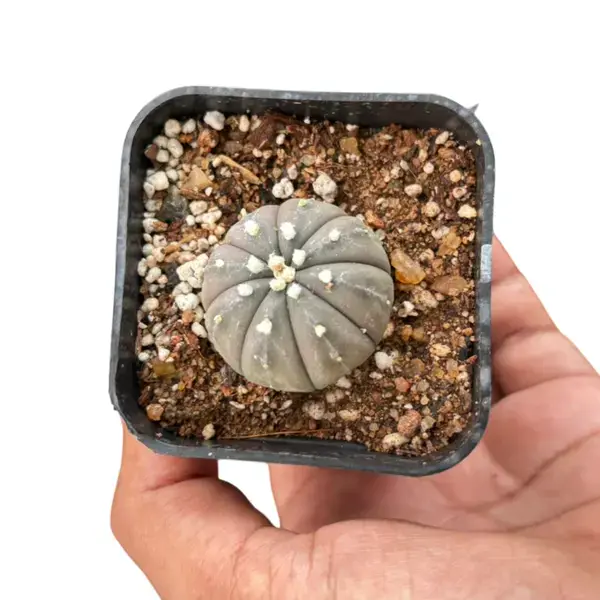
Astrophytum asterias Purple
Original price was: ₹899.00.₹449.00Current price is: ₹449.00.
Selling Size : Single Plant | Pot Included | Secure Packing
The Astrophytum asterias Purple is a highly sought-after cultivar of the Star Cactus (Sand Dollar Cactus), prized for its distinct deep purple or blackish coloration. This coloration is often a response to strong light and is a sign of a healthy, beautifully stressed plant.
Its care is similar to that of the standard Astrophytum asterias, but with a slightly greater emphasis on light to maintain its purple hue.
Here is a detailed care guide for your Astrophytum asterias Purple :
1. Light Requirements
- High Light is Key: This cultivar needs plenty of bright light to maintain its unique purple coloration.
- Indoors: Place it on a sunny windowsill, preferably facing south or west. Providing 4 to 6 hours of direct sun (or bright grow light exposure) is ideal.
- To Achieve Purple: The deep purple color is often a stress reaction to intense light and is a desired trait. If the light is too low, the plant will revert to a more standard green color.
- Caution: While it loves sun, protect it from the most intense, scorching midday sun during the hottest summer days to prevent sunburn (which appears as dry, brown spots).
2. Watering
- The “Soak and Dry” Method: Like all cacti, overwatering is the most common cause of death. Always let the soil dry out completely between waterings.
- Growing Season (Spring & Summer): Water thoroughly (until water runs out the drainage hole) only when the soil has been dry for a few days. This may be about once every 2–4 weeks, depending on heat and humidity.
- Dormancy (Autumn & Winter): Reduce watering significantly. Keep the plant perfectly dry during its winter rest period, which is essential for healthy growth and spring blooming. Water only sparingly or not at all, as cold and moisture will quickly cause root rot.
3. Soil and Potting
- Excellent Drainage is Critical: Use a very gritty, well-ddraining cactus or succulent mix.
- DIY Mix: A good formula is 70-80% inorganic material (like pumice, perlite, lava rock, or coarse sand) and 20-30% organic material (potting soil).
- Pot: Use a pot with a drainage hole. Terracotta pots are preferred as they allow the soil to breathe and dry out quicker.
- Repotting: This is a slow-growing cactus. Repot only every 2–3 years, or when it has clearly outgrown its container. Always repot in spring before the new growing season starts.
4. Temperature
- Warmth is Ideal: It prefers warm temperatures during the growing season, ideally between and ( and ).
- Winter Rest: During winter dormancy, it can tolerate slightly cooler temperatures (around to ( to )) provided it is kept completely dry. It is not frost-tolerant and must be protected from freezing.
5. Fertilizing
- Minimal Feeding: Fertilizing is not strictly necessary but can support growth.
- When to Feed: If you choose to fertilize, do so lightly 1–2 times during the active growing period (late spring/early summer).
- What to Use: Use a specialized low-nitrogen cactus fertilizer diluted to half strength.
6. Common Issues
- Root Rot: Indicated by a soft, mushy base, usually caused by overwatering, especially in winter.
- Shrinking/Wrinkling: A sign of dehydration. If the soil is dry, give it a deep drink. If the soil is wet, it might be root rot.
- Flowering: Mature plants typically bloom in the spring and summer with large, star-like yellow flowers (sometimes with a red/orange center). Consistent light and a cool, dry winter rest period encourage flowering.
You must be logged in to post a review.
Related products
-
Philodendron Xanadu
Original price was: ₹450.00.₹199.00Current price is: ₹199.00.Add to cartSelling size:Well rooted plant | 2.5″ Pot Included | Secure Packing The Philodendron Xanadu, now officially classified as Thaumatophyllum xanadu, is a fantastic and relatively easy-to-care-for houseplant. It’s known for its compact, bushy growth habit and deeply lobed, glossy green leaves that give it a sophisticated, tropical look. Here is a complete guide to caring …
-
Pilea involucrata ‘Norfolk’ – Friendship Plant
Original price was: ₹450.00.₹199.00Current price is: ₹199.00.Add to cartSize: Single Plant | 2.5″ Pot Included | Free Shipping The Pilea involucrata ‘Norfolk’, commonly known as the Friendship Plant, is a delightful houseplant celebrated for its unique, velvety, quilted foliage. The leaves have a rich texture and a beautiful color palette, with deep green and bronze tones on the upper surface and a reddish-purple …
-
Chlorophytum Spider Live Plant
Original price was: ₹249.00.₹99.00Current price is: ₹99.00.Add to cartSelling size: Well rooted Single plant | 2.5″ Pot included Chlorophytum Spider, also the Spider Plant is an impressive houseplant which is the perfect plant for any beginner. A NASA certified air purifier, its long, green foliage with white variegations look good in both hanging planters and as desktop setups. In favourable conditions, it blooms …
-
String Of Nickels (Dischidia nummularia)
Price range: ₹99.00 through ₹599.00Select options This product has multiple variants. The options may be chosen on the product pageSelling size: Well rooted plant in a Jiffy bag The Dischidia nummularia, commonly known as the String of Nickels or Button Orchid, is a delightful and easy-to-care-for trailing epiphyte. Its common name comes from its small, round, coin-shaped leaves that densely cover its long, slender stems. As a relative of the Hoya, it shares a similar …
-
Spanish Moss Air Plant
Price range: ₹49.00 through ₹1,699.00Select options This product has multiple variants. The options may be chosen on the product pageSelling size: PLEASE CHOOSE Spanish Moss Air Plant – CARE INSTRUCTIONS Scientific name: Tillandsia usneoides Synonyms: Old man’s beard, Spanish Moss, French Hair, Spanish Beard Spanish Moss is a delicate silvery-grey air plant that is often used to hang in trees or as a gorgeous decor piece without the need for soil. Despite its name, Spanish Moss …
-
Dischidia Ruscifolia (Million Hearts)
Price range: ₹199.00 through ₹499.00Select options This product has multiple variants. The options may be chosen on the product pagePlant Size: Single plant | 2.5″-6″ Pot Included The Dischidia Ruscifolia (Million Hearts), commonly known as the Million Hearts plant, is a delightful and easy-to-care-for trailing epiphyte. Its name comes from the abundance of small, heart-shaped leaves that densely cover its slender stems. As a member of the same family as Hoyas, its care …
-
Dischidia nummularia (Pebble Beach/ Button Orchid)
Price range: ₹99.00 through ₹599.00Select options This product has multiple variants. The options may be chosen on the product pagePlant Size: Single plant | 2.5″ Pot Included he Dischidia nummularia, commonly known as the String of Nickels, Pebble Beach plant, or Button Orchid, is a charming epiphyte with trailing stems covered in small, round, succulent-like leaves. It’s a great choice for hanging baskets and is known for being relatively easy to care for, especially …
-
Pellionia repens var. pulchra
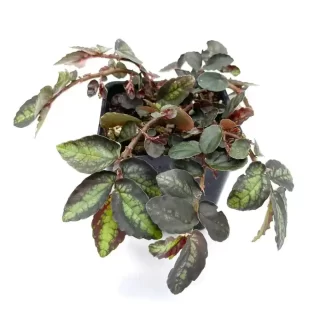
Original price was: ₹325.00.₹149.00Current price is: ₹149.00.Add to cartSelling size: Well rooted plant in a jiffy bag | Secure Packing The Pellionia repens var. pulchra, often called the Trailing Watermelon Begonia, is a beautiful and easy-to-care-for trailing plant. Its common name comes from the striking, patterned leaves that resemble the rind of a watermelon. Despite the name, it is not a true begonia …






 If you need any assistance, I'm always here. Have you found what you were looking for?
Reviews
There are no reviews yet.