
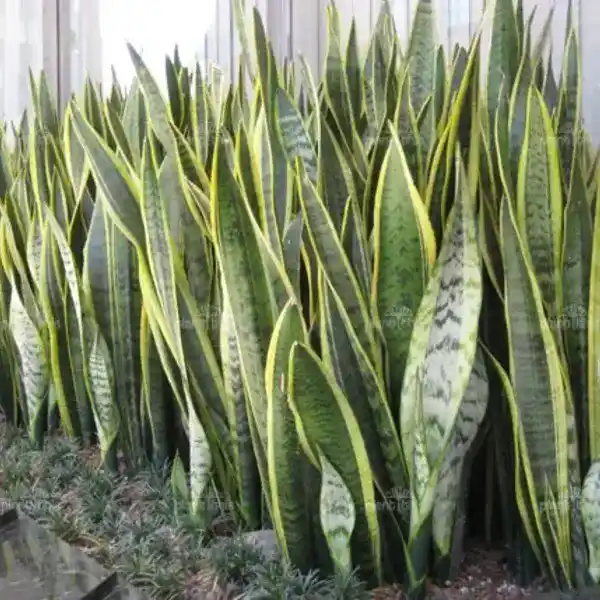
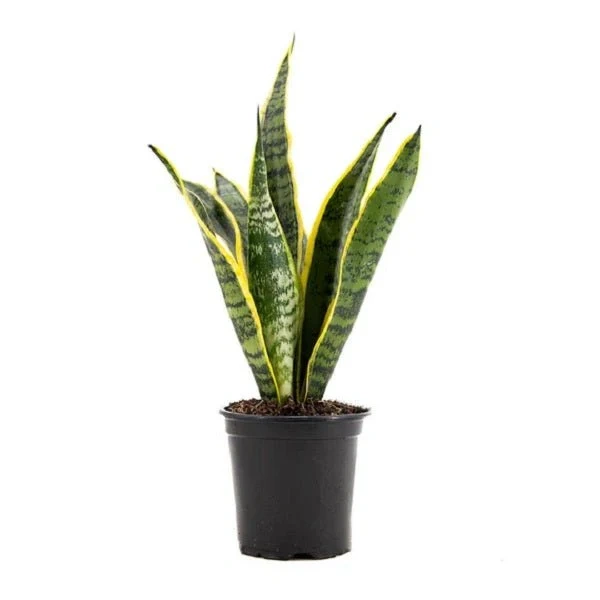
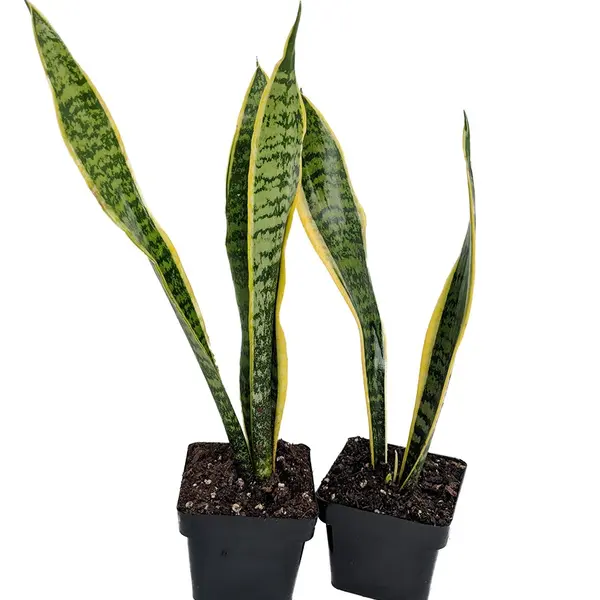
Sansevieria Trifasciata Laurentii Snake Plant
Original price was: ₹949.00.₹349.00Current price is: ₹349.00.
Selling Size : Single Plant | Pot Included | Secure Packing
The Sansevieria Trifasciata Laurentii Snake Plant or variegated snake plant is a popular and low-maintenance houseplant, perfect for beginners.
Here’s a guide care for Sansevieria Trifasciata Laurentii Snake Plant :
1. Watering:
- The most common mistake is overwatering. Snake plants are succulents and store water in their leaves.
- Allow the soil to dry out completely between waterings.
- Water less frequently in the fall and winter when the plant’s growth slows.
- Check the soil by sticking your finger about two inches down. If it feels moist, wait to water.
- When you do water, water thoroughly until the water drains out of the pot’s drainage holes.
2. Light:
- Snake plants are incredibly adaptable and can tolerate a wide range of light conditions, from low light to bright, indirect sunlight.
- For the best growth and to maintain the vibrant yellow variegation on the leaves, place your plant in a spot with bright, indirect light.
- Avoid prolonged, direct sunlight, as it can scorch the leaves.
3. Soil & Potting:
- Use a well-draining potting mix. A mix designed for cacti and succulents is ideal.
- Ensure the pot has a drainage hole to prevent water from pooling at the bottom and causing root rot.
- Snake plants prefer to be a bit root-bound, so you don’t need to repot often—typically every 2-3 years. Repot in the spring.
4. Temperature & Humidity:
- These plants thrive in warm temperatures, ideally between 60°F and 80°F (15°C – 27°C).
- They are not tolerant of cold temperatures. Keep them away from cold drafts and temperatures below 50°F (10°C).
- Average household humidity is perfectly fine. They do not require misting.
5. Fertilizing:
- Sansevieria are not heavy feeders.
- You can feed them with a general-purpose houseplant fertilizer diluted to half strength once a month during the spring and summer growing season.
- Do not fertilize in the fall and winter.
6. Pruning & Maintenance:
- You can wipe the leaves occasionally with a damp cloth to remove dust and help the plant photosynthesize.
- Prune off any damaged, yellowing, or brown leaves at the base using a clean, sharp tool.
- You can also propagate new plants from leaf cuttings or by dividing the plant.
You must be logged in to post a review.
Related products
-
Scindapsus Pictus Exotica
Original price was: ₹380.00.₹99.00Current price is: ₹99.00.Add to cartSelling size: Single Plant | 2.5″ Pot Included The Scindapsus Pictus Exotica, also known as the silver pothos, is a houseplant with large, dark green leaves that have silver spots and mottling. Here’s a guide to caring for your Scindapsus pictus Exotica plant: Light: Prefers bright, indirect light. An east or west-facing window that’s about …
-
Philodendron Moonshine
Original price was: ₹1,250.00.₹249.00Current price is: ₹249.00.Add to cartSelling size: Single plant | Pot included | Secure Packing The Philodendron Moonshine (often also called ‘Moonlight’) is a popular hybrid known for its vibrant, almost glowing, chartreuse-colored leaves. It has an upright, self-heading growth habit, so unlike many vining philodendrons, it doesn’t need a trellis or pole. Here is a comprehensive guide to caring …
-
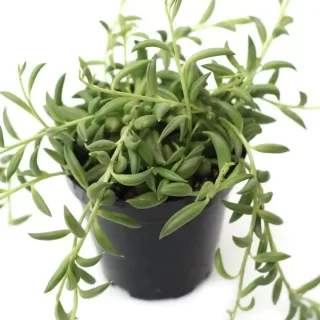
String of Bananas
Original price was: ₹450.00.₹249.00Current price is: ₹249.00.Add to cartSelling size: Mentioned in last Picture | Secure Packing The String of Bananas (Curio radicans or Senecio radicans) is a charming trailing succulent known for its long, cascading stems covered in plump, banana-shaped leaves. It’s a popular choice for hanging baskets and is generally easy to care for, especially for those who are new …
-
Columbian Peperomia (Galaxy pepperomia)
Original price was: ₹345.00.₹183.65Current price is: ₹183.65.Read moreSelling size:Well rooted plant in a jiffy bag The Columbian Peperomia (Peperomia metallica var. columbiana) is a visually striking and relatively low-maintenance houseplant. It is also sometimes sold as “Galaxy Peperomia,” a name that hints at its unique foliage. This plant is known for its beautiful, semi-succulent leaves that have a dark green or bronze-purple …
-
Chlorophytum Spider Live Plant
Original price was: ₹249.00.₹99.00Current price is: ₹99.00.Add to cartSelling size: Well rooted Single plant | 2.5″ Pot included Chlorophytum Spider, also the Spider Plant is an impressive houseplant which is the perfect plant for any beginner. A NASA certified air purifier, its long, green foliage with white variegations look good in both hanging planters and as desktop setups. In favourable conditions, it blooms …
-
Golden Sedum Plant
Original price was: ₹549.00.₹349.00Current price is: ₹349.00.Add to cartSelling size: Well rooted plan | 2.5″ pot included The Golden Sedum (Sedum adolphii) is a popular succulent known for its bright, fleshy, evergreen leaves that can take on a beautiful golden-yellow or even reddish-pink tint in bright sun. It has a trailing or spreading growth habit, making it a great choice for hanging baskets, …
-
Dischidia Ruscifolia (Million Hearts)
Price range: ₹199.00 through ₹499.00Select options This product has multiple variants. The options may be chosen on the product pagePlant Size: Single plant | 2.5″-6″ Pot Included The Dischidia Ruscifolia (Million Hearts), commonly known as the Million Hearts plant, is a delightful and easy-to-care-for trailing epiphyte. Its name comes from the abundance of small, heart-shaped leaves that densely cover its slender stems. As a member of the same family as Hoyas, its care …
-
Dischidia Oiantha plant
Price range: ₹99.00 through ₹599.00Select options This product has multiple variants. The options may be chosen on the product pagePlant Size: Single plant | Secure Packing The Dischidia oiantha, often referred to as a “Hoya cousin,” is a charming, easy-to-care-for epiphyte with trailing vines and small, oval, succulent-like leaves. It’s a great choice for hanging baskets or for adding a touch of whimsy to a shelf. Here is a comprehensive guide to caring for …






 If you need any assistance, I'm always here. Have you found what you were looking for?
Reviews
There are no reviews yet.