
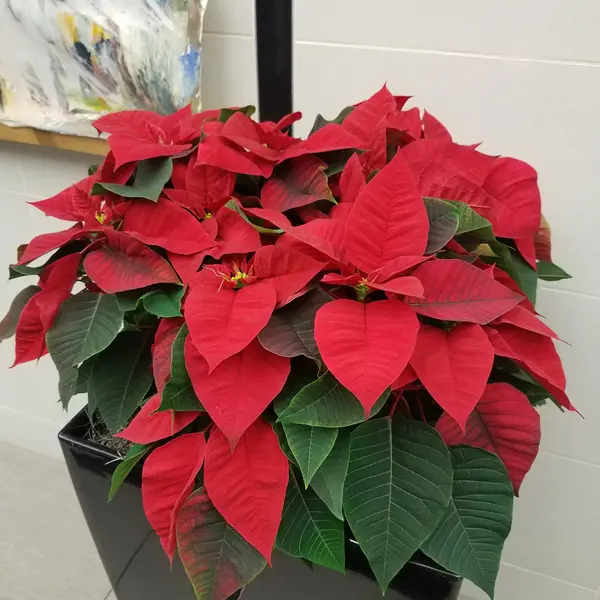

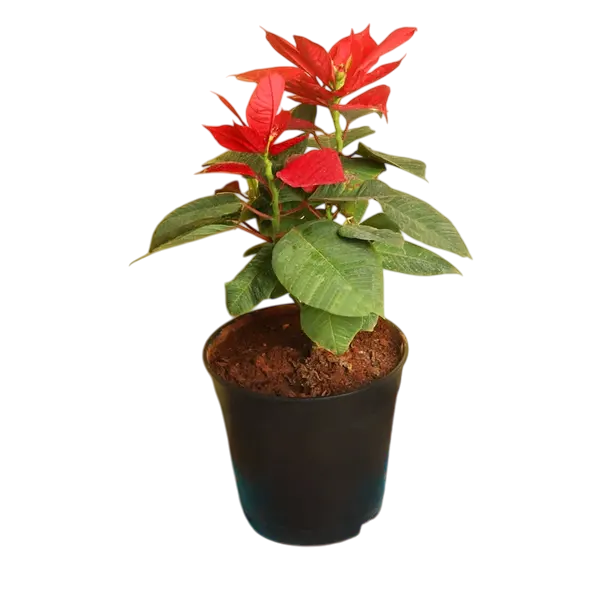
Red Poinsettia Plant
Original price was: ₹799.00.₹475.00Current price is: ₹475.00.
Selling Size : Single Plant | Pot Included | Secure Packing
The Red Poinsettia Plant (Euphorbia pulcherrima) is one of the world’s most iconic holiday plants, known for its striking red bracts and deep green foliage. Though commonly associated with Christmas décor, Poinsettias can thrive year-round as beautiful indoor plants with the right care. They are moderately easy to maintain but require attention to light, temperature, and moisture levels to stay healthy and vibrant.
Red Poinsettia Plant Care – Complete Guide:
🌞 Light Requirements
Poinsettias need bright, indirect light to maintain strong color and compact growth.
-
Place the plant near an east- or west-facing window, where it receives gentle light for a few hours.
-
Harsh midday sunlight can scorch the leaves.
-
Low light causes bracts to fade early and leads to leggy stems.
If growing indoors in low-light homes, consider supplemental LED grow lights kept at least 30–40 cm away.
💧 Watering Needs
Watering is crucial for a healthy Red Poinsettia. The plant dislikes both soggy soil and prolonged dryness.
-
Water when the top 3–4 cm of soil feels dry.
-
Always ensure the pot has drainage holes.
-
Empty the saucer after watering—standing water causes root rot.
-
Avoid overwatering during winter, when growth naturally slows.
Signs of overwatering include yellow leaves and sudden leaf drop. Underwatering leads to drooping and crispy leaf edges.
🌱 Soil Requirements
To keep your Poinsettia healthy, use a well-draining but moisture-retentive soil mix.
Ideal soil mix:
-
40% coco peat or peat moss
-
30% compost or aged cow dung
-
20% perlite
-
10% coarse sand
This mix ensures aeration around the roots and prevents waterlogging while maintaining enough moisture for the plant.
🌡️ Temperature & Climate
Red Poinsettias thrive in warm, stable indoor temperatures.
-
Ideal range: 18°C – 25°C
-
Avoid cold drafts from windows, AC vents, or doors.
-
Do not expose the plant to temperatures below 12°C, as this can cause leaf drop.
-
High heat from direct sun or heaters can scorch the foliage.
They also dislike sudden temperature changes, which can stress the plant and reduce the life of the bracts.
💦 Humidity Needs
Poinsettias prefer moderate humidity.
-
Ideal humidity: 45–60%
-
Dry indoor air—especially during winter—may cause leaf curl or browning edges.
You can maintain humidity by:
-
Placing a pebble tray beneath the pot
-
Grouping plants together
-
Running a humidifier nearby (avoid blowing directly on the plant)
Do not mist the leaves unnecessarily, as this can encourage fungal problems.
🌿 Fertilizing Routine
Feed the Red Poinsettia during its active growing months.
Fertilizer guidelines:
-
Feed once every 20–30 days from March to September.
-
Use a balanced liquid fertilizer such as NPK 10-10-10 at half strength.
-
Organic options like seaweed extract, compost tea, or diluted cow dung slurry are also effective.
Avoid fertilizing during the bract-coloring phase (October–December), as excessive feeding can affect blooming.
✂️ Pruning & Maintenance
Pruning is essential for shaping the plant and encouraging bushier growth.
-
Prune back the stems by one-third in late spring.
-
Remove any faded leaves or bracts.
-
Pinch new tips during summer to promote compact growth.
-
Keep the plant clean by wiping leaves with a soft cloth.
Avoid cutting the main stem during the blooming season.
🌸 Reblooming (Coloring Again Next Season)
To get the bright red bracts again the next year, you must give the plant short-day treatment.
-
From September to early December, provide 14 hours of complete darkness every night.
-
Keep it in a dark cupboard/box from evening to morning.
-
Ensure it receives bright light during the daytime.
This treatment triggers bract coloration and helps the plant bloom right on time for the festive season.
🐛 Pests & Diseases
Most common problems:
-
Whiteflies
-
Mealybugs
-
Spider mites
-
Root rot from overwatering
-
Fungal leaf spots
Spray neem oil every 10–15 days as a preventive measure. Improve ventilation and avoid overwatering to prevent diseases.
🪴 Repotting
Repot the plant:
-
Every 1–2 years
-
During spring, after the bracts fade
-
Move to a pot only one size larger
Ensure fresh soil for better growth and root health.
🌼 Final Note
With proper light, consistent watering, and moderate humidity, the Red Poinsettia becomes a stunning year-round houseplant. Whether used for seasonal décor or as a permanent indoor beauty, this vibrant red-bracted plant is sure to add color and charm to your space.
Related products
-
Philodendron Xanadu
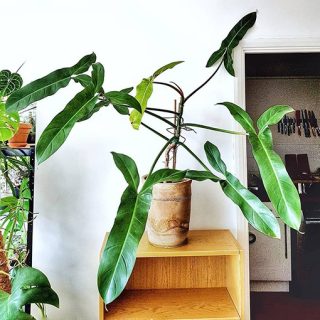
Original price was: ₹450.00.₹199.00Current price is: ₹199.00.Add to cartSelling size:Well rooted plant | 2.5″ Pot Included | Secure Packing The Philodendron Xanadu, now officially classified as Thaumatophyllum xanadu, is a fantastic and relatively easy-to-care-for houseplant. It’s known for its compact, bushy growth habit and deeply lobed, glossy green leaves that give it a sophisticated, tropical look. Here is a complete guide to caring …
-
Philodendron Mexicanum
Original price was: ₹1,090.00.₹749.00Current price is: ₹749.00.Add to cartSelling size: Single Plant | Pot included The Philodendron mexicanum is a beautiful vining plant known for its long, arrow-shaped leaves with a striking deep maroon or reddish underside. As its name suggests, it is native to the tropical forests of Mexico. It’s a relatively easy-to-care-for plant, especially for those familiar with other vining philodendrons. …
-
Philodendron Mican plant
Original price was: ₹650.00.₹99.00Current price is: ₹99.00.Add to cartSelling size: A well rooted plant | 2.5″ Pot Included The Philodendron Micans (Philodendron hederaceum ‘Micans’), also known as the Velvet-Leaf Philodendron, is a popular, easy-care trailing or climbing houseplant prized for its unique, velvety, heart-shaped leaves that emerge a beautiful chartreuse/pink and mature to a deep, iridescent, bronze-green with hints of purple. Here is …
-
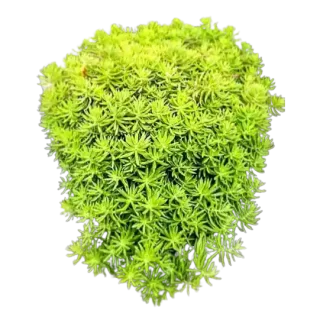
Golden Sedum Plant
Original price was: ₹549.00.₹349.00Current price is: ₹349.00.Add to cartSelling size: Well rooted plan | 2.5″ pot included The Golden Sedum (Sedum adolphii) is a popular succulent known for its bright, fleshy, evergreen leaves that can take on a beautiful golden-yellow or even reddish-pink tint in bright sun. It has a trailing or spreading growth habit, making it a great choice for hanging baskets, …
-
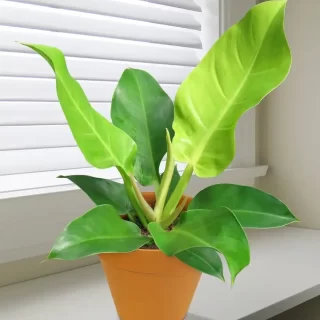
Philodendron Moonshine
Original price was: ₹1,250.00.₹249.00Current price is: ₹249.00.Add to cartSelling size: Single plant | Pot included | Secure Packing The Philodendron Moonshine (often also called ‘Moonlight’) is a popular hybrid known for its vibrant, almost glowing, chartreuse-colored leaves. It has an upright, self-heading growth habit, so unlike many vining philodendrons, it doesn’t need a trellis or pole. Here is a comprehensive guide to caring …
-
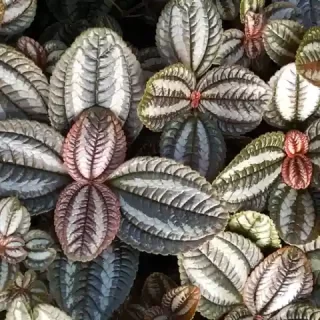
Pilea involucrata ‘Norfolk’ – Friendship Plant
Original price was: ₹450.00.₹199.00Current price is: ₹199.00.Add to cartSize: Single Plant | 2.5″ Pot Included | Free Shipping The Pilea involucrata ‘Norfolk’, commonly known as the Friendship Plant, is a delightful houseplant celebrated for its unique, velvety, quilted foliage. The leaves have a rich texture and a beautiful color palette, with deep green and bronze tones on the upper surface and a reddish-purple …
-
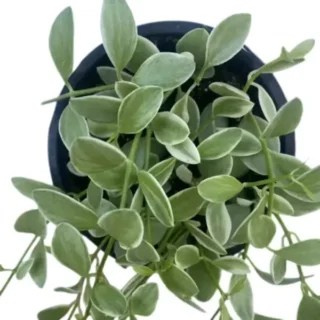
Dischidia nummularia (Pebble Beach/ Button Orchid)
Price range: ₹99.00 through ₹599.00Select options This product has multiple variants. The options may be chosen on the product pagePlant Size: Single plant | 2.5″ Pot Included he Dischidia nummularia, commonly known as the String of Nickels, Pebble Beach plant, or Button Orchid, is a charming epiphyte with trailing stems covered in small, round, succulent-like leaves. It’s a great choice for hanging baskets and is known for being relatively easy to care for, especially …

 If you need any assistance, I'm always here. Have you found what you were looking for?