

Poovan banana
Original price was: ₹399.00.₹175.00Current price is: ₹175.00.
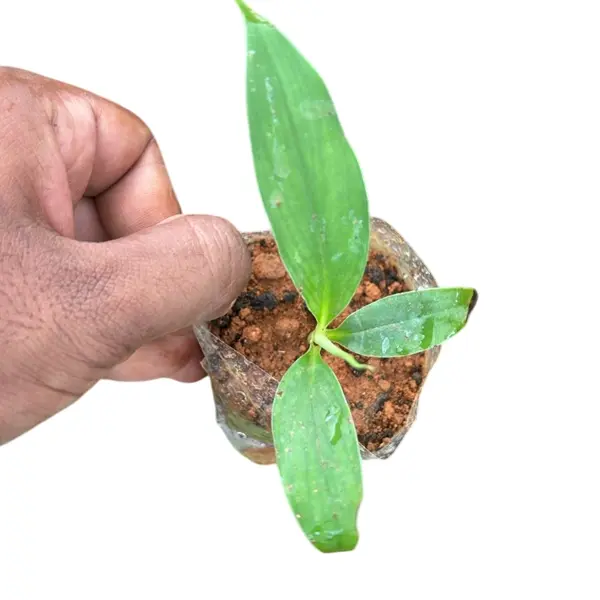
Selling Size : Single Plant | Pot Included | Secure Packing
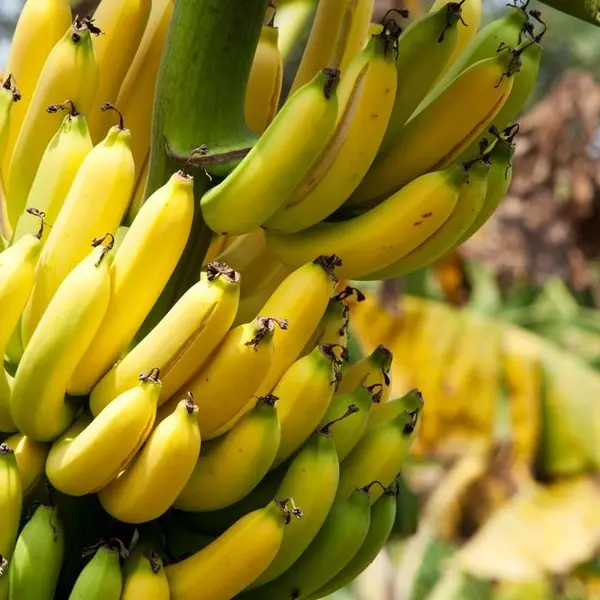
Poovan banana, also known as Poovan Pazham or Karpuravalli, is one of the most popular South Indian backyard banana varieties loved for its sweet aroma, smooth texture, and excellent shelf life. It is a hardy, fast-growing variety that adapts well to tropical climates, making it a favourite among home gardeners and small farmers. With the right care, Poovan bananas produce strong bunches with 8–12 hands and remain relatively resistant to common diseases compared to other cultivars.
Below is a detailed care guide to help you grow a healthy and productive Poovan banana plant.
Poovan Banana Care – Complete Guide:
1. Ideal Climate and Sunlight
Poovan bananas thrive best in warm, humid, tropical climates, such as those in Kerala, Tamil Nadu, and Karnataka.
Requirements
-
Sunlight: A minimum of 6–8 hours of direct sunlight daily.
-
Temperature: Prefers 25–35°C. Growth slows below 18°C.
-
Humidity: Moderate to high humidity ensures smooth leaf development.
-
Wind Protection: Young plants are sensitive to heavy winds. Use windbreaks or grow near a protective wall.
2. Soil Conditions
Healthy soil is the foundation for a strong, disease-free banana plant.
Best soil type
-
Loamy, fertile, well-draining soil
-
Soil pH: 5.5 to 7
-
Organic matter must be high for continuous nutrient supply.
Soil preparation
Before planting:
-
Mix 2–3 kg well-decomposed cow dung/compost per planting pit.
-
Add neem cake (200 g) to prevent soil pests.
-
Ensure good drainage; Poovan does not like standing water around the rhizome.
3. Planting and Spacing
Poovan is a medium-sized banana variety.
Spacing
-
Maintain 1.8–2 meters between plants.
-
Plant in pits of 45 x 45 x 45 cm enriched with compost.
Planting method
-
Place the sucker upright in the pit.
-
Firm the soil around the base.
-
Water deeply after planting.
4. Watering Requirements
Bananas need consistent moisture for quick growth.
Watering tips
-
Water the plant 2–3 times a week during dry months.
-
Reduce frequency during rainy season to prevent rot.
-
Keep the soil evenly moist but never waterlogged.
-
Mulch with dried leaves or coconut husk to retain moisture.
5. Fertilizer Schedule
Poovan is a heavy feeder. A regular feeding cycle boosts leaf production and fruit quality.
Recommended feeding
-
Organic compost/cow dung: 2–3 kg every 45 days
-
NPK 5:10:10 or 10:10:10: 100–150 g every 60 days
-
Banana special micronutrient mix: boosts fruiting
-
Apply potash-rich fertilizer during bunch formation for larger fruits.
Fertilizer tips
-
Always water after adding fertilizers.
-
Avoid placing fertilizers directly on the pseudostem.
6. Pruning and Maintenance
Proper maintenance ensures maximum yield.
Steps
-
Remove dried leaves every 2–3 weeks.
-
Allow only one main plant + 1 follower sucker to grow.
-
Remove all other unwanted suckers.
-
Support the plant with a bamboo pole when it starts fruiting to prevent bending.
-
Apply mulch to improve moisture retention and soil health.
7. Pests and Diseases
Poovan banana is moderately resistant but still requires monitoring.
Common issues
-
Banana weevil
-
Aphids
-
Nematodes
-
Sigatoka leaf spot (fungal)
Prevention
-
Apply neem oil spray every 15 days.
-
Maintain clean soil and remove dried leaves promptly.
-
Ensure good air circulation around the plant.
8. Flowering and Fruiting
Poovan usually flowers in 8–12 months depending on care.
Tips for better fruiting
-
Provide high potassium during flower emergence.
-
Remove the male flower (banana heart) once the last hand forms.
-
Cover bunches with a banana bunch cover to protect from insects and sunburn.
The fruits mature in 90–110 days after flowering.
9. Harvesting
Harvest when bananas turn light green to yellowish and the edges become rounded.
-
Cut the bunch carefully without damaging the trunk.
-
Store in a cool, dry place for natural ripening.
Related products
-
Dischidia Oiantha plant
Price range: ₹99.00 through ₹599.00Select options This product has multiple variants. The options may be chosen on the product pagePlant Size: Single plant | Secure Packing The Dischidia oiantha, often referred to as a “Hoya cousin,” is a charming, easy-to-care-for epiphyte with trailing vines and small, oval, succulent-like leaves. It’s a great choice for hanging baskets or for adding a touch of whimsy to a shelf. Here is a comprehensive guide to caring for …
-
Pilea Repens, Black Panamiga
Original price was: ₹280.00.₹149.00Current price is: ₹149.00.Add to cartSize: Single Plant | Jiffy Bag Caring for a Pilea Ripens (also known as Black Panamiga) involves understanding its specific needs to ensure it thrives. Here’s a breakdown of Pilea Repens, Black Panamiga key care aspects: Key Care Points: Light: Pilea repens prefers bright, indirect sunlight. Direct sunlight can scorch its leaves. Rotating the plant …
-
Pilea involucrata ‘Norfolk’ – Friendship Plant
Original price was: ₹450.00.₹199.00Current price is: ₹199.00.Add to cartSize: Single Plant | 2.5″ Pot Included | Free Shipping The Pilea involucrata ‘Norfolk’, commonly known as the Friendship Plant, is a delightful houseplant celebrated for its unique, velvety, quilted foliage. The leaves have a rich texture and a beautiful color palette, with deep green and bronze tones on the upper surface and a reddish-purple …
-
Pellionia repens var. pulchra
Original price was: ₹325.00.₹149.00Current price is: ₹149.00.Add to cartSelling size: Well rooted plant in a jiffy bag | Secure Packing The Pellionia repens var. pulchra, often called the Trailing Watermelon Begonia, is a beautiful and easy-to-care-for trailing plant. Its common name comes from the striking, patterned leaves that resemble the rind of a watermelon. Despite the name, it is not a true begonia …
-
Philodendron Moonshine
Original price was: ₹1,250.00.₹249.00Current price is: ₹249.00.Add to cartSelling size: Single plant | Pot included | Secure Packing The Philodendron Moonshine (often also called ‘Moonlight’) is a popular hybrid known for its vibrant, almost glowing, chartreuse-colored leaves. It has an upright, self-heading growth habit, so unlike many vining philodendrons, it doesn’t need a trellis or pole. Here is a comprehensive guide to caring …
-
Golden Sedum Plant
Original price was: ₹549.00.₹349.00Current price is: ₹349.00.Add to cartSelling size: Well rooted plan | 2.5″ pot included The Golden Sedum (Sedum adolphii) is a popular succulent known for its bright, fleshy, evergreen leaves that can take on a beautiful golden-yellow or even reddish-pink tint in bright sun. It has a trailing or spreading growth habit, making it a great choice for hanging baskets, …
-
Columbian Peperomia (Galaxy pepperomia)
Original price was: ₹345.00.₹183.65Current price is: ₹183.65.Read moreSelling size:Well rooted plant in a jiffy bag The Columbian Peperomia (Peperomia metallica var. columbiana) is a visually striking and relatively low-maintenance houseplant. It is also sometimes sold as “Galaxy Peperomia,” a name that hints at its unique foliage. This plant is known for its beautiful, semi-succulent leaves that have a dark green or bronze-purple …
-
Dischidia Ruscifolia (Million Hearts)
Price range: ₹199.00 through ₹499.00Select options This product has multiple variants. The options may be chosen on the product pagePlant Size: Single plant | 2.5″-6″ Pot Included The Dischidia Ruscifolia (Million Hearts), commonly known as the Million Hearts plant, is a delightful and easy-to-care-for trailing epiphyte. Its name comes from the abundance of small, heart-shaped leaves that densely cover its slender stems. As a member of the same family as Hoyas, its care …








 If you need any assistance, I'm always here. Have you found what you were looking for?