
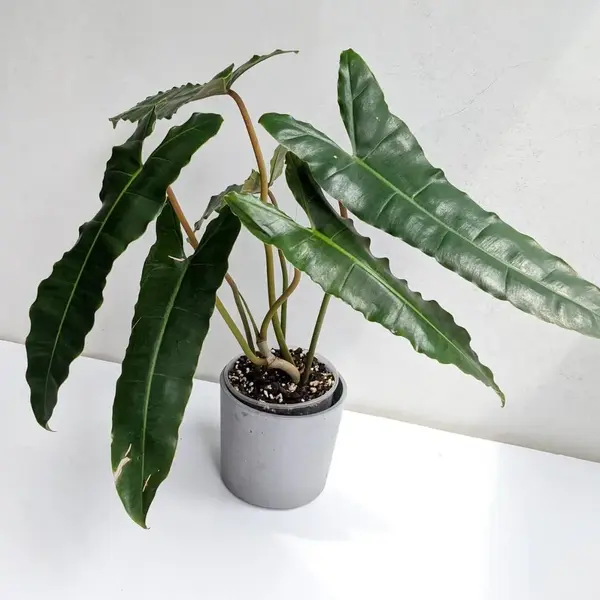
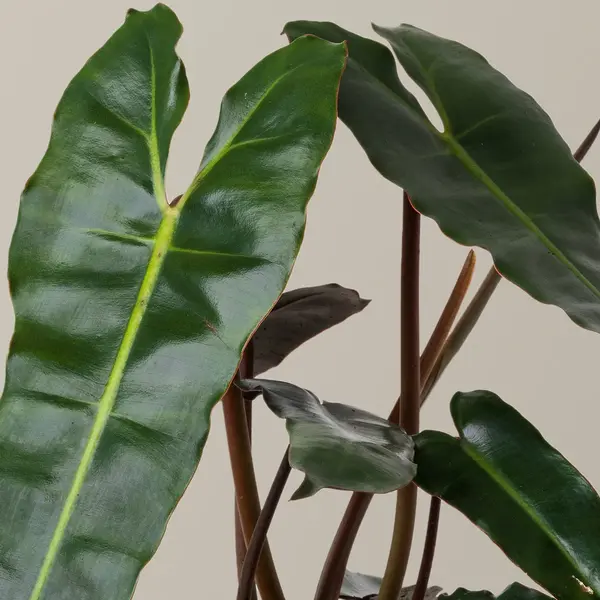
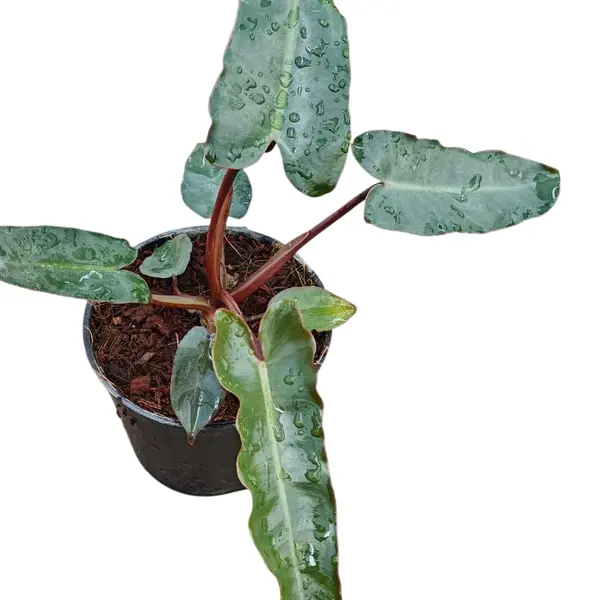
Philodendron Black Billietiae
Original price was: ₹1,299.00.₹449.00Current price is: ₹449.00.
Selling Size : Single Plant | Pot Included | Secure Packing
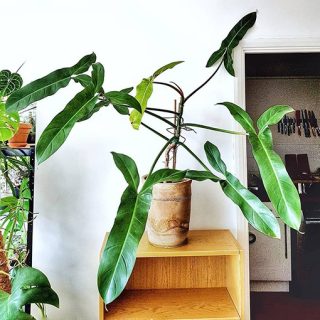
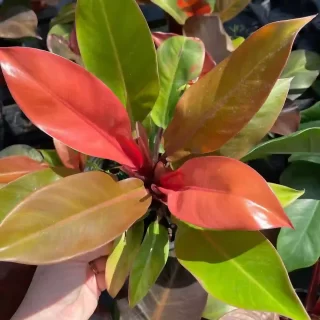
Philodendron Black Billietiae is a rare and stunning aroid known for its elongated, deeply grooved leaves, blackish-green tones, and long, narrow petioles with an almost architectural look. This plant is admired by collectors for its unique silhouette and dramatic foliage. With the right care, it grows quickly and becomes a striking statement plant indoors. Here’s a complete guide to help you keep your Black Billietiae thriving.
Philodendron Black Billietiae – Complete Care Guide :
Light Requirements
Philodendron Black Billietiae loves bright, indirect light. Natural filtered sunlight keeps its leaves glossy and prevents legginess. A spot near an east-facing window or a few feet away from a bright south-facing window is ideal.
Avoid direct afternoon sunlight because the leaves may develop brown scorch marks. If grown in low light, the plant may survive, but leaf size will reduce, petioles will stretch, and the deep coloration may fade.
If indoors light is insufficient, consider a full-spectrum grow light placed 30–40 cm above the plant for 8–10 hours per day.
Watering Schedule
Like most philodendrons, Black Billietiae prefers a moist-but-not-wet soil environment. Water the plant only when the top 2–3 cm of soil feels dry to the touch.
Overwatering is the most common mistake—this can quickly lead to root rot, especially since this species has long, sensitive roots.
Watering Tips:
-
Use room-temperature, filtered, or resting water.
-
Ensure the pot has drainage holes.
-
During summer, watering frequency increases.
-
During winter, reduce watering because the plant’s growth slows down.
Crispy edges usually indicate underwatering, while yellowing lower leaves may be a sign of overwatering.
Humidity Needs
This plant thrives in high humidity, ideally 60%–80%. Higher humidity encourages larger leaves and prevents the edges from drying out.
How to increase humidity:
-
Use a humidifier nearby.
-
Keep the plant in a pebble tray with water.
-
Group plants together to maintain a microclimate.
-
Place it in a naturally humid room like a kitchen or bathroom (with good light).
Avoid misting directly on the leaves too often, as it can invite fungal issues.
Temperature Range
Philodendron Black Billietiae enjoys warm conditions:
18–30°C is the ideal range.
Protect it from:
-
Cold drafts
-
AC vents
-
Sudden temperature drops
Below 15°C, growth slows drastically and leaves may droop.
Soil and Potting Mix
A fast-draining, chunky mix is essential. The roots of this philodendron love air circulation and dislike compact soil.
Use a mix such as:
-
40% cocopeat or peat moss
-
30% perlite
-
20% orchid bark
-
10% charcoal or pumice
You can also add a small amount of worm castings for nutrients. Repot every 1–2 years, preferably in early spring before new growth starts.
Fertilization
Feed the plant with a balanced liquid fertilizer (NPK 10-10-10 or 20-20-20 diluted to half strength) once every 3–4 weeks during the growing season (March–October).
Avoid over-fertilizing, which may cause root burn. In winter, fertilizing can be reduced to once every 6–8 weeks or skipped.
Support and Growth Habit
Black Billietiae grows in an upright, semi-climbing manner. To encourage larger leaves and strong growth, provide a moss pole or coco pole.
As the plant matures, the petioles grow longer and the foliage becomes more dramatic.
Pests and Problems
Common pests:
-
Spider mites
-
Mealybugs
-
Aphids
-
Scale
Wipe the leaves regularly with neem oil spray and inspect the undersides weekly.
Common issues:
-
Yellow leaves – Overwatering
-
Brown tips – Low humidity
-
Leggy growth – Insufficient light
Propagation
The easiest method is stem cuttings. Take a cutting with 1–2 nodes and place it in water, moss, or a perlite mix. Roots should appear in 3–4 weeks under warm, humid conditions.
Related products
-
Dischidia Ruscifolia (Million Hearts)
Price range: ₹199.00 through ₹499.00Select options This product has multiple variants. The options may be chosen on the product pagePlant Size: Single plant | 2.5″-6″ Pot Included The Dischidia Ruscifolia (Million Hearts), commonly known as the Million Hearts plant, is a delightful and easy-to-care-for trailing epiphyte. Its name comes from the abundance of small, heart-shaped leaves that densely cover its slender stems. As a member of the same family as Hoyas, its care …
-
Philodendron Burle Marx Plant
Original price was: ₹485.00.₹149.00Current price is: ₹149.00.Add to cartSelling size: Single plant | Pot Included | Secure Packing The Philodendron Burle Marx is a fantastic and relatively easy-to-care-for plant, known for its glossy, spade-shaped leaves and dense, clumping growth. It’s often recommended as a great choice for beginner houseplant owners. Here is a comprehensive care guide for your Philodendron Burle Marx: Light …
-
Philodendron Mexicanum
Original price was: ₹1,090.00.₹749.00Current price is: ₹749.00.Add to cartSelling size: Single Plant | Pot included The Philodendron mexicanum is a beautiful vining plant known for its long, arrow-shaped leaves with a striking deep maroon or reddish underside. As its name suggests, it is native to the tropical forests of Mexico. It’s a relatively easy-to-care-for plant, especially for those familiar with other vining philodendrons. …
-
Heliconia Variegated – Super Rare
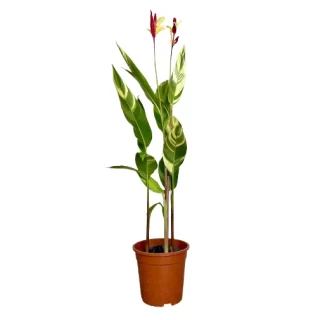
Original price was: ₹2,599.00.₹1,099.00Current price is: ₹1,099.00.Add to cartPlant size: Single plant | Pot Included | Free shipping The Variegated Heliconia (often a cultivar of Heliconia psittacorum, like ‘Lady Di’ or ‘Golden Torch’) is a striking tropical plant known for its banana-like leaves splashed with stripes of cream, yellow, or white. It is a demanding plant, requiring specific tropical conditions to thrive, especially …
-
Tillandsia Stricta (Air plant)
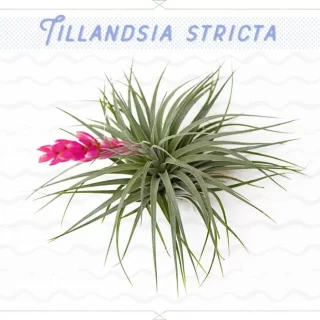
Original price was: ₹400.00.₹199.00Current price is: ₹199.00.Add to cartSelling size: Single plant | Secure Packing The Tillandsia Stricta (Air plant) is one of the most popular and adaptable species of air plants, known for its soft, green-silver foliage and beautiful blooms. Like all air plants, it is epiphytic, meaning it absorbs all its water and nutrients through its leaves from the air, not …
-
Dischidia Oiantha plant
Price range: ₹99.00 through ₹599.00Select options This product has multiple variants. The options may be chosen on the product pagePlant Size: Single plant | Secure Packing The Dischidia oiantha, often referred to as a “Hoya cousin,” is a charming, easy-to-care-for epiphyte with trailing vines and small, oval, succulent-like leaves. It’s a great choice for hanging baskets or for adding a touch of whimsy to a shelf. Here is a comprehensive guide to caring for …
-
Golden Sedum Plant
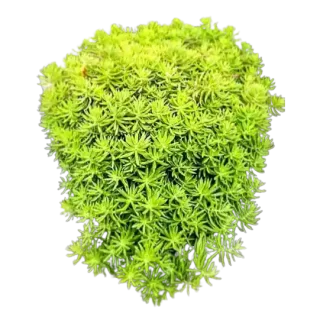
Original price was: ₹549.00.₹349.00Current price is: ₹349.00.Add to cartSelling size: Well rooted plan | 2.5″ pot included The Golden Sedum (Sedum adolphii) is a popular succulent known for its bright, fleshy, evergreen leaves that can take on a beautiful golden-yellow or even reddish-pink tint in bright sun. It has a trailing or spreading growth habit, making it a great choice for hanging baskets, …
-
Philodendron ‘Prince of Orange’
Price range: ₹199.00 through ₹620.00Select options This product has multiple variants. The options may be chosen on the product pageSelling Size : Single Plant | Pot Included | Secure Packing The Philodendron ‘Prince of Orange’ is a stunning and popular hybrid known for its vibrant, ever-changing leaf colors. New leaves emerge as a brilliant orange or coppery color, and as they mature, they transition to a lime green, then a deep, glossy green. It …


 If you need any assistance, I'm always here. Have you found what you were looking for?