
Nendran Swarnamukhi Banana
Original price was: ₹399.00.₹175.00Current price is: ₹175.00.
Selling Size: Single Plant | Pot Included | Secure Packing
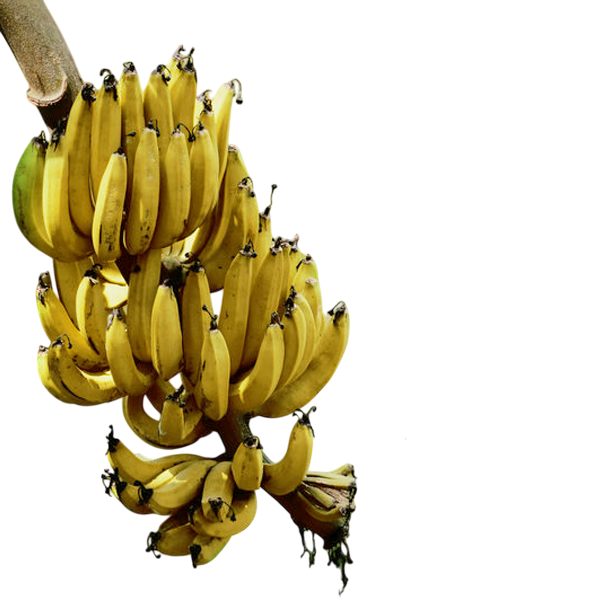
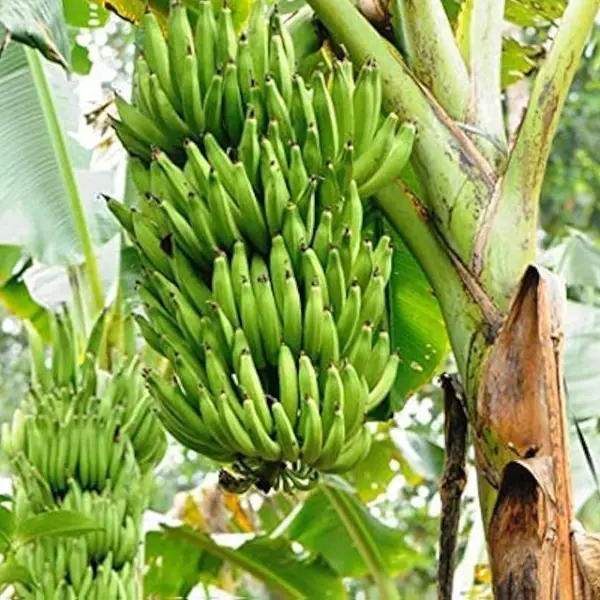
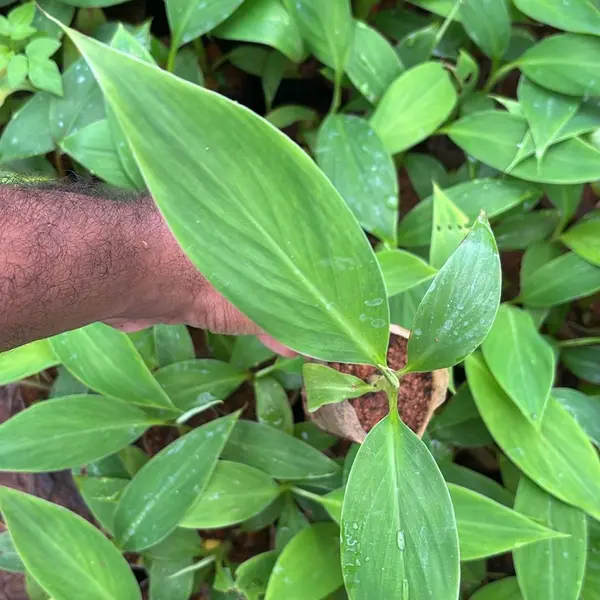
The Nendran Swarnamukhi Banana is a premium South Indian variety known for its rich taste, high nutritional value, thick golden-yellow flesh, and excellent cooking quality. It belongs to the Nendran group of bananas but stands out for its exceptional sweetness, larger fruit size, and improved disease tolerance. This variety is especially popular in Kerala and Tamil Nadu, where it is widely used for chips, steamed dishes, and traditional sweets. With proper care, the Swarnamukhi banana plant produces strong pseudostems, thick leaves, and large bunches packed with premium-quality fruits. Below is a detailed 600-word care guide to help you grow it successfully.
Nendran Swarnamukhi Banana – Complete Care Guide :
1. Climate Requirements
Nendran Swarnamukhi thrives in hot, humid, tropical climates. It requires warm temperatures ranging from 25°C to 35°C for optimum growth. While it tolerates high heat, prolonged cold conditions below 15°C slow down growth and may affect bunch development.
Ideal Conditions:
-
High humidity
-
Bright sunlight
-
Warm coastal or semi-tropical environments
Avoid frost-prone regions, as cold stress can weaken the plant.
2. Sunlight Needs
Like all Nendran varieties, Swarnamukhi requires 6–8 hours of direct sunlight every day. Good sunlight ensures:
-
Thick pseudostem formation
-
Large leaf growth
-
Strong roots
-
Healthy, uniform fruits
Plants grown in low light become thin, weak, and produce smaller bunches.
3. Soil Requirements
Nendran varieties grow best in deep, fertile, well-drained soils. For Swarnamukhi, choose soil that is:
-
Loamy or sandy-loam
-
Rich in organic matter
-
pH between 6.0 and 7.5
-
Not clayey or waterlogged
Before planting, dig a 2×2×2 ft pit and fill it with:
-
50% red soil or garden soil
-
25% cow dung or compost
-
25% sand/cocopeat for drainage
-
A handful of neem cake to prevent soil pests
Proper soil preparation directly influences fruit size and bunch weight.
4. Planting & Spacing
Correct planting helps the plant grow vigorously.
Guidelines:
-
Maintain 6–7 feet spacing between plants.
-
Plant suckers or tissue culture plants slightly deeper than pot level.
-
Press soil firmly around the base.
-
Apply thick mulch using coconut husk, dried leaves, or grass.
This spacing allows for good airflow and reduces the risk of fungal diseases.
5. Watering Requirements
Nendran Swarnamukhi is a heavy water-loving plant. Consistent moisture is essential throughout its growth cycle.
Watering Tips:
-
Water every 2–3 days in summer.
-
Reduce to twice a week in winter/monsoon.
-
Never allow soil to completely dry out.
-
Avoid stagnant water around the stem.
Drip irrigation ensures uniform moisture and prevents fungal infections while saving water.
6. Fertilizer Schedule
To achieve large, high-quality bunches, Swarnamukhi bananas need regular feeding.
Monthly Feeding Plan:
-
Organic manure: 1–2 kg compost every month
-
Biofertilizers: Trichoderma, mycorrhizae in the root zone
-
NPK fertilizers:
-
2nd & 4th month – Foliar spray of NPK 19-19-19
-
3rd & 5th month – Soil application of NPK 17-17-17
-
During Fruiting:
-
Add muriate of potash (MOP) or 0-0-50 for fruit size
-
Apply banana special micronutrient mix every 30 days
-
Use bunch booster sprays for uniform hand formation
Organic alternatives such as bone meal, rock phosphate, and banana peel compost also help.
7. Pruning & Maintenance
Proper pruning keeps the plant healthy and productive.
-
Remove dried leaves regularly.
-
Keep only one main plant + one follower sucker.
-
Remove extra suckers to concentrate energy on fruiting.
-
Maintain thick mulch for moisture retention.
-
Weed regularly around the base.
In windy regions, provide support using bamboo poles.
8. Flowering & Fruiting
Swarnamukhi banana typically flowers around 8–10 months after planting. After the flower appears:
-
Hold the heavy bunch with a support stick.
-
Remove the male bud (banana heart) 7–10 days after last hand formation.
-
Cover the bunch with a protective bag to prevent sunburn and pest damage.
The fruits mature in 90–120 days after flowering.
9. Common Pests & Diseases
Pests:
-
Banana stem borer
-
Aphids
-
Thrips
-
Mealybugs
Use neem oil spray every 10–14 days.
Diseases:
-
Sigatoka leaf spot
-
Panama wilt
-
Bunchy top virus
Prevent diseases by ensuring good drainage, proper spacing, and using disease-free planting material.
10. Harvesting
Harvest when:
-
Fruits turn plump
-
Angles become round
-
Skin turns light green to yellowish
Use a sharp knife and handle the bunch gently to avoid bruising.
Related products
-
String of Bananas
Original price was: ₹450.00.₹249.00Current price is: ₹249.00.Add to cartSelling size: Mentioned in last Picture | Secure Packing The String of Bananas (Curio radicans or Senecio radicans) is a charming trailing succulent known for its long, cascading stems covered in plump, banana-shaped leaves. It’s a popular choice for hanging baskets and is generally easy to care for, especially for those who are new …
-
Tillandsia Stricta (Air plant)
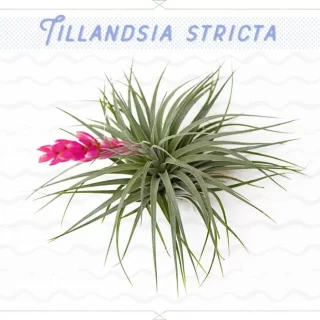
Original price was: ₹400.00.₹199.00Current price is: ₹199.00.Add to cartSelling size: Single plant | Secure Packing The Tillandsia Stricta (Air plant) is one of the most popular and adaptable species of air plants, known for its soft, green-silver foliage and beautiful blooms. Like all air plants, it is epiphytic, meaning it absorbs all its water and nutrients through its leaves from the air, not …
-
Black zz plant, Raven ZZ Plant
Price range: ₹99.00 through ₹499.00Select options This product has multiple variants. The options may be chosen on the product pageSelling size: Please Choose (Single – Bushy) | 2.5″-5” Pot Included | Secure Packing The Black ZZ Plant, or Raven ZZ Plant (Zamioculcas zamiifolia ‘Raven’), is a popular, exceptionally resilient houseplant known for its striking, nearly black foliage. It shares the easy-care nature of the standard green ZZ plant, making it perfect for beginners or …
-
Dischidia nummularia (Pebble Beach/ Button Orchid)
Price range: ₹99.00 through ₹599.00Select options This product has multiple variants. The options may be chosen on the product pagePlant Size: Single plant | 2.5″ Pot Included he Dischidia nummularia, commonly known as the String of Nickels, Pebble Beach plant, or Button Orchid, is a charming epiphyte with trailing stems covered in small, round, succulent-like leaves. It’s a great choice for hanging baskets and is known for being relatively easy to care for, especially …
-
Dischidia Oiantha plant
Price range: ₹99.00 through ₹599.00Select options This product has multiple variants. The options may be chosen on the product pagePlant Size: Single plant | Secure Packing The Dischidia oiantha, often referred to as a “Hoya cousin,” is a charming, easy-to-care-for epiphyte with trailing vines and small, oval, succulent-like leaves. It’s a great choice for hanging baskets or for adding a touch of whimsy to a shelf. Here is a comprehensive guide to caring for …
-
Pilea Repens, Black Panamiga
Original price was: ₹280.00.₹149.00Current price is: ₹149.00.Add to cartSize: Single Plant | Jiffy Bag Caring for a Pilea Ripens (also known as Black Panamiga) involves understanding its specific needs to ensure it thrives. Here’s a breakdown of Pilea Repens, Black Panamiga key care aspects: Key Care Points: Light: Pilea repens prefers bright, indirect sunlight. Direct sunlight can scorch its leaves. Rotating the plant …
-
String Of Nickels (Dischidia nummularia)
Price range: ₹99.00 through ₹599.00Select options This product has multiple variants. The options may be chosen on the product pageSelling size: Well rooted plant in a Jiffy bag The Dischidia nummularia, commonly known as the String of Nickels or Button Orchid, is a delightful and easy-to-care-for trailing epiphyte. Its common name comes from its small, round, coin-shaped leaves that densely cover its long, slender stems. As a relative of the Hoya, it shares a similar …







 If you need any assistance, I'm always here. Have you found what you were looking for?