
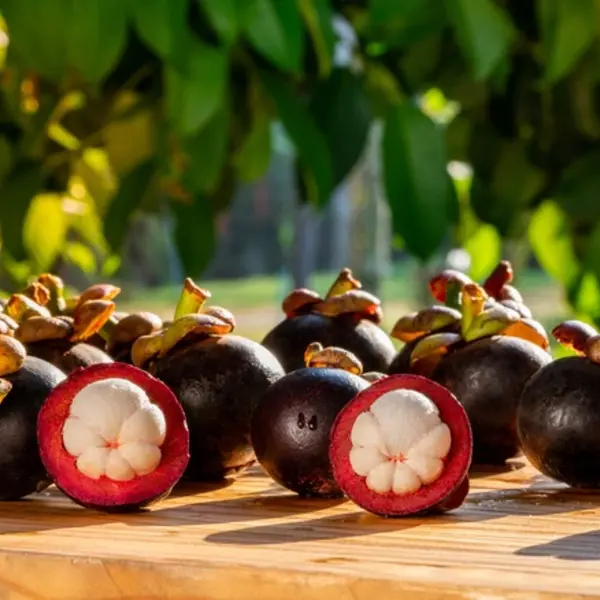
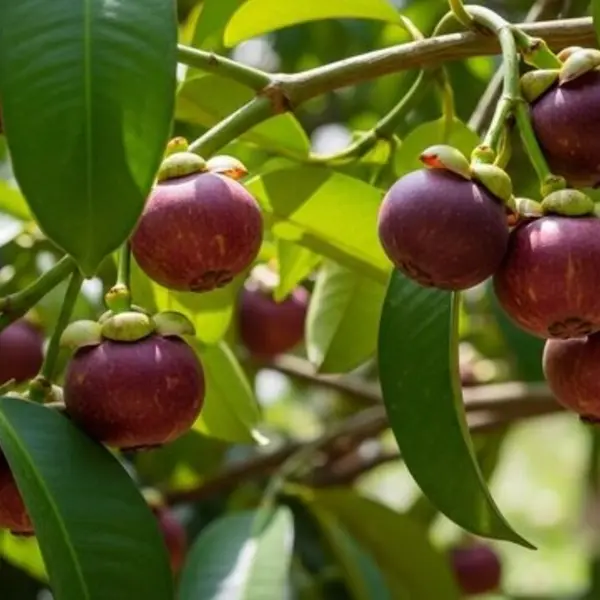
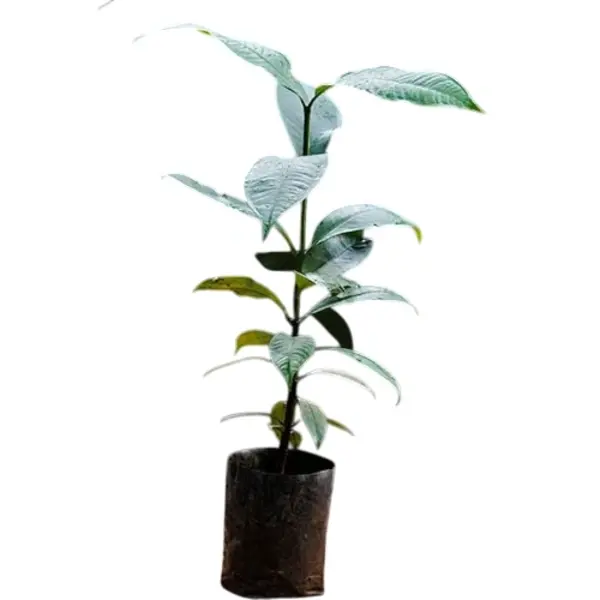
Mangosteen Fruit Plant
Price range: ₹299.00 through ₹1,199.00
Selling Size : Single Plant | Pot Included | Secure Packing | Free Delivery
Mangosteen Fruit Plant (Garcinia mangostana), often called the “Queen of Fruits,” is a tropical evergreen tree prized for its sweet, tangy, purple fruits. Although slow-growing and somewhat demanding, it rewards the grower with delicious harvests and beautiful glossy foliage when provided with the right care. Here is a complete 600-word guide to growing a healthy Mangosteen plant at home or in a garden.
Mangosteen Fruit Plant – Complete Care Guide :
1. Light Requirements
Mangosteen Fruit Plant prefers bright, filtered sunlight. Young plants especially need protection from harsh direct sun, which can burn their tender leaves. A partially shaded area or dappled sunlight under tall trees is ideal. If grown indoors or in a nursery setting, use 50–60% shade net to mimic the natural forest canopy.
As the plant matures, it can tolerate more light, but still avoid extremely hot afternoon sun. Too much exposure can cause leaf yellowing and dehydration.
2. Temperature & Climate
Mangosteen Fruit Plant is a true tropical species and thrives in warm, humid climates. The ideal temperature range is 20°C–35°C. It cannot tolerate cold weather or frost; temperatures below 10°C can stunt growth or kill the plant.
It grows best in regions with consistent rainfall and high humidity. If your climate is dry, frequent watering and humidity management will help the plant adapt. Avoid exposure to strong winds, as the plant has a shallow root system and fragile branches.
3. Watering
Mangosteen Fruit Plant requires consistent, deep watering—but without waterlogging. Keep the soil evenly moist at all times. The top layer should not be allowed to dry completely, especially for young plants. Water the plant 2–3 times per week in warm months and slightly reduce in cooler seasons.
Always allow excess water to drain freely. Water stagnation can cause root rot because Mangosteen roots require oxygen-rich soil. Mulching the base with dry leaves or coco husk helps maintain soil moisture and temperature.
4. Soil Requirements
A healthy Mangosteen tree depends heavily on the soil quality. It prefers:
-
Deep, fertile soil
-
Slightly acidic pH (5.5–6.5)
-
Good drainage
-
High organic matter
Ideal soil mix for planting:
-
40% red loam soil
-
30% compost or well-decomposed cow manure
-
20% river sand for drainage
-
10% cocopeat or mulch
Do not use alkaline or clay-heavy soils, as they slow growth and reduce nutrient uptake. Raised beds or mounds help improve drainage during rainy seasons.
5. Humidity Needs
Mangosteen loves high humidity (60%–80%). In dry climates, sprinkle water around the plant, use misting, or grow near other foliage to create a moist micro-climate. Without good humidity, leaf tips may turn brown and growth will slow significantly.
6. Fertilising
Feed the plant regularly to support its slow but steady growth. Use a balanced fertiliser such as NPK 14-14-14 or 20-20-20 during the growing season. Apply every 45 days for young plants.
Organic options like neem cake, cow manure, and compost also help improve soil structure and fertility. For fruiting plants, increase potassium when the tree begins flowering. Always water after applying fertiliser to avoid burning the roots.
7. Potting & Repotting
If growing in a pot, choose a large, deep container of at least 18–24 inches for young plants. Mangosteen does not like frequent repotting, so shift only when roots overfill the pot. Use well-draining soil and ensure the pot has large drainage holes.
Once the plant grows above 3–4 feet, it is best shifted into the ground if possible, since Mangosteen becomes a medium-large tree over time.
8. Pruning & Maintenance
Prune lightly to remove dried, crossing, or diseased branches. Avoid heavy pruning as Mangosteen naturally grows in a compact, dome-shaped canopy. Mulch the soil annually and replenish organic matter to support root health.
9. Pests & Diseases
While generally hardy, Mangosteen can be affected by:
-
Mealybugs
-
Scales
-
Aphids
-
Root rot due to overwatering
Neem oil spray every 15 days helps keep pests under control. Improve air circulation and avoid standing water to prevent fungal infections.
10. Flowering & Fruiting
Mangosteen is slow to fruit and may take 6–10 years to produce its first harvest. Consistent care, rich soil, and stable climate conditions are essential. Mature trees produce beautiful purple fruits with soft white segments inside.
Related products
-
Scindapsus Pictus Exotica
Original price was: ₹380.00.₹99.00Current price is: ₹99.00.Add to cartSelling size: Single Plant | 2.5″ Pot Included The Scindapsus Pictus Exotica, also known as the silver pothos, is a houseplant with large, dark green leaves that have silver spots and mottling. Here’s a guide to caring for your Scindapsus pictus Exotica plant: Light: Prefers bright, indirect light. An east or west-facing window that’s about …
-
Philodendron Mican plant
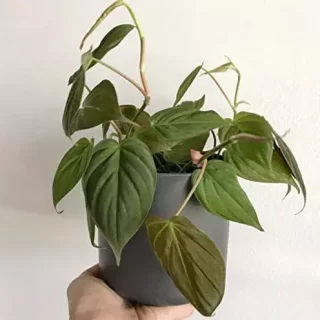
Original price was: ₹650.00.₹99.00Current price is: ₹99.00.Add to cartSelling size: A well rooted plant | 2.5″ Pot Included The Philodendron Micans (Philodendron hederaceum ‘Micans’), also known as the Velvet-Leaf Philodendron, is a popular, easy-care trailing or climbing houseplant prized for its unique, velvety, heart-shaped leaves that emerge a beautiful chartreuse/pink and mature to a deep, iridescent, bronze-green with hints of purple. Here is …
-
Wandering Jew Plant
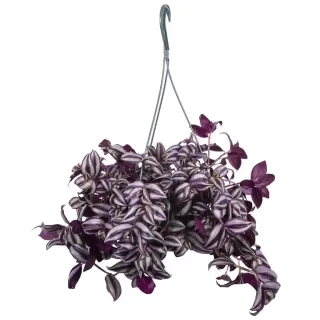
Original price was: ₹305.00.₹149.00Current price is: ₹149.00.Add to cartSelling size: This plant comes in a 2.5″ Square pot The Wandering Jew Plant, also known as the Tradescantia! They’re such vibrant and easy-to-love plants. To keep yours thriving, here’s a rundown of Wandering Jew Plant care needs: Light: They absolutely love bright, indirect sunlight. Think of a spot near an east- or west-facing window …
-
Philodendron ‘Prince of Orange’
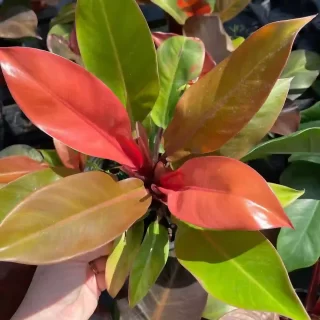
Price range: ₹199.00 through ₹620.00Select options This product has multiple variants. The options may be chosen on the product pageSelling Size : Single Plant | Pot Included | Secure Packing The Philodendron ‘Prince of Orange’ is a stunning and popular hybrid known for its vibrant, ever-changing leaf colors. New leaves emerge as a brilliant orange or coppery color, and as they mature, they transition to a lime green, then a deep, glossy green. It …
-
Dischidia Oiantha plant
Price range: ₹99.00 through ₹599.00Select options This product has multiple variants. The options may be chosen on the product pagePlant Size: Single plant | Secure Packing The Dischidia oiantha, often referred to as a “Hoya cousin,” is a charming, easy-to-care-for epiphyte with trailing vines and small, oval, succulent-like leaves. It’s a great choice for hanging baskets or for adding a touch of whimsy to a shelf. Here is a comprehensive guide to caring for …
-
Calathiya Rattlesnake Plant
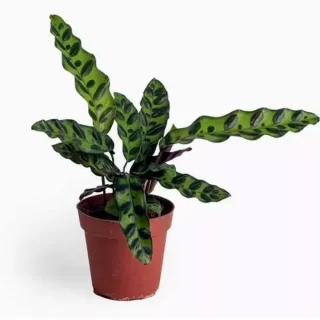
Price range: ₹125.00 through ₹549.00Select options This product has multiple variants. The options may be chosen on the product pageSelling size: Please Choose | Secure Packing | 2.5″-4″ Pot Included Calathiya rattlesnake is a plant easy to care for. However, there are a few measures and precautions you need to take to grow and maintain yours. Here’s a comprehensive guide for rattlesnake plant : Light Calathea Lancifolia prefers bright, indirect light. Like most variegated …
-
Pellionia repens var. pulchra
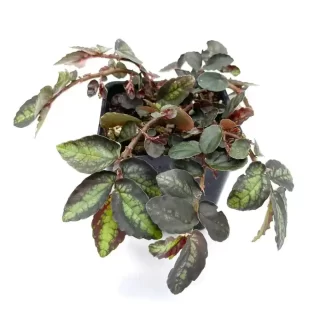
Original price was: ₹325.00.₹149.00Current price is: ₹149.00.Add to cartSelling size: Well rooted plant in a jiffy bag | Secure Packing The Pellionia repens var. pulchra, often called the Trailing Watermelon Begonia, is a beautiful and easy-to-care-for trailing plant. Its common name comes from the striking, patterned leaves that resemble the rind of a watermelon. Despite the name, it is not a true begonia …


 If you need any assistance, I'm always here. Have you found what you were looking for?