
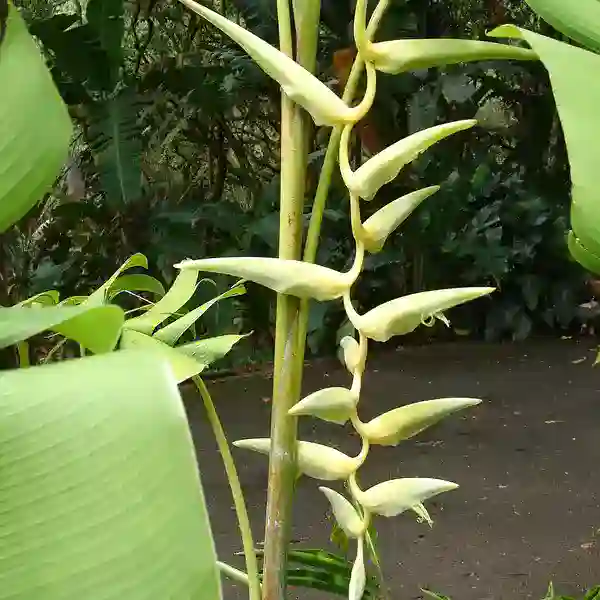
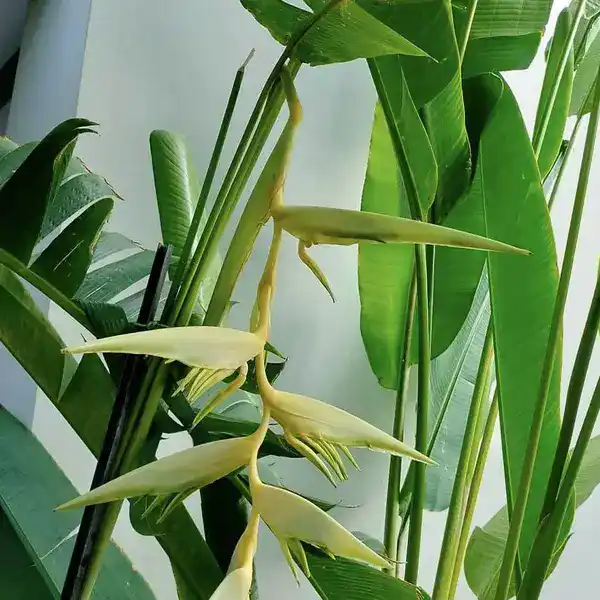
Heliconia Surinam Gold
Original price was: ₹899.00.₹599.00Current price is: ₹599.00.
1 in stock
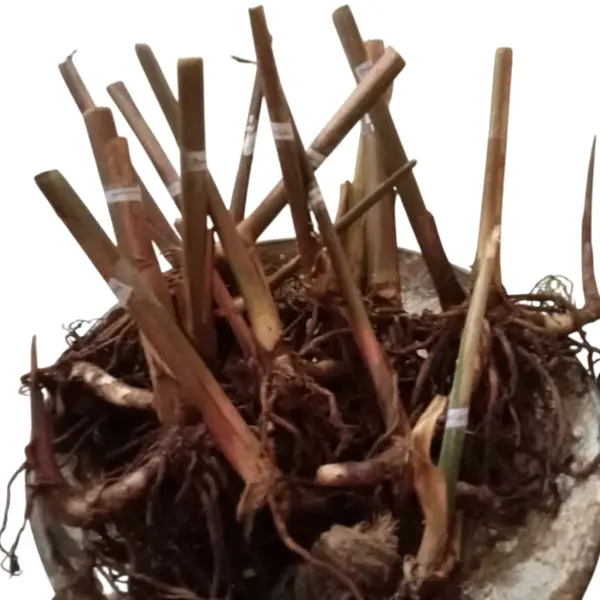
Selling Part : A single Rhizsome with Tag | Secure packing | Free Shipping
The Heliconia Surinam Gold is a striking, tropical plant known for its vibrant, pendulous blooms. It’s an evergreen perennial that requires specific warm, moist conditions to thrive.
Here is a comprehensive care guide for Heliconia Surinam Gold :
1. Key Characteristics
- Botanical Name: Heliconia chartacea ‘Surinam Gold’ (sometimes confused with H. psittacorum cultivars).
- Appearance: Features large, oblong, banana-like, deep green leaves.
- Flower: The spectacular hanging inflorescence (flower spike) is characterized by bright yellow to golden-orange bracts with hints of lime green at the keel/tips. The true flowers are small and greenish-yellow, tucked inside the colorful waxy bracts.
- Mature Height: Can grow quite tall, reaching up to 2-4 meters (6–13 feet) in optimal, mature conditions.
- Growth Habit: Forms clumps via spreading rhizomes.
2. Essential Growing Conditions
3. Care and Maintenance
Watering
- Watering must be regular and deep, especially during hot weather. In the peak of summer, they may need watering daily.
- Overwatering (soggy soil) can lead to root rot, which is fatal. Ensure excellent drainage.
Fertilizing (Feeding)
- Heliconias are heavy feeders to support their rapid growth and large blooms.
- Growing Season (Spring through Fall): Fertilize monthly with a balanced, slow-release or liquid fertilizer, preferably one rich in potassium and magnesium to encourage strong stems and vibrant colors.
- Reduce or stop fertilizing in winter.
Pruning
- Each flower spike (inflorescence) is borne on a single stalk (pseudostem) and only blooms once.
- Once a stalk has flowered and the bloom is spent, cut the entire stem back to the ground to encourage new shoots (suckers) to emerge from the rhizome, which will produce the next flowers.
- Remove any dead or heavily damaged leaves as they appear.
Propagation
- The easiest method is by dividing the rhizomes (underground stems) in the spring.
- Dig up a clump, cut off sections that have 2-3 healthy new shoots attached, and replant them at a shallow depth (just covering the rhizome base).
Pests and Problems
- Brown leaf tips/edges: The most common issue, usually caused by low humidity or inconsistent watering (allowing the soil to dry out).
- Pests: Watch for common tropical pests like spider mites, scale insects, and mealybugs, especially in dry conditions or when overwintering indoors. Treat with horticultural oil or insecticidal soap.
You must be logged in to post a review.
Related products
-
Philodendron Moonshine
Original price was: ₹1,250.00.₹249.00Current price is: ₹249.00.Add to cartSelling size: Single plant | Pot included | Secure Packing The Philodendron Moonshine (often also called ‘Moonlight’) is a popular hybrid known for its vibrant, almost glowing, chartreuse-colored leaves. It has an upright, self-heading growth habit, so unlike many vining philodendrons, it doesn’t need a trellis or pole. Here is a comprehensive guide to caring …
-
String Of Nickels (Dischidia nummularia)
Price range: ₹99.00 through ₹599.00Select options This product has multiple variants. The options may be chosen on the product pageSelling size: Well rooted plant in a Jiffy bag The Dischidia nummularia, commonly known as the String of Nickels or Button Orchid, is a delightful and easy-to-care-for trailing epiphyte. Its common name comes from its small, round, coin-shaped leaves that densely cover its long, slender stems. As a relative of the Hoya, it shares a similar …
-
Philodendron Mexicanum
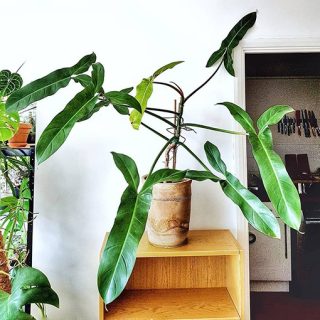
Original price was: ₹1,090.00.₹749.00Current price is: ₹749.00.Add to cartSelling size: Single Plant | Pot included The Philodendron mexicanum is a beautiful vining plant known for its long, arrow-shaped leaves with a striking deep maroon or reddish underside. As its name suggests, it is native to the tropical forests of Mexico. It’s a relatively easy-to-care-for plant, especially for those familiar with other vining philodendrons. …
-
Philodendron ‘Prince of Orange’
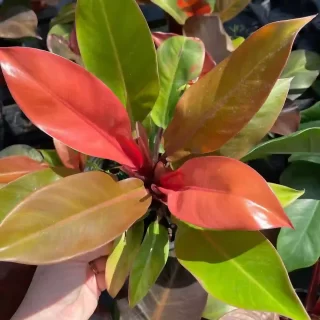
Price range: ₹199.00 through ₹620.00Select options This product has multiple variants. The options may be chosen on the product pageSelling Size : Single Plant | Pot Included | Secure Packing The Philodendron ‘Prince of Orange’ is a stunning and popular hybrid known for its vibrant, ever-changing leaf colors. New leaves emerge as a brilliant orange or coppery color, and as they mature, they transition to a lime green, then a deep, glossy green. It …
-
String of Bananas
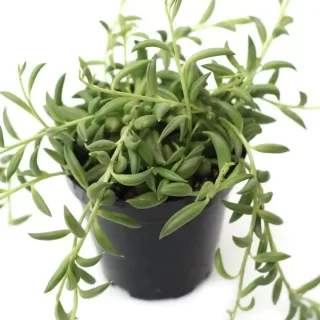
Original price was: ₹450.00.₹249.00Current price is: ₹249.00.Add to cartSelling size: Mentioned in last Picture | Secure Packing The String of Bananas (Curio radicans or Senecio radicans) is a charming trailing succulent known for its long, cascading stems covered in plump, banana-shaped leaves. It’s a popular choice for hanging baskets and is generally easy to care for, especially for those who are new …
-
Golden Pothos
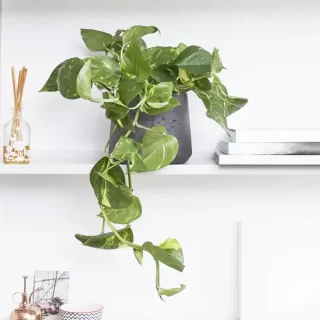
Original price was: ₹355.00.₹99.00Current price is: ₹99.00.Add to cartSelling size : Well rooted plant | 2.5″ pot included The Golden Pothos (Epipremnum aureum), also known as Devil’s Ivy, is one of the most popular and easiest houseplants to care for, making it an excellent choice for beginners. It’s a vining plant with heart-shaped leaves that are a vibrant green, often with splashes or …
-
Scindapsus Pictus Exotica
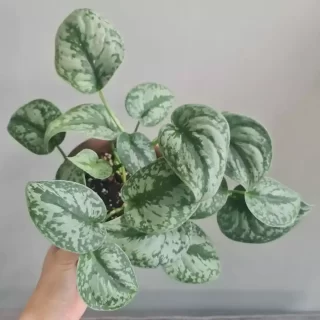
Original price was: ₹380.00.₹99.00Current price is: ₹99.00.Add to cartSelling size: Single Plant | 2.5″ Pot Included The Scindapsus Pictus Exotica, also known as the silver pothos, is a houseplant with large, dark green leaves that have silver spots and mottling. Here’s a guide to caring for your Scindapsus pictus Exotica plant: Light: Prefers bright, indirect light. An east or west-facing window that’s about …
-
Dischidia Oiantha plant
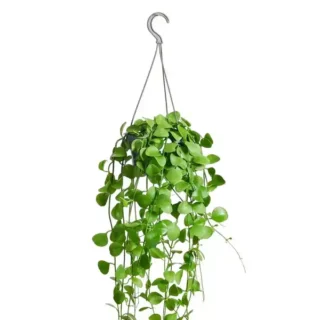
Price range: ₹99.00 through ₹599.00Select options This product has multiple variants. The options may be chosen on the product pagePlant Size: Single plant | Secure Packing The Dischidia oiantha, often referred to as a “Hoya cousin,” is a charming, easy-to-care-for epiphyte with trailing vines and small, oval, succulent-like leaves. It’s a great choice for hanging baskets or for adding a touch of whimsy to a shelf. Here is a comprehensive guide to caring for …

 If you need any assistance, I'm always here. Have you found what you were looking for?
Reviews
There are no reviews yet.