

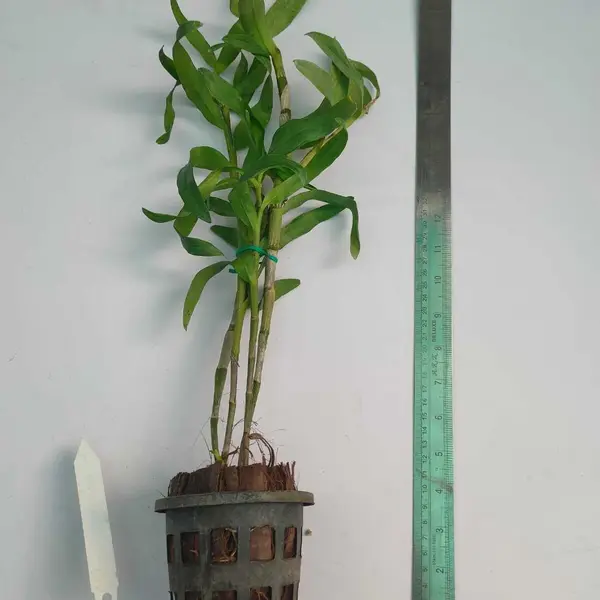
Dendrobium Nobile Nappori Blooming Stage
Original price was: ₹1,399.00.₹1,149.00Current price is: ₹1,149.00.
Selling Size : Last Image | Net Pot Included | Secure Packing
Dendrobium Nobile Nappori Blooming Stage is a hybrid of the popular Dendrobium Nobile species, known for its beautiful, often fragrant flowers. As with all Nobile-type Dendrobiums, it has a distinct seasonal growth and rest cycle that is crucial for successful blooming.
Here’s a comprehensive care guide for Dendrobium Nobile Nappori Blooming Stage:
Understanding the Nobile Cycle:
Nobile Dendrobiums, including ‘Nappori’, go through distinct phases:
- Active Growth (Spring to Late Summer): New canes emerge, grow, and mature. This is the period of strong growth.
- Maturation/Preparation for Rest (Fall): Canes finish growing, and the plant prepares for its dormant period.
- Cool, Dry Rest (Late Fall/Winter): This is absolutely critical for flower bud initiation. The plant needs cooler temperatures and significantly reduced water.
- Flowering (Late Winter/Early Spring): Flowers emerge from the mature canes.
Care Guide for Dendrobium Nobile ‘Nappori’:
1. Light: * Bright, indirect light is essential. Nobile Dendrobiums are light-hungry. * In India, an east-facing window that gets gentle morning sun, or a south/west-facing window with filtered light (e.g., through a sheer curtain) is ideal. * If grown outdoors, place them under a shade net or a location that receives bright, filtered light, especially during the intense Indian summer. * Signs of too much light: Yellowish-white leaves, scorched spots. * Signs of too little light: Weak, spindly canes, and a lack of blooms (or only “keikis” – baby plantlets – instead of flowers).
2. Temperature: * Active Growth (Spring/Summer): Day temperatures between to ( to ). Night temperatures should ideally not drop below (). * Cooling/Rest Period (Fall/Winter – Crucial for Blooms): This is the most vital part. To initiate flower buds, Nobile Dendrobiums need a significant drop in nighttime temperatures. Aim for night temperatures between to ( to ) for at least 6 weeks. Day temperatures can be slightly warmer, around to ( to ). * In many parts of India, especially northern regions or hill stations, these cooler temperatures might occur naturally outdoors during winter. In warmer, tropical parts, you might need to find a cooler spot (e.g., an unheated room, near an open window at night, or even in a controlled environment if possible). * Blooming Stage: Once buds appear, you can slightly raise night temperatures to to ( to ) to speed up flower development. The flower color may become more intense at temperatures under .
3. Watering: * Active Growth (Spring/Summer): Water generously and frequently. Allow the potting mix to approach dryness but still feel lightly damp before rewatering. They are actively growing and need consistent moisture. Use room-temperature water. * Fall (Gradual Reduction): As temperatures start to drop in autumn, gradually reduce watering. Allow the potting mix to dry out more thoroughly between waterings. * Winter (Cool, Dry Rest): This is when watering becomes minimal. Water just enough to prevent the canes from severely shriveling. This might mean watering only every 2-3 weeks, or even less, depending on your environment. Do not resume regular watering until you see flower buds emerge. Overwatering during this period is a common cause of failure to bloom and root rot. * Blooming Stage (Late Winter/Early Spring): Once flower buds appear and start to swell, gradually increase watering. Water consistently when in full bloom.
4. Humidity: * Moderate to High (50-70%): Nobile Dendrobiums appreciate good humidity, especially during active growth. * In dry climates, consider using a humidity tray (a shallow tray with pebbles and water, ensuring the pot doesn’t sit in the water) or a humidifier. * Good air circulation is crucial to prevent fungal issues, especially in high humidity.
5. Potting Medium and Repotting: * Well-draining orchid mix: Use a chunky, bark-based mix, coconut chips, or a blend that ensures excellent drainage and aeration. You can add a small percentage of sphagnum moss or peat fiber to improve moisture retention. * Pot size: They prefer to be somewhat pot-bound. Choose a pot that is only slightly larger than the root mass. * Repotting: Best done right after flowering, when new roots are just beginning to emerge (typically in spring). Repot every 2-3 years, or when the potting mix breaks down.
6. Fertilization: * Active Growth (Spring/Summer): This is the main feeding period. Use a balanced orchid fertilizer (e.g., NPK 20-20-20) at half to full strength every 1-2 weeks. * Fall: Stop fertilizing completely by early to mid-fall. Nitrogen at this stage can promote vegetative growth (keikis) instead of flower buds. * Winter (Rest Period): Do not fertilize. * Blooming Stage: Once flower buds are well-developed and starting to open, you can resume light fertilization at half strength to support the blooms and new growth. * Always water the plant thoroughly before fertilizing to prevent root burn. Flush the pot with plain water once a month to prevent salt buildup. Use rainwater or RO water if possible to avoid mineral buildup.
7. Air Circulation: * Excellent air movement is vital year-round. This helps prevent fungal diseases, especially in humid conditions, and contributes to healthy cane development.
After Blooming:
- Once the flowers fade, you can cut the spent flower spikes where they emerge from the cane.
- Do NOT cut off healthy, leafless canes. These canes store energy and water for the plant, and they can re-bloom in subsequent years, though typically less profusely than new canes.
- Transition back to the “active growth” care cycle.
By carefully managing the light, temperature, and especially the watering and fertilization based on its seasonal growth cycle, your Dendrobium Nobile ‘Nappori’ should reliably produce its beautiful, violet-colored, white-shaded, and often fragrant flowers.
You must be logged in to post a review.
Related products
-
Calathiya Rattlesnake Plant
Price range: ₹125.00 through ₹549.00Select options This product has multiple variants. The options may be chosen on the product pageSelling size: Please Choose | Secure Packing | 2.5″-4″ Pot Included Calathiya rattlesnake is a plant easy to care for. However, there are a few measures and precautions you need to take to grow and maintain yours. Here’s a comprehensive guide for rattlesnake plant : Light Calathea Lancifolia prefers bright, indirect light. Like most variegated …
-
Scindapsus Pictus Exotica
Original price was: ₹380.00.₹99.00Current price is: ₹99.00.Add to cartSelling size: Single Plant | 2.5″ Pot Included The Scindapsus Pictus Exotica, also known as the silver pothos, is a houseplant with large, dark green leaves that have silver spots and mottling. Here’s a guide to caring for your Scindapsus pictus Exotica plant: Light: Prefers bright, indirect light. An east or west-facing window that’s about …
-
Philodendron Burle Marx Plant
Original price was: ₹485.00.₹149.00Current price is: ₹149.00.Add to cartSelling size: Single plant | Pot Included | Secure Packing The Philodendron Burle Marx is a fantastic and relatively easy-to-care-for plant, known for its glossy, spade-shaped leaves and dense, clumping growth. It’s often recommended as a great choice for beginner houseplant owners. Here is a comprehensive care guide for your Philodendron Burle Marx: Light …
-
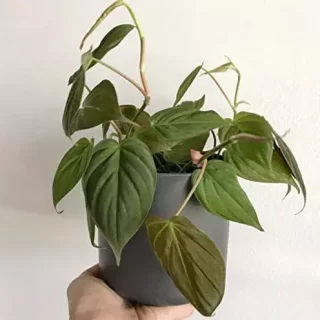
Philodendron Mican plant
Original price was: ₹650.00.₹99.00Current price is: ₹99.00.Add to cartSelling size: A well rooted plant | 2.5″ Pot Included The Philodendron Micans (Philodendron hederaceum ‘Micans’), also known as the Velvet-Leaf Philodendron, is a popular, easy-care trailing or climbing houseplant prized for its unique, velvety, heart-shaped leaves that emerge a beautiful chartreuse/pink and mature to a deep, iridescent, bronze-green with hints of purple. Here is …
-
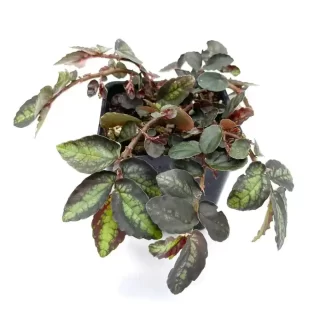
Pellionia repens var. pulchra
Original price was: ₹325.00.₹149.00Current price is: ₹149.00.Add to cartSelling size: Well rooted plant in a jiffy bag | Secure Packing The Pellionia repens var. pulchra, often called the Trailing Watermelon Begonia, is a beautiful and easy-to-care-for trailing plant. Its common name comes from the striking, patterned leaves that resemble the rind of a watermelon. Despite the name, it is not a true begonia …
-
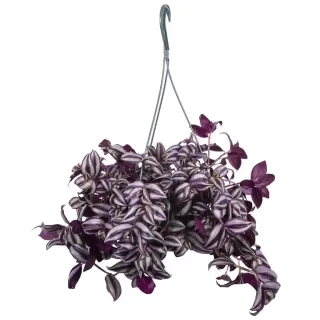
Wandering Jew Plant
Original price was: ₹305.00.₹149.00Current price is: ₹149.00.Add to cartSelling size: This plant comes in a 2.5″ Square pot The Wandering Jew Plant, also known as the Tradescantia! They’re such vibrant and easy-to-love plants. To keep yours thriving, here’s a rundown of Wandering Jew Plant care needs: Light: They absolutely love bright, indirect sunlight. Think of a spot near an east- or west-facing window …
-
Chlorophytum Spider Live Plant
Original price was: ₹249.00.₹99.00Current price is: ₹99.00.Add to cartSelling size: Well rooted Single plant | 2.5″ Pot included Chlorophytum Spider, also the Spider Plant is an impressive houseplant which is the perfect plant for any beginner. A NASA certified air purifier, its long, green foliage with white variegations look good in both hanging planters and as desktop setups. In favourable conditions, it blooms …
-
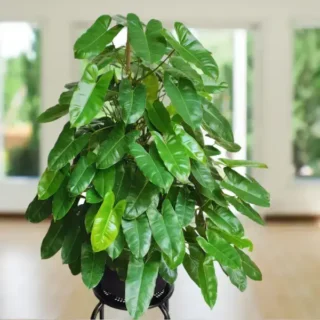
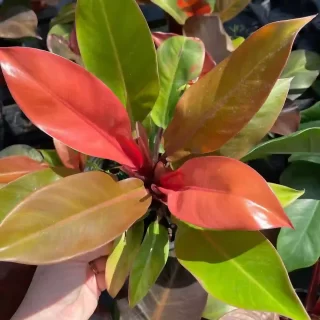
Philodendron ‘Prince of Orange’
Price range: ₹199.00 through ₹620.00Select options This product has multiple variants. The options may be chosen on the product pageSelling Size : Single Plant | Pot Included | Secure Packing The Philodendron ‘Prince of Orange’ is a stunning and popular hybrid known for its vibrant, ever-changing leaf colors. New leaves emerge as a brilliant orange or coppery color, and as they mature, they transition to a lime green, then a deep, glossy green. It …



 If you need any assistance, I'm always here. Have you found what you were looking for?
Reviews
There are no reviews yet.