
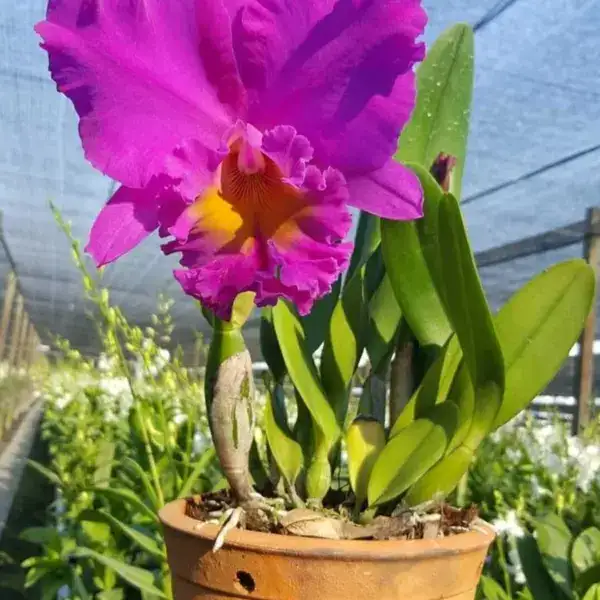
Cattleya (CS-048)
Original price was: ₹599.00.₹325.00Current price is: ₹325.00.
Out of stock
Email when stock available
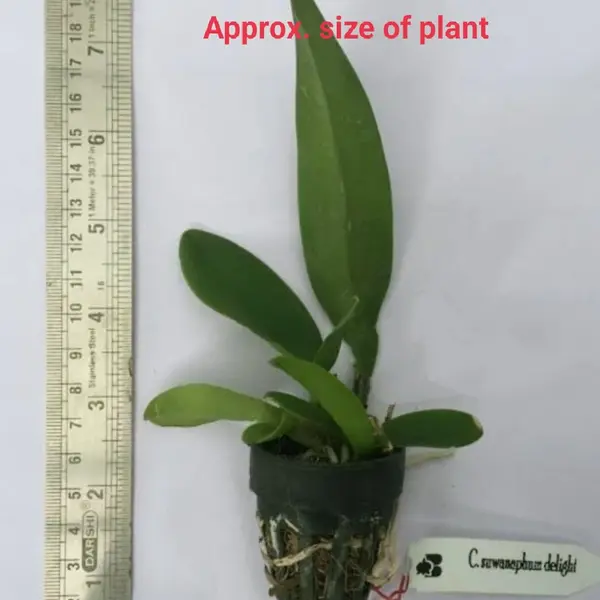
Selling Size : Last Image | Net Pot Included | Secure Packing
Cattleya orchids, often called the “Queen of Orchids” or “Corsage Orchids,” are renowned for their stunning, often fragrant, and long-lasting blooms.
Here’s a comprehensive guide to Cattleya care, with consideration for conditions in India:
1. Light:
- Bright, indirect light is crucial for blooming. Insufficient light is the most common reason for Cattleya not flowering.
- They need more light than Phalaenopsis orchids.
- Ideal placement: An east or west-facing window with dappled or filtered light. A south-facing window can work if protected from direct midday sun by a sheer curtain or shade cloth, especially in the intense Indian summer sun.
- Signs of correct light: Leaves should be a medium, olive-green color, and pseudobulbs should be plump and erect.
- Too little light: Dark green leaves, leggy growth, pseudobulbs that won’t stand without staking. The plant may draw energy from older pseudobulbs, causing them to shrivel.
- Too much light: Yellowish-green leaves, reddish tint, or sunburn (brown patches) on the leaves.
- Gradual adjustment: If moving a Cattleya from a shadier to a brighter spot, do it gradually to prevent scorching.
2. Temperature:
- Cattleyas are typically warm-growing to intermediate-growing orchids.
- Day temperatures: 21°C to 27°C (70°F to 80°F) is ideal. They can tolerate higher temperatures (up to 35°C / 95°F) if humidity and air circulation are also increased.
- Night temperatures: A crucial 5-10°C (10-15°F) drop from daytime temperatures, ideally between 12.8°C to 18°C (55°F to 65°F), is important to stimulate flower production. This day-night temperature differential is key for blooming.
- Protect from extreme cold or excessive heat sources (like direct AC vents or heaters).
3. Humidity:
- Cattleyas thrive in moderate to high humidity, ideally between 50-80%. In India’s humid climate, this can often be naturally met, especially during monsoon.
- If humidity is low (e.g., during dry seasons or indoors with AC/heating):
- Use a humidity tray (a tray filled with pebbles and water, ensuring the pot doesn’t sit in the water).
- Group plants together to create a microclimate.
- Use a room humidifier.
- Good air circulation is essential with high humidity to prevent fungal and bacterial diseases. Stagnant, humid air is detrimental. A fan can be beneficial.
4. Watering:
- This is often the most critical aspect and where many beginners struggle. Cattleyas prefer to dry out almost completely between waterings. They are more prone to root rot from overwatering than from underwatering.
- Frequency:
- During active growth (new pseudobulbs, leaves, or flower spikes), they will need more frequent watering, perhaps once or twice a week.
- During cooler, less active periods (winter), reduce watering to once a week or even less.
- Always check the potting medium before watering. Stick your finger a few inches into the mix; if it feels dry, then water. You can also judge by pot weight (dry pots are lighter) or by observing the roots (silvery/white when dry, green when wet).
- Method: Water thoroughly, allowing water to flow completely through the pot. Do this in the morning so the leaves have time to dry before nightfall, which helps prevent disease.
- Water quality: Use water low in alkalinity, such as rainwater, distilled water, or reverse osmosis (RO) water. If using tap water, ensure it’s not softened with salt and flush the pot regularly to prevent mineral buildup. Tepid water is preferred over cold.
5. Potting Medium and Repotting:
- Cattleyas are epiphytic (grow on trees) and need a coarse, well-draining, and airy potting mix that allows roots to dry quickly.
- Common mixes include:
- Fir bark (medium to coarse)
- Coconut husk chips
- Charcoal
- Perlite
- Lava rock
- A blend of these is often ideal. Avoid regular potting soil.
- Repotting:
- Repot every 2-3 years, or when the potting medium starts to break down and become soggy, or when the plant outgrows its pot (pseudobulbs are extending over the edge).
- The best time to repot is when new root growth is just beginning to emerge from the base of a new pseudobulb, typically after flowering or in spring.
- Choose a pot that allows for 1-2 years of new growth (sympodial orchids like Cattleya grow horizontally).
- Remove all old, degraded potting mix and any dead or rotting roots (they’ll be soft and brown).
- Allow fresh cuts on roots to air dry and callous for a few days before repotting, and don’t water for about a week after repotting to prevent rot.
6. Fertilization:
- Cattleyas are moderate feeders.
- “Feed weakly, weekly” is a good general principle during the active growing season (spring and summer).
- Use a balanced orchid-specific fertilizer (e.g., 20-20-20 NPK) at 1/4 to 1/2 strength with almost every watering.
- During fall and winter, reduce fertilization to once a month or every other watering, or stop entirely if growth slows significantly.
- Flush the pot with plain water once a month (or every 4-6 weeks) to prevent the buildup of fertilizer salts, which can burn roots.
- Consider a high-phosphorus fertilizer (e.g., 0-52-34) to encourage blooming, alternating with your regular balanced fertilizer.
7. Pests and Diseases:
- Good air circulation and proper watering are key to preventing most problems.
- Common pests include mealybugs, spider mites, and scale insects. Inspect your plants regularly.
- Fungal and bacterial diseases can occur with poor air circulation or overwatering.
By following these guidelines, you’ll be well on your way to enjoying the magnificent blooms of your Cattleya orchids.
You must be logged in to post a review.
Related products
-
Golden Sedum Plant
Original price was: ₹549.00.₹349.00Current price is: ₹349.00.Add to cartSelling size: Well rooted plan | 2.5″ pot included The Golden Sedum (Sedum adolphii) is a popular succulent known for its bright, fleshy, evergreen leaves that can take on a beautiful golden-yellow or even reddish-pink tint in bright sun. It has a trailing or spreading growth habit, making it a great choice for hanging baskets, …
-
Philodendron Moonshine
Original price was: ₹1,250.00.₹249.00Current price is: ₹249.00.Add to cartSelling size: Single plant | Pot included | Secure Packing The Philodendron Moonshine (often also called ‘Moonlight’) is a popular hybrid known for its vibrant, almost glowing, chartreuse-colored leaves. It has an upright, self-heading growth habit, so unlike many vining philodendrons, it doesn’t need a trellis or pole. Here is a comprehensive guide to caring …
-
String Of Nickels (Dischidia nummularia)
Price range: ₹99.00 through ₹599.00Select options This product has multiple variants. The options may be chosen on the product pageSelling size: Well rooted plant in a Jiffy bag The Dischidia nummularia, commonly known as the String of Nickels or Button Orchid, is a delightful and easy-to-care-for trailing epiphyte. Its common name comes from its small, round, coin-shaped leaves that densely cover its long, slender stems. As a relative of the Hoya, it shares a similar …
-
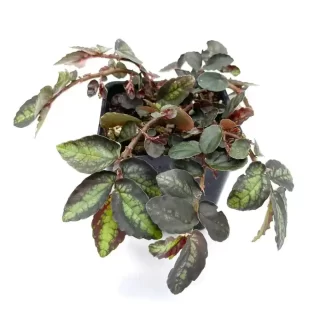
Pellionia repens var. pulchra
Original price was: ₹325.00.₹149.00Current price is: ₹149.00.Add to cartSelling size: Well rooted plant in a jiffy bag | Secure Packing The Pellionia repens var. pulchra, often called the Trailing Watermelon Begonia, is a beautiful and easy-to-care-for trailing plant. Its common name comes from the striking, patterned leaves that resemble the rind of a watermelon. Despite the name, it is not a true begonia …
-
Wandering Jew Plant
Original price was: ₹305.00.₹149.00Current price is: ₹149.00.Add to cartSelling size: This plant comes in a 2.5″ Square pot The Wandering Jew Plant, also known as the Tradescantia! They’re such vibrant and easy-to-love plants. To keep yours thriving, here’s a rundown of Wandering Jew Plant care needs: Light: They absolutely love bright, indirect sunlight. Think of a spot near an east- or west-facing window …
-
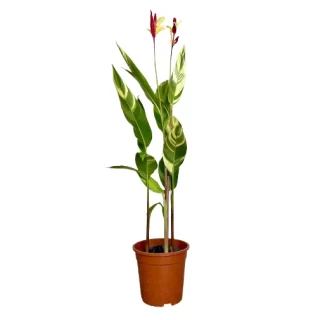
Heliconia Variegated – Super Rare
Original price was: ₹2,599.00.₹1,099.00Current price is: ₹1,099.00.Add to cartPlant size: Single plant | Pot Included | Free shipping The Variegated Heliconia (often a cultivar of Heliconia psittacorum, like ‘Lady Di’ or ‘Golden Torch’) is a striking tropical plant known for its banana-like leaves splashed with stripes of cream, yellow, or white. It is a demanding plant, requiring specific tropical conditions to thrive, especially …
-
Philodendron Mexicanum
Original price was: ₹1,090.00.₹749.00Current price is: ₹749.00.Add to cartSelling size: Single Plant | Pot included The Philodendron mexicanum is a beautiful vining plant known for its long, arrow-shaped leaves with a striking deep maroon or reddish underside. As its name suggests, it is native to the tropical forests of Mexico. It’s a relatively easy-to-care-for plant, especially for those familiar with other vining philodendrons. …
-
Philodendron Burle Marx Plant
Original price was: ₹485.00.₹149.00Current price is: ₹149.00.Add to cartSelling size: Single plant | Pot Included | Secure Packing The Philodendron Burle Marx is a fantastic and relatively easy-to-care-for plant, known for its glossy, spade-shaped leaves and dense, clumping growth. It’s often recommended as a great choice for beginner houseplant owners. Here is a comprehensive care guide for your Philodendron Burle Marx: Light …




 If you need any assistance, I'm always here. Have you found what you were looking for?
Reviews
There are no reviews yet.