
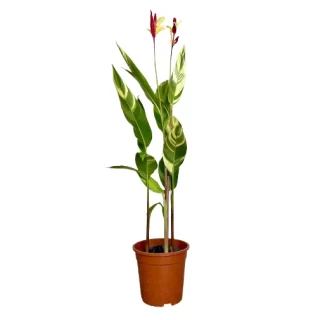
Bottle Brush White
Original price was: ₹749.00.₹425.00Current price is: ₹425.00.
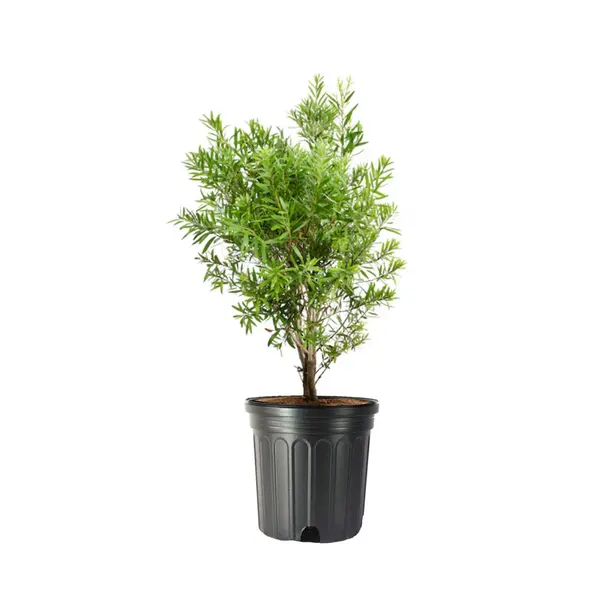
Selling Size : Single Plant | Pot Included | Secure Packing
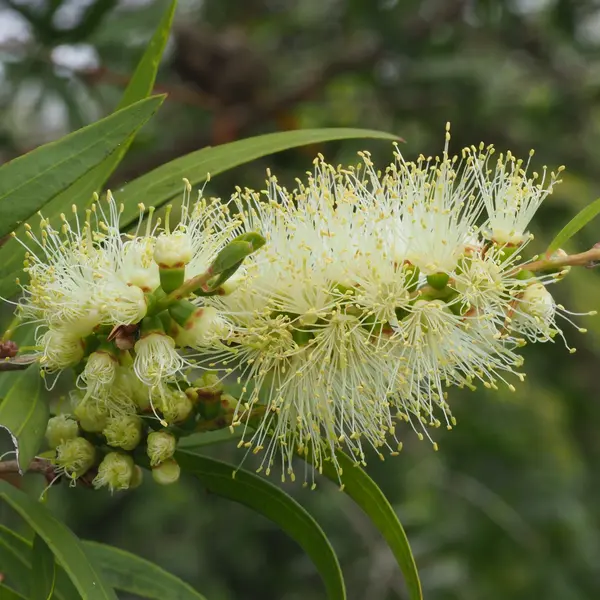
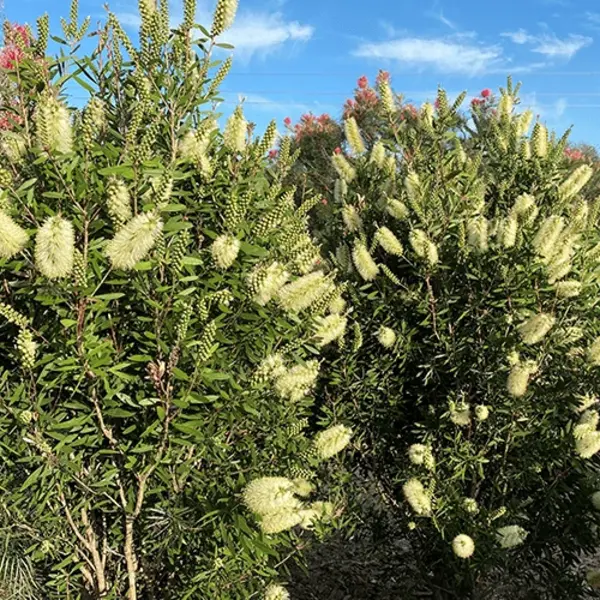
The Bottle Brush White plant, a member of the Callistemon family, is an evergreen shrub admired for its elegant creamy-white, brush-like flowers. These unique blooms resemble bottle-cleaning brushes and attract bees, butterflies, and other pollinators. Known for being hardy, drought-tolerant, and low-maintenance, the White Bottle Brush is ideal for gardens, hedges, borders, and even large containers.Here is a detailed guide to help your plant grow healthy and bloom abundantly.
Bottle Brush White – Complete Care Guide :
Light Requirements
White Bottle Brush thrives best in full sunlight. To bloom profusely, it needs at least 6–8 hours of direct sunlight every day.
-
Full sun = maximum flowering
-
Partial shade = fewer blooms and leggy growth
Choose a bright outdoor spot—open garden, terrace, or a sunny boundary area. Avoid placing it in shaded corners or under large trees.
Watering Needs
Bottle Brush White is moderately drought-tolerant once mature, but young plants need consistent moisture.
Watering Guidelines:
-
Young plants: Keep the soil evenly moist but not soggy.
-
Mature plants: Water deeply once every 5–7 days.
-
Summer: Increase watering during extreme heat.
-
Winter: Reduce watering—only water when the topsoil becomes dry.
Overwatering is one of the main causes of plant failure. Yellowing leaves, soft stems, or foul smell in soil indicate root rot.
Soil Requirements
White Bottle Brush prefers well-draining, slightly acidic to neutral soil. Heavy clay soils cause poor drainage and root diseases.
Ideal Potting/Garden Mix:
-
40% red soil or garden soil
-
30% coarse sand or river sand
-
20% organic compost
-
10% cocopeat or leaf mould
Ensure the soil is airy and loose. For potted plants, use containers with multiple drainage holes.
Temperature & Climate
This plant loves warm climates and grows well in temperatures between 18–35°C.
It tolerates heat but is sensitive to frost and cold winds.
Protection Tips:
-
Move potted plants indoors during cold winters.
-
Use mulch at the base to keep roots warm.
-
Shield young plants from harsh winds.
If exposed to cold below 10–12°C for long periods, the plant may drop leaves and reduce flowering.
Humidity
Bottle Brush White grows comfortably in normal outdoor humidity levels. It does not require very high humidity and can thrive even in dry conditions. Avoid misting the plant, as wet foliage can lead to fungal infections.
Fertilization
Regular feeding improves flowering and new growth.
Fertilizer Schedule:
-
Apply NPK 10-10-10 or a Bloom Booster (NPK 5-10-5) every 4–6 weeks during spring and summer.
-
Add organic compost or cow dung manure once every 2–3 months.
-
Seaweed extract or fish emulsion can also be used for better root growth.
Avoid fertilizers high in nitrogen, as they encourage leaf growth but reduce flowering.
Pruning
Pruning is essential to shape the plant and encourage more blooms.
Pruning Tips:
-
Prune after the flowering cycle ends (usually late spring or early summer).
-
Trim only lightly—do not cut very deep.
-
Remove dead, damaged, or crossing branches.
-
Pinch off spent flower spikes to encourage repeat blooming.
Regular pruning results in a bushy, compact plant with more flower buds.
Pests & Diseases
Bottle Brush White is hardy but may occasionally be affected by:
-
Aphids
-
Mealybugs
-
Scale insects
-
Caterpillars
Use neem oil spray every 10–15 days as a preventive measure.
Common problems:
-
Yellow leaves → Overwatering or nutrient imbalance
-
Poor flowering → Low sunlight or too much nitrogen
-
Leaf drop → Cold stress
Maintaining proper sunlight and drainage prevents most issues.
Propagation
Propagation is possible by:
-
Semi-hardwood cuttings (most reliable)
-
Seeds (slow but effective)
Cuttings root well in warm weather. Use a mix of sand and cocopeat for rooting and keep it lightly moist.
Related products
-
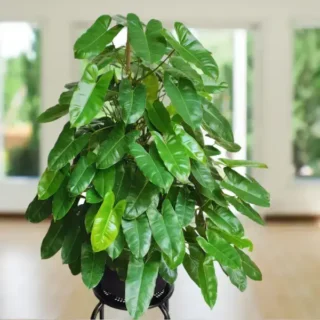
Philodendron Burle Marx Plant
Original price was: ₹485.00.₹149.00Current price is: ₹149.00.Add to cartSelling size: Single plant | Pot Included | Secure Packing The Philodendron Burle Marx is a fantastic and relatively easy-to-care-for plant, known for its glossy, spade-shaped leaves and dense, clumping growth. It’s often recommended as a great choice for beginner houseplant owners. Here is a comprehensive care guide for your Philodendron Burle Marx: Light …
-
Heliconia Variegated – Super Rare
Original price was: ₹2,599.00.₹1,099.00Current price is: ₹1,099.00.Add to cartPlant size: Single plant | Pot Included | Free shipping The Variegated Heliconia (often a cultivar of Heliconia psittacorum, like ‘Lady Di’ or ‘Golden Torch’) is a striking tropical plant known for its banana-like leaves splashed with stripes of cream, yellow, or white. It is a demanding plant, requiring specific tropical conditions to thrive, especially …
-
String Of Nickels (Dischidia nummularia)
Price range: ₹99.00 through ₹599.00Select options This product has multiple variants. The options may be chosen on the product pageSelling size: Well rooted plant in a Jiffy bag The Dischidia nummularia, commonly known as the String of Nickels or Button Orchid, is a delightful and easy-to-care-for trailing epiphyte. Its common name comes from its small, round, coin-shaped leaves that densely cover its long, slender stems. As a relative of the Hoya, it shares a similar …
-
Black zz plant, Raven ZZ Plant
Price range: ₹99.00 through ₹499.00Select options This product has multiple variants. The options may be chosen on the product pageSelling size: Please Choose (Single – Bushy) | 2.5″-5” Pot Included | Secure Packing The Black ZZ Plant, or Raven ZZ Plant (Zamioculcas zamiifolia ‘Raven’), is a popular, exceptionally resilient houseplant known for its striking, nearly black foliage. It shares the easy-care nature of the standard green ZZ plant, making it perfect for beginners or …
-
Golden Sedum Plant
Original price was: ₹549.00.₹349.00Current price is: ₹349.00.Add to cartSelling size: Well rooted plan | 2.5″ pot included The Golden Sedum (Sedum adolphii) is a popular succulent known for its bright, fleshy, evergreen leaves that can take on a beautiful golden-yellow or even reddish-pink tint in bright sun. It has a trailing or spreading growth habit, making it a great choice for hanging baskets, …
-
String of Bananas
Original price was: ₹450.00.₹249.00Current price is: ₹249.00.Add to cartSelling size: Mentioned in last Picture | Secure Packing The String of Bananas (Curio radicans or Senecio radicans) is a charming trailing succulent known for its long, cascading stems covered in plump, banana-shaped leaves. It’s a popular choice for hanging baskets and is generally easy to care for, especially for those who are new …
-
Columbian Peperomia (Galaxy pepperomia)
Original price was: ₹345.00.₹183.65Current price is: ₹183.65.Read moreSelling size:Well rooted plant in a jiffy bag The Columbian Peperomia (Peperomia metallica var. columbiana) is a visually striking and relatively low-maintenance houseplant. It is also sometimes sold as “Galaxy Peperomia,” a name that hints at its unique foliage. This plant is known for its beautiful, semi-succulent leaves that have a dark green or bronze-purple …
-
Pellionia repens var. pulchra
Original price was: ₹325.00.₹149.00Current price is: ₹149.00.Add to cartSelling size: Well rooted plant in a jiffy bag | Secure Packing The Pellionia repens var. pulchra, often called the Trailing Watermelon Begonia, is a beautiful and easy-to-care-for trailing plant. Its common name comes from the striking, patterned leaves that resemble the rind of a watermelon. Despite the name, it is not a true begonia …






 If you need any assistance, I'm always here. Have you found what you were looking for?