
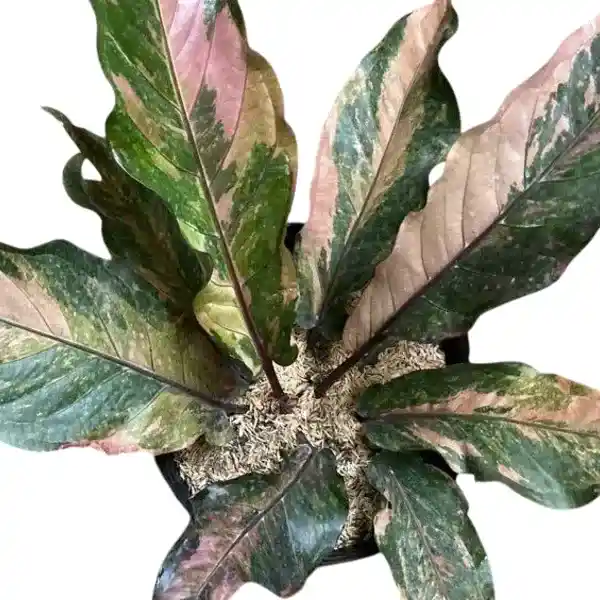
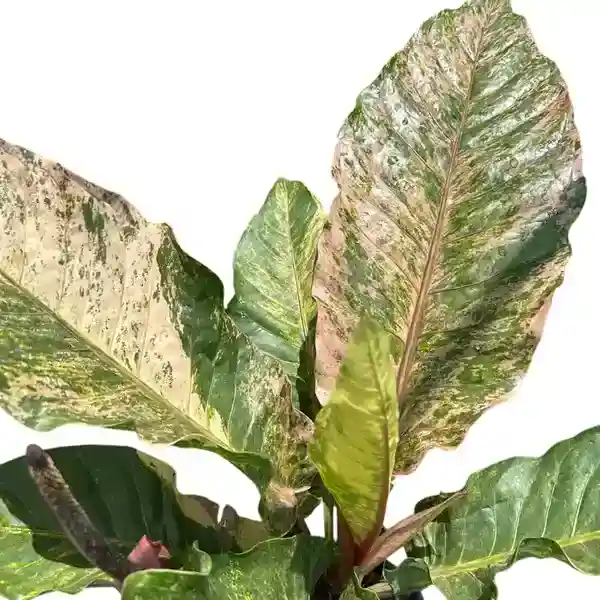
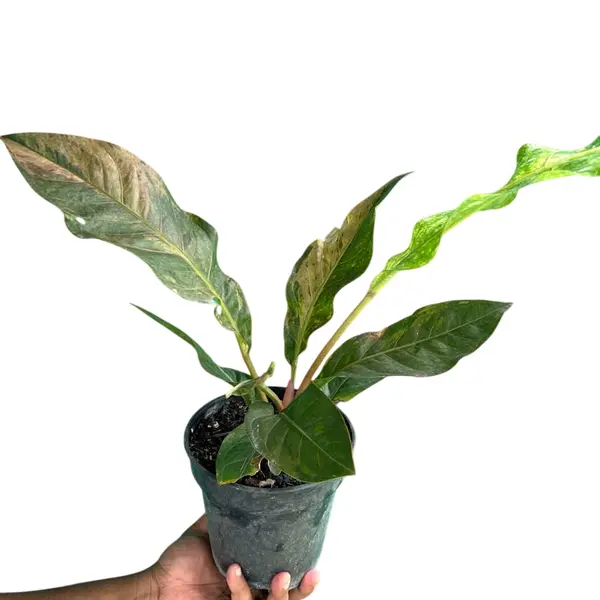
Anthurium Hookeri Tricolor
Original price was: ₹17,800.00.₹3,549.00Current price is: ₹3,549.00.
Selling Size : Single Plant | Pot Included | Secure Packing | Free Shipping
TheAnthurium Hookeri Tricolor is a beautiful and unique plant that, while having a reputation for being a bit of a challenge, can thrive with the right care. It’s a type of “bird’s nest” anthurium, known for its large, ruffled leaves that grow in a rosette, and in the case of the ‘Tricolor’ variety, they display a stunning mix of colors.
Here is a comprehensive care guide for yourAnthurium Hookeri Tricolor:
Light
- Bright, Indirect Light: This is the most crucial factor for a healthy plant. The ‘Tricolor’ variety needs plenty of bright, indirect light to maintain its vibrant coloration. Think of its natural habitat: it grows on the forest floor, receiving dappled sunlight through the canopy.
- Avoid Direct Sun: Direct sunlight will quickly scorch and burn the leaves, leaving behind brown or yellowed patches.
- Placement: Place it near an east or north-facing window, or a few feet back from a south or west-facing window. A sheer curtain can help to diffuse strong light.
- Signs of improper light: If the leaves are pale or dull, it might need more light. If they are yellowing or scorched, it’s getting too much direct sun.
Watering
- Keep it Moist, Not Soggy: Anthurium hookeri prefers to have its soil consistently moist, but not waterlogged. Its epiphytic nature (growing on other plants) means its roots are not accustomed to sitting in dense, wet soil.
- Allow the top inch or two to dry: Before watering, check the top layer of the potting mix with your finger. If it feels dry, it’s time to water.
- Thorough watering: When you do water, do so thoroughly until water drains from the bottom of the pot. This ensures the entire root ball is hydrated.
- Prevent Root Rot: Never let the plant sit in a saucer of water. This can quickly lead to root rot, which is a common problem for anthuriums.
- Watering frequency: The frequency will depend on your environment, the pot size, and the time of year. You’ll likely water more often in warmer months and less in the winter when the plant’s growth slows.
Humidity and Temperature
- High Humidity is a Must: As a tropical plant, the Anthurium hookeri ‘Tricolor’ thrives in high humidity, ideally between 60% and 80%.
- Ways to increase humidity:
- Use a plant humidifier. This is the most effective way to consistently provide the humidity it needs.
- Group it with other plants.
- Place the pot on a pebble tray filled with water (making sure the bottom of the pot is not in the water).
- Misting can provide a temporary boost, but it’s not a long-term solution.
- Warm Temperatures: The ideal temperature range is between 65°F and 85°F (18°C to 29°C).
- Avoid Fluctuations: Keep the plant away from cold drafts, air conditioning vents, or heating sources, as sudden temperature changes can stress it out.
Soil and Fertilizer
- Chunky, Well-Draining Soil: A standard potting mix is too dense for this plant. Use a chunky, airy, and well-draining aroid mix that mimics its natural growing medium.
- Ideal soil components: A good mix can include a combination of orchid bark, perlite, coco coir or peat moss, and a small amount of activated charcoal. This allows for excellent aeration and drainage.
- Fertilize During Growing Season: Feed your plant with a balanced liquid fertilizer every 4 to 6 weeks during the spring and summer (the active growing season).
- Dilute the fertilizer: Dilute the fertilizer to half or quarter strength to avoid burning the roots.
- Reduce in winter: Do not fertilize in the fall and winter when the plant’s growth has slowed.
Other Care Tips
- Toxicity: Be aware that all parts of the anthurium plant are toxic to humans and pets if ingested. Keep it out of reach of children and animals.
- Repotting: Repot your Anthurium hookeri every 1-2 years, or when it becomes root-bound. The best time to do this is in the spring.
- Pruning and Cleaning: Minimal pruning is required. Simply remove any old, yellowing, or damaged leaves to keep the plant tidy. Regularly wipe the large leaves with a damp cloth to remove dust, which helps the plant to photosynthesize more efficiently.
You must be logged in to post a review.
Related products
-
Calathiya Rattlesnake Plant
Price range: ₹125.00 through ₹549.00Select options This product has multiple variants. The options may be chosen on the product pageSelling size: Please Choose | Secure Packing | 2.5″-4″ Pot Included Calathiya rattlesnake is a plant easy to care for. However, there are a few measures and precautions you need to take to grow and maintain yours. Here’s a comprehensive guide for rattlesnake plant : Light Calathea Lancifolia prefers bright, indirect light. Like most variegated …
-
Golden Pothos
Original price was: ₹355.00.₹99.00Current price is: ₹99.00.Add to cartSelling size : Well rooted plant | 2.5″ pot included The Golden Pothos (Epipremnum aureum), also known as Devil’s Ivy, is one of the most popular and easiest houseplants to care for, making it an excellent choice for beginners. It’s a vining plant with heart-shaped leaves that are a vibrant green, often with splashes or …
-
Golden Sedum Plant
Original price was: ₹549.00.₹349.00Current price is: ₹349.00.Add to cartSelling size: Well rooted plan | 2.5″ pot included The Golden Sedum (Sedum adolphii) is a popular succulent known for its bright, fleshy, evergreen leaves that can take on a beautiful golden-yellow or even reddish-pink tint in bright sun. It has a trailing or spreading growth habit, making it a great choice for hanging baskets, …
-
Philodendron Burle Marx Plant
Original price was: ₹485.00.₹149.00Current price is: ₹149.00.Add to cartSelling size: Single plant | Pot Included | Secure Packing The Philodendron Burle Marx is a fantastic and relatively easy-to-care-for plant, known for its glossy, spade-shaped leaves and dense, clumping growth. It’s often recommended as a great choice for beginner houseplant owners. Here is a comprehensive care guide for your Philodendron Burle Marx: Light …
-
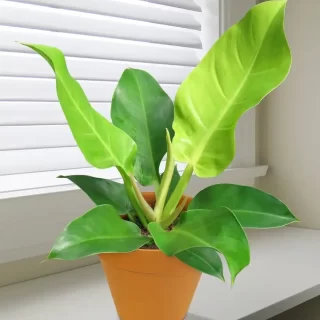
Philodendron Moonshine
Original price was: ₹1,250.00.₹249.00Current price is: ₹249.00.Add to cartSelling size: Single plant | Pot included | Secure Packing The Philodendron Moonshine (often also called ‘Moonlight’) is a popular hybrid known for its vibrant, almost glowing, chartreuse-colored leaves. It has an upright, self-heading growth habit, so unlike many vining philodendrons, it doesn’t need a trellis or pole. Here is a comprehensive guide to caring …
-
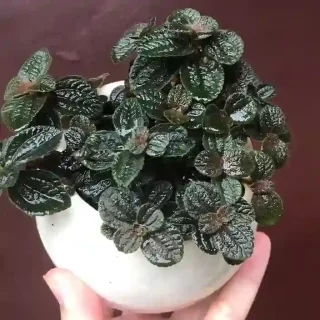
Pilea Repens, Black Panamiga
Original price was: ₹280.00.₹149.00Current price is: ₹149.00.Add to cartSize: Single Plant | Jiffy Bag Caring for a Pilea Ripens (also known as Black Panamiga) involves understanding its specific needs to ensure it thrives. Here’s a breakdown of Pilea Repens, Black Panamiga key care aspects: Key Care Points: Light: Pilea repens prefers bright, indirect sunlight. Direct sunlight can scorch its leaves. Rotating the plant …
-
Dischidia Oiantha plant
Price range: ₹99.00 through ₹599.00Select options This product has multiple variants. The options may be chosen on the product pagePlant Size: Single plant | Secure Packing The Dischidia oiantha, often referred to as a “Hoya cousin,” is a charming, easy-to-care-for epiphyte with trailing vines and small, oval, succulent-like leaves. It’s a great choice for hanging baskets or for adding a touch of whimsy to a shelf. Here is a comprehensive guide to caring for …
-
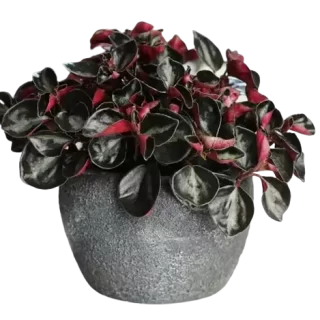
Columbian Peperomia (Galaxy pepperomia)
Original price was: ₹345.00.₹183.65Current price is: ₹183.65.Read moreSelling size:Well rooted plant in a jiffy bag The Columbian Peperomia (Peperomia metallica var. columbiana) is a visually striking and relatively low-maintenance houseplant. It is also sometimes sold as “Galaxy Peperomia,” a name that hints at its unique foliage. This plant is known for its beautiful, semi-succulent leaves that have a dark green or bronze-purple …




 If you need any assistance, I'm always here. Have you found what you were looking for?
Reviews
There are no reviews yet.