
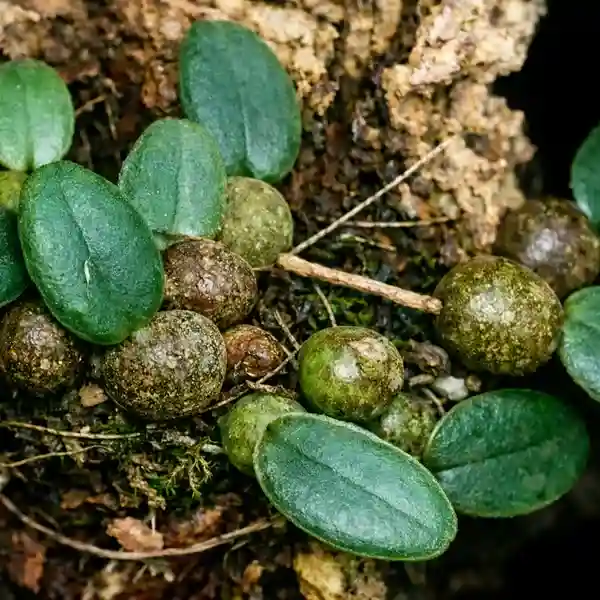
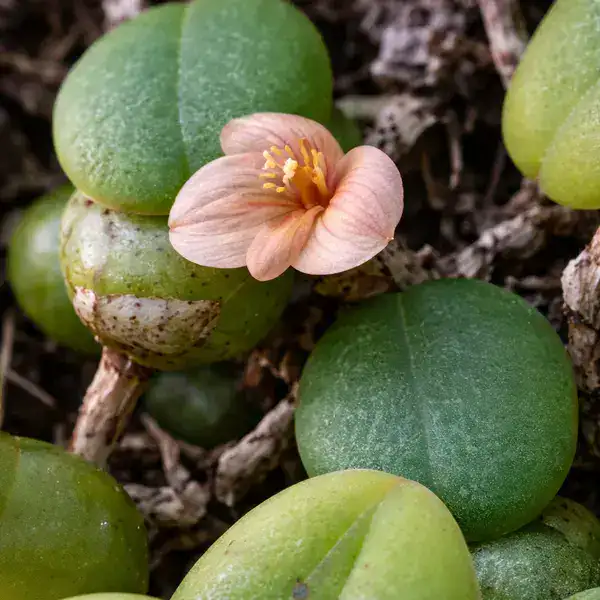
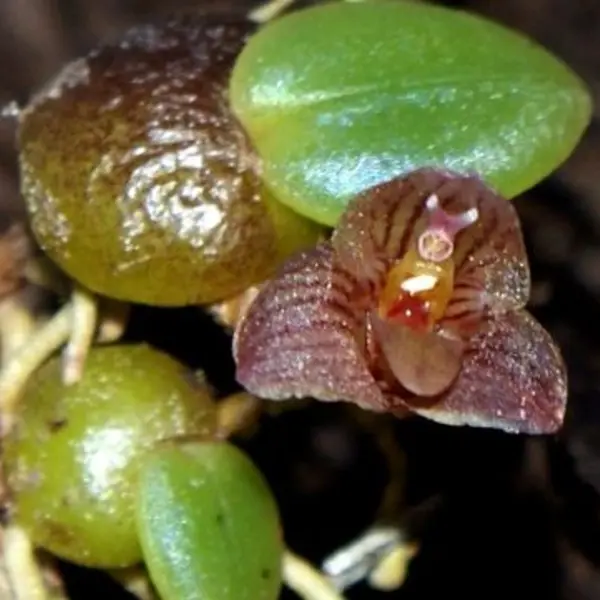
Miniature orchid Trias intermedia
Original price was: ₹2,000.00.₹1,769.00Current price is: ₹1,769.00.
Selling Size : Single Plant | Secure Packing | Free Delivery
Miniature orchid Trias intermedia is a fascinating miniature orchid prized by collectors for its unusual round leaves, compact growth, and delicate, short-lived flowers. Native to humid forest regions of Southeast Asia, this species grows as an epiphyte on tree bark and thrives in warm, moist, shaded conditions. Because of its small size and specific needs, it is best suited for terrariums, orchid cabinets, or controlled indoor growing spaces.
Here is a detailed care guide for Miniature orchid Trias intermedia:
Light Requirements
Trias intermedia prefers low to medium, filtered light. In nature, it grows under dense forest canopy, so it should never be exposed to harsh direct sun. Bright indirect light is ideal — similar to what you would give shade-loving orchids. Too much light can yellow or scorch the leaves, while too little light may reduce flowering and slow growth. A shaded east window or diffused grow lights work very well.
Temperature
This miniature orchid prefers warm to intermediate temperatures. Ideal daytime temperatures range between 20–28°C, with slightly cooler nights around 16–20°C. It does not tolerate cold conditions or sudden temperature drops. Consistent warmth encourages steady root and leaf development. Avoid placing it near cold drafts, AC vents, or open winter windows.
Humidity
High humidity is essential. Aim for 70–90% humidity for best results. Because of this requirement, Trias intermedia performs exceptionally well in terrariums, glass cabinets, or enclosed growing chambers. In open room conditions, maintaining humidity can be difficult unless you use a humidifier. Low humidity leads to shriveled pseudobulbs, stalled growth, and bud drop.
Air Circulation
While it enjoys high humidity, the plant still needs gentle air movement. Stagnant, wet air can cause fungal issues and rot. Use a small fan in orchid cabinets or ensure light natural airflow in the growing area. The key is fresh but gentle circulation — not strong wind.
Watering
Trias intermedia prefers frequent moisture but not soggy conditions. Because it is usually grown mounted or in very airy media, it may need watering more often than larger orchids. Water when the mount or medium is just approaching dryness. In warm weather, this could mean daily or every-other-day misting or watering. Use clean, low-mineral water if possible. Never let the roots stay waterlogged.
Mounting and Potting
This species grows best when mounted on cork bark, tree fern fiber, or hardwood with a small pad of sphagnum moss around the roots. Mounting mimics its natural epiphytic habit and prevents root rot. It can also be grown in tiny baskets with very open media such as sphagnum mixed with bark chips and perlite, but drainage must be excellent.
Growing Environment
Due to its miniature size and humidity needs, Trias intermedia is ideal for:
-
Terrariums
-
Orchidariums
-
Humidity cabinets
-
Enclosed propagation boxes
These environments allow stable moisture, warmth, and humidity — conditions that are hard to maintain on an open windowsill.
Fertilizing
Feed lightly and regularly. Use a diluted orchid fertilizer at about ¼ strength every 2–3 weeks during active growth. Because mounts are flushed often with water, nutrients wash away quickly, so weak frequent feeding works better than strong doses. Flush with plain water occasionally to prevent salt buildup.
Rest Period
Trias intermedia does not require a strict rest period, but growth may slow slightly in cooler or darker months. During this time, reduce fertilizer and slightly reduce watering frequency — but never allow the plant to dry completely.
Flowering
The flowers are small and often short-lived but very interesting in form and color. Blooms may appear close to the base of the leaves. Stable humidity, correct light, and consistent moisture improve flowering chances.
Common Problems
The biggest risks are low humidity and overwatering without airflow. Watch for rot if conditions are wet and stagnant. If leaves wrinkle, humidity or watering is too low. If leaves yellow, light may be too strong.
Care Summary
Think warm, humid, shaded forest conditions with airy roots and frequent moisture. When grown in a controlled environment, Trias intermedia can thrive and reward growers with unique miniature orchid charm. 🌿
Related products
-
Chlorophytum Spider Live Plant
Original price was: ₹249.00.₹99.00Current price is: ₹99.00.Add to cartSelling size: Well rooted Single plant | 2.5″ Pot included Chlorophytum Spider, also the Spider Plant is an impressive houseplant which is the perfect plant for any beginner. A NASA certified air purifier, its long, green foliage with white variegations look good in both hanging planters and as desktop setups. In favourable conditions, it blooms …
-
Philodendron ‘Prince of Orange’
Price range: ₹199.00 through ₹620.00Select options This product has multiple variants. The options may be chosen on the product pageSelling Size : Single Plant | Pot Included | Secure Packing The Philodendron ‘Prince of Orange’ is a stunning and popular hybrid known for its vibrant, ever-changing leaf colors. New leaves emerge as a brilliant orange or coppery color, and as they mature, they transition to a lime green, then a deep, glossy green. It …
-
Dischidia nummularia (Pebble Beach/ Button Orchid)
Price range: ₹99.00 through ₹599.00Select options This product has multiple variants. The options may be chosen on the product pagePlant Size: Single plant | 2.5″ Pot Included he Dischidia nummularia, commonly known as the String of Nickels, Pebble Beach plant, or Button Orchid, is a charming epiphyte with trailing stems covered in small, round, succulent-like leaves. It’s a great choice for hanging baskets and is known for being relatively easy to care for, especially …
-
Philodendron Burle Marx Plant
Original price was: ₹485.00.₹149.00Current price is: ₹149.00.Add to cartSelling size: Single plant | Pot Included | Secure Packing The Philodendron Burle Marx is a fantastic and relatively easy-to-care-for plant, known for its glossy, spade-shaped leaves and dense, clumping growth. It’s often recommended as a great choice for beginner houseplant owners. Here is a comprehensive care guide for your Philodendron Burle Marx: Light …
-
Scindapsus Pictus Exotica
Original price was: ₹380.00.₹99.00Current price is: ₹99.00.Add to cartSelling size: Single Plant | 2.5″ Pot Included The Scindapsus Pictus Exotica, also known as the silver pothos, is a houseplant with large, dark green leaves that have silver spots and mottling. Here’s a guide to caring for your Scindapsus pictus Exotica plant: Light: Prefers bright, indirect light. An east or west-facing window that’s about …
-
Black zz plant, Raven ZZ Plant
Price range: ₹99.00 through ₹499.00Select options This product has multiple variants. The options may be chosen on the product pageSelling size: Please Choose (Single – Bushy) | 2.5″-5” Pot Included | Secure Packing The Black ZZ Plant, or Raven ZZ Plant (Zamioculcas zamiifolia ‘Raven’), is a popular, exceptionally resilient houseplant known for its striking, nearly black foliage. It shares the easy-care nature of the standard green ZZ plant, making it perfect for beginners or …
-
Pellionia repens var. pulchra
Original price was: ₹325.00.₹149.00Current price is: ₹149.00.Add to cartSelling size: Well rooted plant in a jiffy bag | Secure Packing The Pellionia repens var. pulchra, often called the Trailing Watermelon Begonia, is a beautiful and easy-to-care-for trailing plant. Its common name comes from the striking, patterned leaves that resemble the rind of a watermelon. Despite the name, it is not a true begonia …




 If you need any assistance, I'm always here. Have you found what you were looking for?