
Drosera Binata Multifida
Original price was: ₹2,569.00.₹1,649.00Current price is: ₹1,649.00.
Selling Size : Single Plant | Pot Included | Secure Packing | Free Shipping
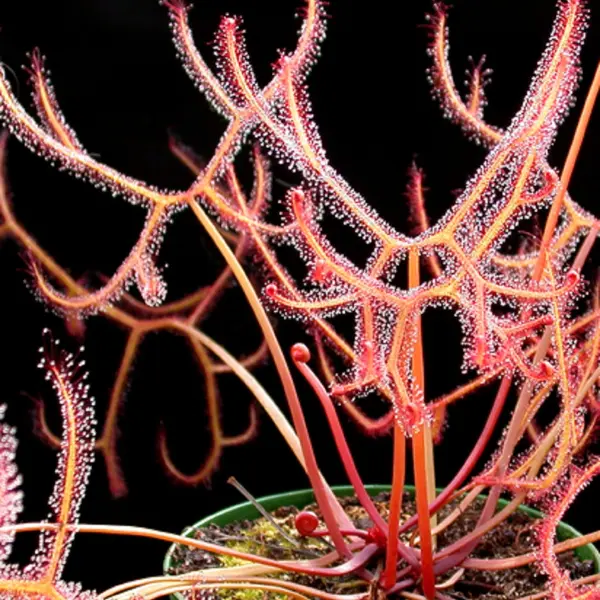
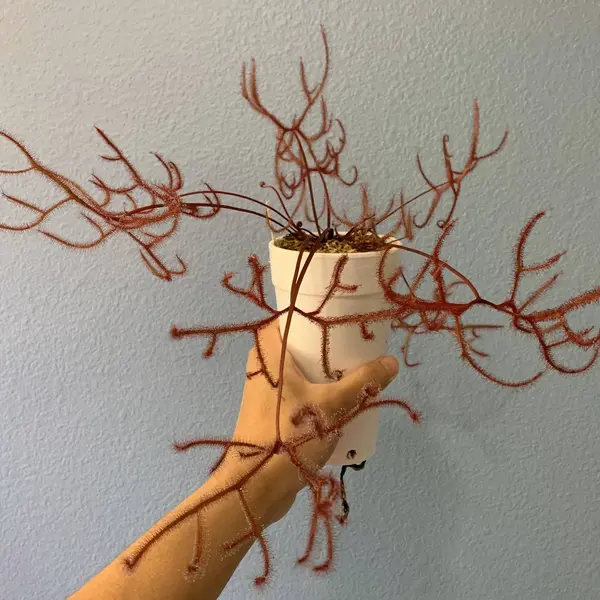
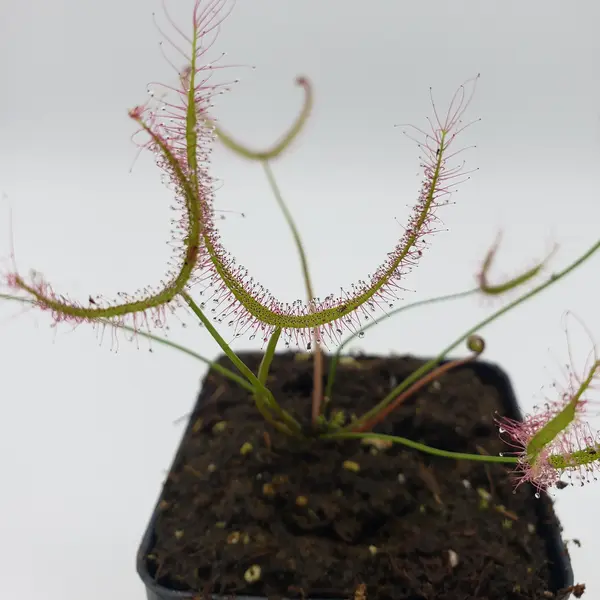
Drosera binata ‘Multifida’ is a dramatic and eye-catching carnivorous plant known for its tall, branching leaves that split into multiple forked segments. Each segment is covered with sticky, glistening tentacles used to trap insects. Native to Australia and New Zealand, this sundew is larger and more architectural than many rosette-forming Drosera, making it a standout specimen in any carnivorous plant collection.
Drosera binata ‘Multifida’ (Forked Sundew) Care Guide:
Light Requirements
Bright light is essential for strong growth and good dew production. Drosera binata ‘Multifida’ thrives in bright indirect light to full sun. Ideally, provide 4–6 hours of direct sunlight daily, especially gentle morning sun. Outdoors, it performs well in full sun to partial sun. Under grow lights, ensure strong intensity to prevent weak or floppy leaves. Insufficient light results in elongated stems and reduced stickiness.
Watering
Use only pure, mineral-free water such as rainwater, distilled water, or reverse osmosis (RO) water. Minerals in tap water can accumulate and damage the roots. Keep the soil consistently moist using the tray method by placing the pot in 2–3 cm of water during active growth. Unlike some smaller sundews, Drosera binata can tolerate brief periods of slightly lower water levels but should never be allowed to dry out completely.
Soil and Potting
Drosera binata ‘Multifida’ requires a nutrient-poor, well-draining medium. A mix of sphagnum peat moss and perlite or silica sand in a 1:1 ratio works well. Avoid any regular potting soil or fertilizer-enriched mixes, as these will kill the plant. Use plastic or glazed ceramic pots to prevent mineral leaching. This species develops a strong root system, so deeper pots are recommended. Repot every 1–2 years or when the medium degrades.
Temperature and Humidity
This sundew prefers moderate to warm temperatures between 15°C and 30°C. It tolerates cooler conditions better than many tropical sundews and can handle brief drops near 10°C. Humidity requirements are flexible, ranging from 40% to 80%. While higher humidity improves dew production, Drosera binata ‘Multifida’ adapts well to typical outdoor or indoor conditions if light and water needs are met.
Feeding
Drosera binata ‘Multifida’ is an efficient insect catcher, especially outdoors where it often traps flies, mosquitoes, and other insects. Feeding is not required if the plant has access to natural prey. Indoors, occasional feeding with small insects can support growth. Never apply fertilizer to the soil, as nutrients can burn the roots and kill the plant.
Dormancy and Seasonal Growth
In cooler climates, Drosera binata may enter a partial dormancy during winter. Growth slows, and some leaves may die back, leaving a resting crown at soil level. This is normal. Reduce watering slightly during dormancy, keeping the soil damp rather than waterlogged. Growth resumes vigorously in spring with longer days and warmer temperatures.
Pruning and Maintenance
Remove dead or blackened leaves at the base to keep the plant tidy and reduce the risk of mold. Healthy green growth should never be cut back unnecessarily, as it contributes to energy storage. Good air circulation helps prevent fungal problems.
Propagation
Propagation is easy through root cuttings, leaf cuttings, or division. Root cuttings placed horizontally on moist peat often produce new plantlets within weeks. This makes Drosera binata ‘Multifida’ a rewarding plant for growers interested in propagation.
Common Problems
Lack of dew usually indicates insufficient light or poor water quality. Weak, floppy leaves are often caused by low light. Blackened growth outside of dormancy may signal mineral buildup or root issues.
Toxicity
Drosera binata ‘Multifida’ is non-toxic to humans and pets.
Conclusion
With strong light, pure water, nutrient-poor soil, and adequate space to grow, Drosera binata ‘Multifida’ becomes a spectacular carnivorous plant. Its tall, branching leaves and vigorous insect-catching ability make it an excellent choice for both beginners and serious carnivorous plant collectors.
Related products
-
String of Bananas
Original price was: ₹450.00.₹249.00Current price is: ₹249.00.Add to cartSelling size: Mentioned in last Picture | Secure Packing The String of Bananas (Curio radicans or Senecio radicans) is a charming trailing succulent known for its long, cascading stems covered in plump, banana-shaped leaves. It’s a popular choice for hanging baskets and is generally easy to care for, especially for those who are new …
-
Black zz plant, Raven ZZ Plant
Price range: ₹99.00 through ₹499.00Select options This product has multiple variants. The options may be chosen on the product pageSelling size: Please Choose (Single – Bushy) | 2.5″-5” Pot Included | Secure Packing The Black ZZ Plant, or Raven ZZ Plant (Zamioculcas zamiifolia ‘Raven’), is a popular, exceptionally resilient houseplant known for its striking, nearly black foliage. It shares the easy-care nature of the standard green ZZ plant, making it perfect for beginners or …
-
Pilea Repens, Black Panamiga
Original price was: ₹280.00.₹149.00Current price is: ₹149.00.Add to cartSize: Single Plant | Jiffy Bag Caring for a Pilea Ripens (also known as Black Panamiga) involves understanding its specific needs to ensure it thrives. Here’s a breakdown of Pilea Repens, Black Panamiga key care aspects: Key Care Points: Light: Pilea repens prefers bright, indirect sunlight. Direct sunlight can scorch its leaves. Rotating the plant …
-
Pilea involucrata ‘Norfolk’ – Friendship Plant
Original price was: ₹450.00.₹199.00Current price is: ₹199.00.Add to cartSize: Single Plant | 2.5″ Pot Included | Free Shipping The Pilea involucrata ‘Norfolk’, commonly known as the Friendship Plant, is a delightful houseplant celebrated for its unique, velvety, quilted foliage. The leaves have a rich texture and a beautiful color palette, with deep green and bronze tones on the upper surface and a reddish-purple …
-
Golden Sedum Plant
Original price was: ₹549.00.₹349.00Current price is: ₹349.00.Add to cartSelling size: Well rooted plan | 2.5″ pot included The Golden Sedum (Sedum adolphii) is a popular succulent known for its bright, fleshy, evergreen leaves that can take on a beautiful golden-yellow or even reddish-pink tint in bright sun. It has a trailing or spreading growth habit, making it a great choice for hanging baskets, …
-
Philodendron ‘Prince of Orange’
Price range: ₹199.00 through ₹620.00Select options This product has multiple variants. The options may be chosen on the product pageSelling Size : Single Plant | Pot Included | Secure Packing The Philodendron ‘Prince of Orange’ is a stunning and popular hybrid known for its vibrant, ever-changing leaf colors. New leaves emerge as a brilliant orange or coppery color, and as they mature, they transition to a lime green, then a deep, glossy green. It …
-
Calathiya Rattlesnake Plant
Price range: ₹125.00 through ₹549.00Select options This product has multiple variants. The options may be chosen on the product pageSelling size: Please Choose | Secure Packing | 2.5″-4″ Pot Included Calathiya rattlesnake is a plant easy to care for. However, there are a few measures and precautions you need to take to grow and maintain yours. Here’s a comprehensive guide for rattlesnake plant : Light Calathea Lancifolia prefers bright, indirect light. Like most variegated …







 If you need any assistance, I'm always here. Have you found what you were looking for?