
Drosera spatulata
Original price was: ₹2,255.00.₹1,199.00Current price is: ₹1,199.00.
Selling Size : Single Plant | Pot Included | Secure Packing | Free Shipping
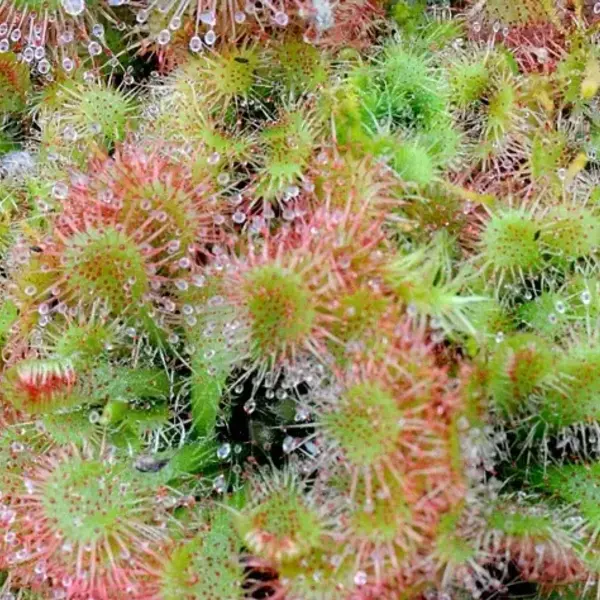
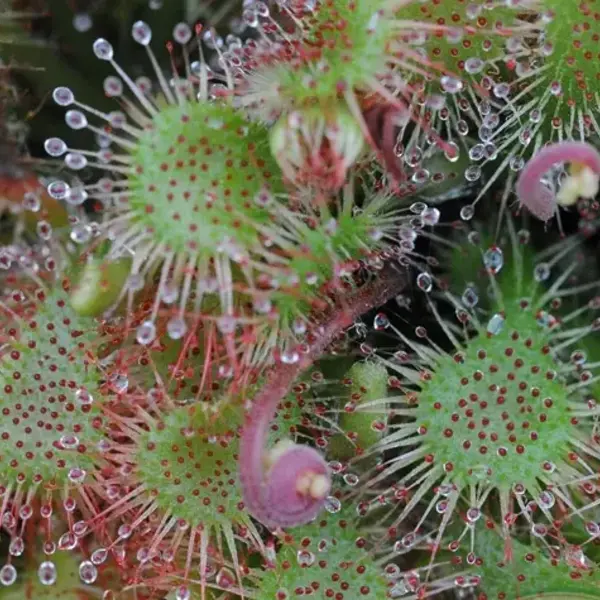
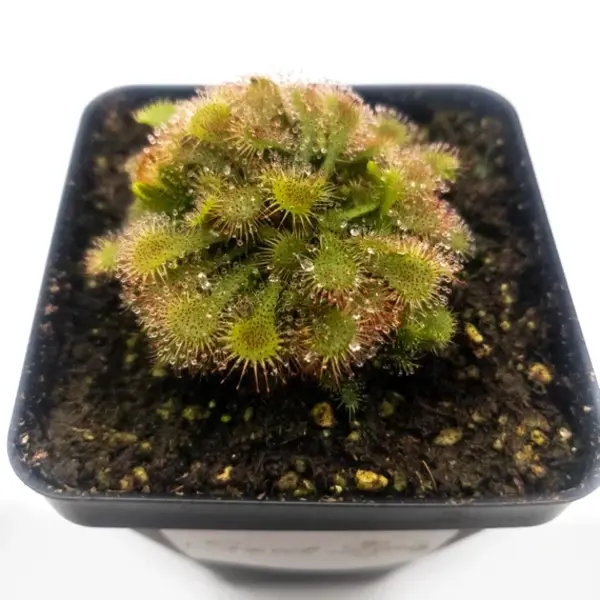
Drosera spatulata, commonly known as the spoon-leaf sundew, is a small but highly attractive carnivorous plant. It forms a compact rosette of spoon-shaped leaves covered with glistening, sticky tentacles that trap insects. Native to parts of Asia, Australia, and the Pacific, this sundew is one of the easiest Drosera species to grow and is ideal for beginners interested in carnivorous plants.
Drosera spatulata (Spoon-leaf Sundew) Care Guide :
Light Requirements
Bright light is essential for healthy growth and strong dew production. Drosera spatulata thrives in bright indirect light to full sun. Ideally, provide 4–6 hours of direct sunlight daily, especially gentle morning sun from an east-facing window. Under strong artificial grow lights, the plant grows compact and develops deep red coloration in the tentacles. In low light, leaves may stay green, stretch outward, and produce little to no sticky dew.
Watering
Drosera spatulata must be watered using only pure, mineral-free water. Always use rainwater, distilled water, or reverse osmosis (RO) water. Tap water usually contains dissolved minerals that can accumulate in the soil and damage the roots. Keep the soil consistently moist using the tray method by placing the pot in a shallow tray with 1–2 cm of water. Never allow the growing medium to dry out completely.
Soil and Potting
This sundew requires a nutrient-poor, acidic growing medium. A standard mix of sphagnum peat moss and perlite or silica sand in a 1:1 ratio works well. Do not use regular potting soil, compost, or fertilizer-enriched mixes, as these will quickly kill the plant. Plastic or glazed ceramic pots are recommended because they do not leach minerals into the soil. Repot every 1–2 years to refresh the medium and maintain healthy growth.
Temperature and Humidity
Drosera spatulata prefers warm to moderate temperatures between 18°C and 30°C. It can tolerate slightly cooler conditions but should be protected from frost. This species adapts well to a wide range of humidity levels, from 40% to 80%. While higher humidity can improve dew production, good airflow is important to prevent mold or fungal issues, especially in enclosed environments.
Feeding
Drosera spatulata feeds on small insects such as fungus gnats, mosquitoes, and fruit flies. Outdoors, it usually catches enough prey on its own. Indoors, occasional feeding may be helpful if insects are scarce. Feed only very small insects or powdered dried insects. Do not overfeed, and never fertilize the soil, as nutrients can burn the roots.
Dormancy
Unlike temperate sundews, Drosera spatulata does not require a true winter dormancy. Growth may slow slightly during cooler months or lower light conditions, but the plant remains active year-round. Continue regular watering and provide adequate light throughout the year.
Flowering and Propagation
This species flowers readily, producing small white or pink flowers on tall stalks. Flowering does not significantly weaken the plant. Drosera spatulata is easy to propagate through seeds, leaf cuttings, or division. It often self-seeds, producing new seedlings around the parent plant when conditions are favorable.
Common Problems
A lack of sticky dew usually indicates insufficient light, poor water quality, or low humidity. Browning or blackening leaves are normal as older leaves die off, but widespread damage may suggest mineral buildup or drying out. Pests are rare, but aphids may occasionally attack flower stalks.
Toxicity
Drosera spatulata is non-toxic to humans and pets, making it safe for homes with children and animals.
Conclusion
With bright light, pure water, consistently moist nutrient-poor soil, and moderate temperatures, Drosera spatulata is a hardy and rewarding carnivorous plant. Its sparkling, insect-catching leaves and easy-going nature make it an excellent choice for both beginners and experienced growers.
Related products
-
Golden Sedum Plant
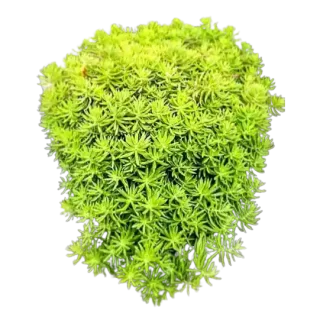
Original price was: ₹549.00.₹349.00Current price is: ₹349.00.Add to cartSelling size: Well rooted plan | 2.5″ pot included The Golden Sedum (Sedum adolphii) is a popular succulent known for its bright, fleshy, evergreen leaves that can take on a beautiful golden-yellow or even reddish-pink tint in bright sun. It has a trailing or spreading growth habit, making it a great choice for hanging baskets, …
-
Columbian Peperomia (Galaxy pepperomia)
Original price was: ₹345.00.₹183.65Current price is: ₹183.65.Read moreSelling size:Well rooted plant in a jiffy bag The Columbian Peperomia (Peperomia metallica var. columbiana) is a visually striking and relatively low-maintenance houseplant. It is also sometimes sold as “Galaxy Peperomia,” a name that hints at its unique foliage. This plant is known for its beautiful, semi-succulent leaves that have a dark green or bronze-purple …
-
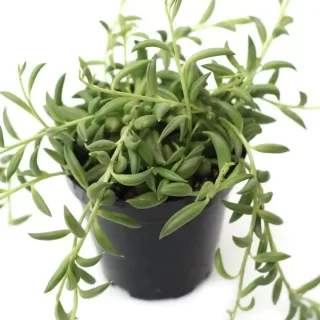
String of Bananas
Original price was: ₹450.00.₹249.00Current price is: ₹249.00.Add to cartSelling size: Mentioned in last Picture | Secure Packing The String of Bananas (Curio radicans or Senecio radicans) is a charming trailing succulent known for its long, cascading stems covered in plump, banana-shaped leaves. It’s a popular choice for hanging baskets and is generally easy to care for, especially for those who are new …
-
Dischidia Oiantha plant
Price range: ₹99.00 through ₹599.00Select options This product has multiple variants. The options may be chosen on the product pagePlant Size: Single plant | Secure Packing The Dischidia oiantha, often referred to as a “Hoya cousin,” is a charming, easy-to-care-for epiphyte with trailing vines and small, oval, succulent-like leaves. It’s a great choice for hanging baskets or for adding a touch of whimsy to a shelf. Here is a comprehensive guide to caring for …
-
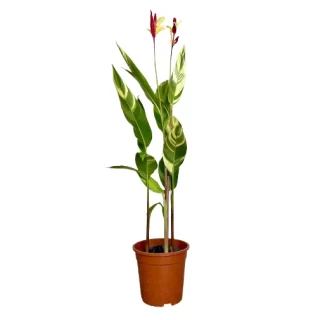
Heliconia Variegated – Super Rare
Original price was: ₹2,599.00.₹1,099.00Current price is: ₹1,099.00.Add to cartPlant size: Single plant | Pot Included | Free shipping The Variegated Heliconia (often a cultivar of Heliconia psittacorum, like ‘Lady Di’ or ‘Golden Torch’) is a striking tropical plant known for its banana-like leaves splashed with stripes of cream, yellow, or white. It is a demanding plant, requiring specific tropical conditions to thrive, especially …
-
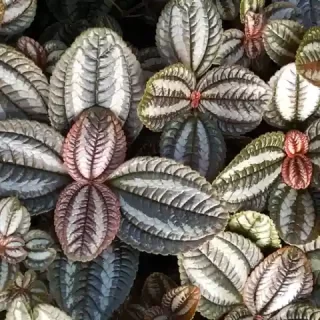
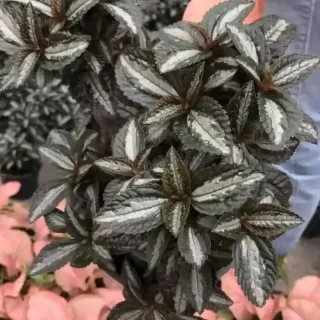
Pilea involucrata ‘Norfolk’ – Friendship Plant
Original price was: ₹450.00.₹199.00Current price is: ₹199.00.Add to cartSize: Single Plant | 2.5″ Pot Included | Free Shipping The Pilea involucrata ‘Norfolk’, commonly known as the Friendship Plant, is a delightful houseplant celebrated for its unique, velvety, quilted foliage. The leaves have a rich texture and a beautiful color palette, with deep green and bronze tones on the upper surface and a reddish-purple …
-
Black zz plant, Raven ZZ Plant
Price range: ₹99.00 through ₹499.00Select options This product has multiple variants. The options may be chosen on the product pageSelling size: Please Choose (Single – Bushy) | 2.5″-5” Pot Included | Secure Packing The Black ZZ Plant, or Raven ZZ Plant (Zamioculcas zamiifolia ‘Raven’), is a popular, exceptionally resilient houseplant known for its striking, nearly black foliage. It shares the easy-care nature of the standard green ZZ plant, making it perfect for beginners or …



 If you need any assistance, I'm always here. Have you found what you were looking for?