
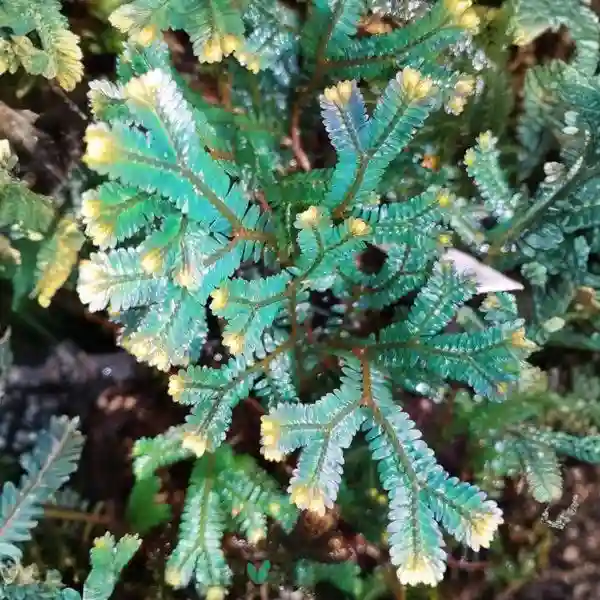
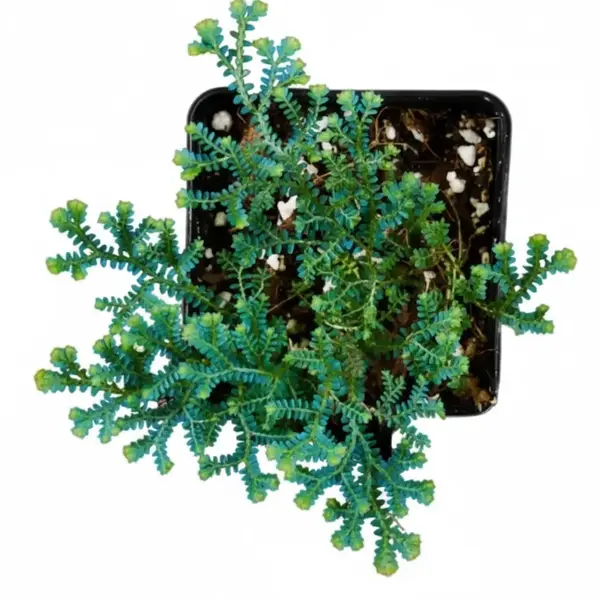
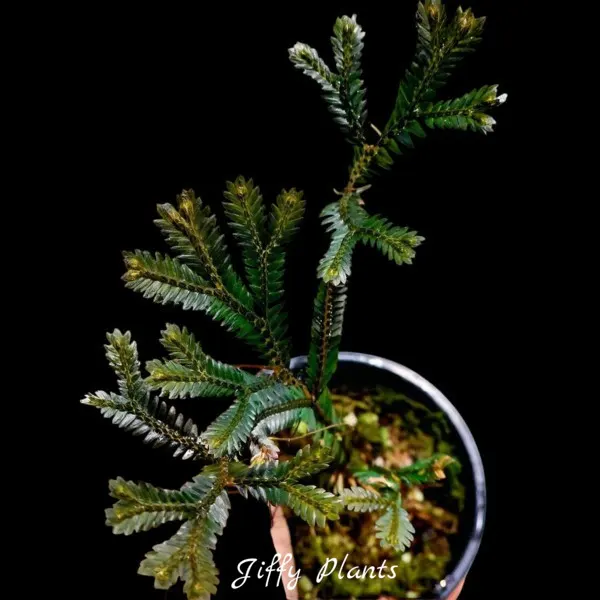
Selaginella sp. Rainbow
Original price was: ₹3,500.00.₹1,749.00Current price is: ₹1,749.00.
Out of stock
Email when stock available
Selling Size : Single Plant | Pot Included | Secure Packing | Free Delivery
Selaginella sp. Rainbow —also known as Rainbow Spike Moss—is a fascinating, rare tropical plant admired for its iridescent foliage that shifts between blue, pink, purple, and green depending on the light. Unlike true mosses, Selaginella is a primitive fern ally that thrives in humid, shaded forest floors. Its beauty lies in its delicate texture and magical colour play, but it does require consistent moisture and a stable environment. Here is a complete 600-word care guide to help your Rainbow Selaginella thrive.
Selaginella sp. Rainbow – Complete Care Guide :
1. Light Requirements
Rainbow Selaginella prefers medium to low indirect light. Too much light will wash out its iridescent colours and may scorch the thin fronds. Ideal locations include east-facing rooms, shaded balconies, or spots away from direct sun. Bright but indirect light enhances the rainbow sheen and keeps the foliage dense.
Avoid placing it in harsh sunlight, especially during the afternoon, as it can cause brown tips and leaf curling. If your indoor space is dim, LED grow lights set on low intensity also work well. Keep lights 30–40 cm above the plant for gentle illumination.
2. Watering Needs
Selaginella is extremely moisture-loving. The soil must remain consistently damp but never waterlogged. Water whenever the top layer of the soil begins to dry slightly. If the plant dries out completely even once, it may become crispy and difficult to revive.
Use room-temperature water and moisten the soil thoroughly, allowing excess water to drain. Avoid letting water sit at the bottom of the pot. In dry seasons or AC rooms, check the soil more frequently. You can also bottom-water by placing the pot in a tray for a few minutes to ensure even moisture.
3. Humidity Requirements
This plant absolutely thrives in very high humidity, ideally above 70%. Without high humidity, its fronds may brown at the edges or lose their vibrant colours.
Ways to maintain humidity:
-
Use a humidifier near the plant.
-
Place the pot on a pebble tray filled with water.
-
Keep it inside terrariums, which is the best environment for Selaginella.
-
Group it with other moisture-loving plants.
Avoid frequent misting directly on the leaves because prolonged wet foliage may encourage fungal issues.
4. Temperature
Rainbow Selaginella enjoys warm, stable temperatures between 18°C–27°C. It is sensitive to extremes. Cold drafts, sudden temperature changes, and hot, dry air from heaters or AC vents can stress the plant.
Never expose it to temperatures below 15°C, as it can cause sudden collapse or frond burn.

5. Soil Mix
Selaginella prefers a soft, moisture-retentive but breathable mix. The best soil should mimic forest-floor conditions. An ideal mix includes:
-
40% cocopeat or peat moss
-
30% perlite
-
20% compost or leaf mould
-
10% fine bark
This ensures moisture retention without turning soggy. Avoid compacted garden soil, as it suffocates delicate roots.
6. Potting and Repotting
Use shallow, wide pots because Selaginella grows horizontally rather than vertically. Terracotta or plastic pots work fine, but plastic maintains moisture better. Repot only when the plant overgrows the container or the soil becomes compacted. When repotting, handle gently, as the stems are fragile.
7. Fertilising
Selaginella grows in nutrient-rich forest floors but does not demand heavy fertilising. Feed lightly with a diluted liquid fertiliser (¼ strength) once every 4–6 weeks during the growing season. Overfertilising can scorch the plant and fade the rainbow effect. Do not fertilise in winter or during stress.

8. Pests & Problems
While Selaginella rarely attracts pests, stressful conditions may invite fungus gnats, spider mites, or mould. Improve airflow and maintain proper humidity balance. Treat pests with neem oil or mild horticultural soap—always dilute and avoid spraying heavily on delicate fronds.
Crisping, browning, and shrinking of foliage usually indicate low humidity or underwatering. Pale growth shows insufficient light.
9. Propagation
Selaginella ‘Rainbow’ is easy to propagate through division. Gently separate a clump with roots attached and plant it in similar moist soil. Keep humidity high until it establishes. Stems can also root if laid on moist substrate.
Related products
-
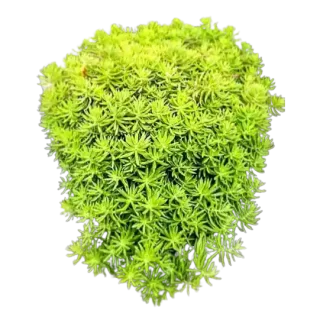
Golden Sedum Plant
Original price was: ₹549.00.₹349.00Current price is: ₹349.00.Add to cartSelling size: Well rooted plan | 2.5″ pot included The Golden Sedum (Sedum adolphii) is a popular succulent known for its bright, fleshy, evergreen leaves that can take on a beautiful golden-yellow or even reddish-pink tint in bright sun. It has a trailing or spreading growth habit, making it a great choice for hanging baskets, …
-
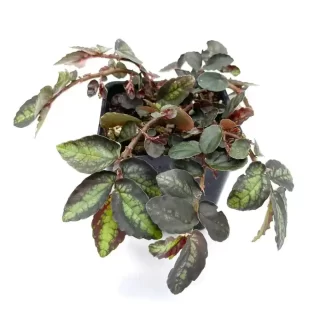
Pellionia repens var. pulchra
Original price was: ₹325.00.₹149.00Current price is: ₹149.00.Add to cartSelling size: Well rooted plant in a jiffy bag | Secure Packing The Pellionia repens var. pulchra, often called the Trailing Watermelon Begonia, is a beautiful and easy-to-care-for trailing plant. Its common name comes from the striking, patterned leaves that resemble the rind of a watermelon. Despite the name, it is not a true begonia …
-
Philodendron Xanadu
Original price was: ₹450.00.₹199.00Current price is: ₹199.00.Add to cartSelling size:Well rooted plant | 2.5″ Pot Included | Secure Packing The Philodendron Xanadu, now officially classified as Thaumatophyllum xanadu, is a fantastic and relatively easy-to-care-for houseplant. It’s known for its compact, bushy growth habit and deeply lobed, glossy green leaves that give it a sophisticated, tropical look. Here is a complete guide to caring …
-
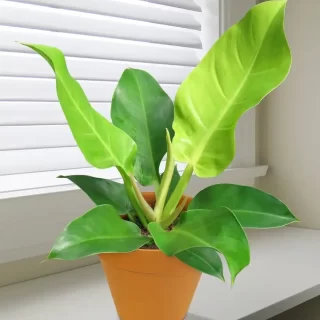
Philodendron Moonshine
Original price was: ₹1,250.00.₹249.00Current price is: ₹249.00.Add to cartSelling size: Single plant | Pot included | Secure Packing The Philodendron Moonshine (often also called ‘Moonlight’) is a popular hybrid known for its vibrant, almost glowing, chartreuse-colored leaves. It has an upright, self-heading growth habit, so unlike many vining philodendrons, it doesn’t need a trellis or pole. Here is a comprehensive guide to caring …
-
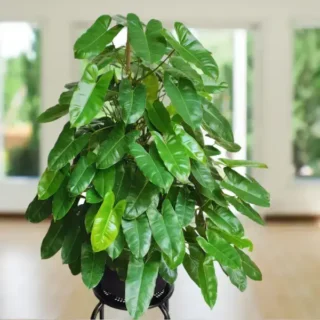
Philodendron Burle Marx Plant
Original price was: ₹485.00.₹149.00Current price is: ₹149.00.Add to cartSelling size: Single plant | Pot Included | Secure Packing The Philodendron Burle Marx is a fantastic and relatively easy-to-care-for plant, known for its glossy, spade-shaped leaves and dense, clumping growth. It’s often recommended as a great choice for beginner houseplant owners. Here is a comprehensive care guide for your Philodendron Burle Marx: Light …
-
Philodendron ‘Prince of Orange’
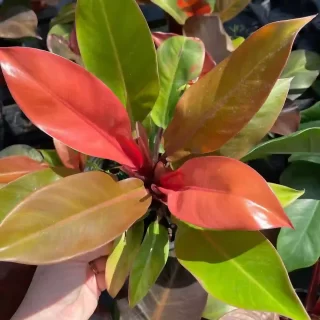
Price range: ₹199.00 through ₹620.00Select options This product has multiple variants. The options may be chosen on the product pageSelling Size : Single Plant | Pot Included | Secure Packing The Philodendron ‘Prince of Orange’ is a stunning and popular hybrid known for its vibrant, ever-changing leaf colors. New leaves emerge as a brilliant orange or coppery color, and as they mature, they transition to a lime green, then a deep, glossy green. It …
-
Heliconia Variegated – Super Rare
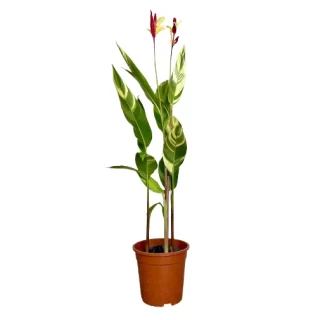
Original price was: ₹2,599.00.₹1,099.00Current price is: ₹1,099.00.Add to cartPlant size: Single plant | Pot Included | Free shipping The Variegated Heliconia (often a cultivar of Heliconia psittacorum, like ‘Lady Di’ or ‘Golden Torch’) is a striking tropical plant known for its banana-like leaves splashed with stripes of cream, yellow, or white. It is a demanding plant, requiring specific tropical conditions to thrive, especially …

 If you need any assistance, I'm always here. Have you found what you were looking for?