
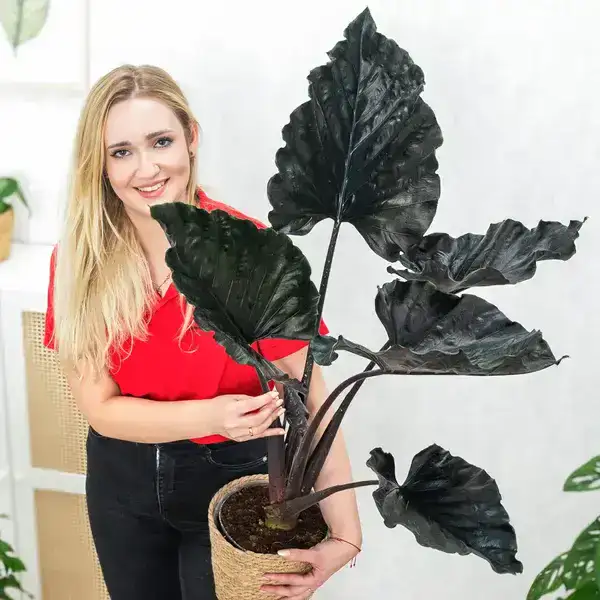
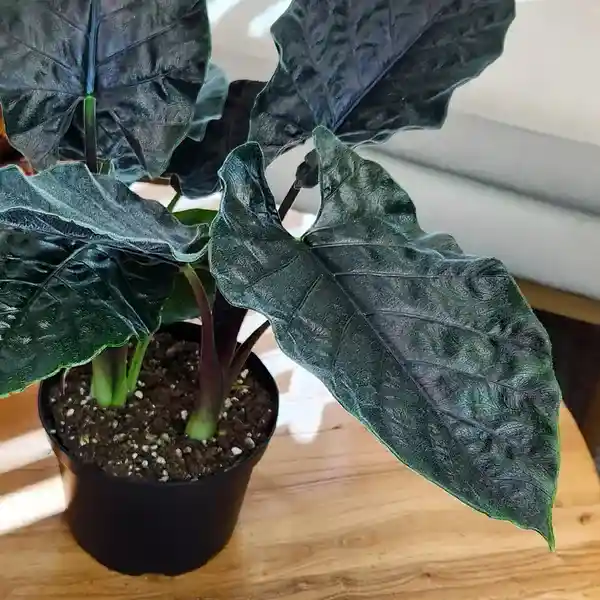
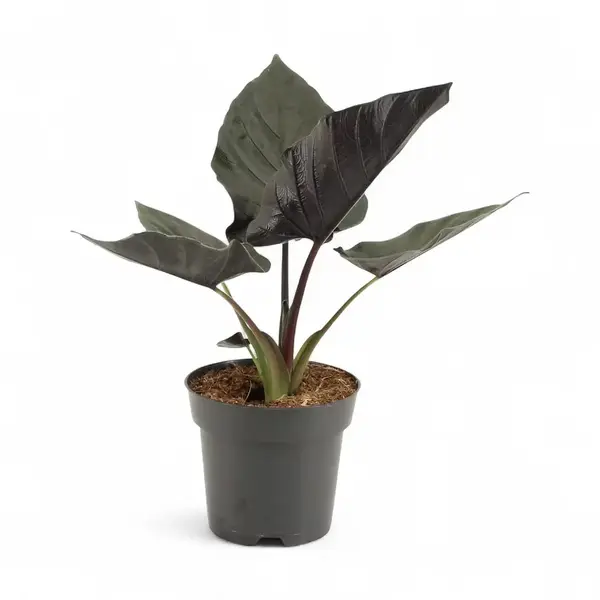
Alocasia Antoro Velvet
Original price was: ₹4,999.00.₹2,499.00Current price is: ₹2,499.00.
2 in stock
Selling Size : Single Plant | Pot Included | Secure Plant | Free Delivery
The Alocasia Antoro Velvet (sometimes referred to as Alocasia chienlii ‘Antoro Velvet’) is a stunning “jewel Alocasia” known for its dark, almost-black, velvety leaves. It requires consistent care to thrive indoors.
Here is a detailed guide to caring for your Alocasia Antoro Velvet :
1. Light
- Bright, Indirect Light is Best: This plant thrives in the bright, dappled light of its native tropical understory. Place it near an east or west-facing window, or a few feet away from a south-facing window.
- Avoid Direct Sun: Direct, strong sunlight will scorch the delicate leaves.
- Too Little Light: In insufficient light, the plant may become leggy, lose its rich, dark coloration, and struggle to grow new leaves.
2. Watering
- Keep Consistently Moist, But Not Soggy: The key to Alocasia care is balancing moisture. They are prone to root rot if overwatered, but they will droop and their leaves may crisp if allowed to dry out completely.
- Check the Soil: Water thoroughly when the top 1 to 2 inches of soil are dry to the touch.
- Drainage is Crucial: Always ensure the pot has drainage holes, and discard any excess water that collects in the saucer after watering. Reduce watering frequency in the winter when the plant’s growth slows.
3. Humidity
- High Humidity is a Must: Alocasias are tropical plants and require high humidity, ideally 60% or higher (some sources recommend ).
- Increase Humidity: Use a humidifier near the plant, place it on a pebble tray filled with water, or grow it in a naturally humid room like a kitchen or bathroom with adequate light.
- Caution with Misting: While some mist, the velvety texture of this particular Alocasia’s leaves can trap water, making it susceptible to mold or fungal spots. A humidifier is generally a safer and more effective option.
4. Soil and Potting
- Airy, Well-Draining Mix: The soil must be fast-draining to prevent “wet feet.” A good aroid mix is ideal.
- Recommended Mix: Use a loose mix of standard potting soil amended with plenty of chunky materials like orchid bark, perlite, pumice, or bio-coal to ensure high drainage and aeration. A common ratio is draining materials to potting mix.
- Potting: Alocasias generally prefer to be slightly root-bound. Only repot when roots are clearly visible from the drainage holes, and only move up to a pot 1-2 inches larger in diameter.
5. Temperature and Fertilizer
- Temperature: Maintain warm temperatures, ideally between and ( to ). They are very sensitive to cold; do not let the temperature drop below (). Keep them away from drafts.
- Fertilizer: Feed with a balanced liquid houseplant fertilizer diluted to half strength monthly during the growing season (spring and summer). Do not fertilize in fall and winter.
Important Note on Toxicity
Alocasia plants are considered toxic to humans and pets if ingested, so it’s best to keep them out of reach of children and animals.
You must be logged in to post a review.
Related products
-
Heliconia Variegated – Super Rare
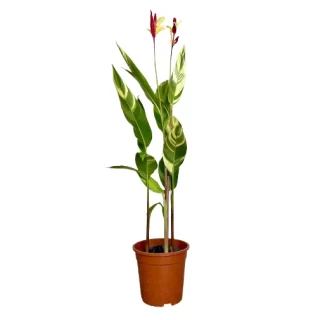
Original price was: ₹2,599.00.₹1,099.00Current price is: ₹1,099.00.Add to cartPlant size: Single plant | Pot Included | Free shipping The Variegated Heliconia (often a cultivar of Heliconia psittacorum, like ‘Lady Di’ or ‘Golden Torch’) is a striking tropical plant known for its banana-like leaves splashed with stripes of cream, yellow, or white. It is a demanding plant, requiring specific tropical conditions to thrive, especially …
-
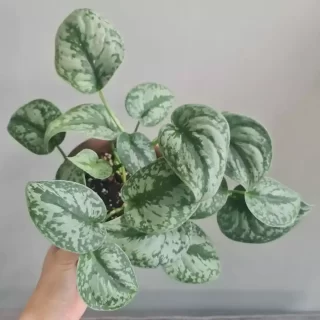
Scindapsus Pictus Exotica
Original price was: ₹380.00.₹99.00Current price is: ₹99.00.Add to cartSelling size: Single Plant | 2.5″ Pot Included The Scindapsus Pictus Exotica, also known as the silver pothos, is a houseplant with large, dark green leaves that have silver spots and mottling. Here’s a guide to caring for your Scindapsus pictus Exotica plant: Light: Prefers bright, indirect light. An east or west-facing window that’s about …
-
Black zz plant, Raven ZZ Plant
Price range: ₹99.00 through ₹499.00Select options This product has multiple variants. The options may be chosen on the product pageSelling size: Please Choose (Single – Bushy) | 2.5″-5” Pot Included | Secure Packing The Black ZZ Plant, or Raven ZZ Plant (Zamioculcas zamiifolia ‘Raven’), is a popular, exceptionally resilient houseplant known for its striking, nearly black foliage. It shares the easy-care nature of the standard green ZZ plant, making it perfect for beginners or …
-
Philodendron Xanadu
Original price was: ₹450.00.₹199.00Current price is: ₹199.00.Add to cartSelling size:Well rooted plant | 2.5″ Pot Included | Secure Packing The Philodendron Xanadu, now officially classified as Thaumatophyllum xanadu, is a fantastic and relatively easy-to-care-for houseplant. It’s known for its compact, bushy growth habit and deeply lobed, glossy green leaves that give it a sophisticated, tropical look. Here is a complete guide to caring …
-
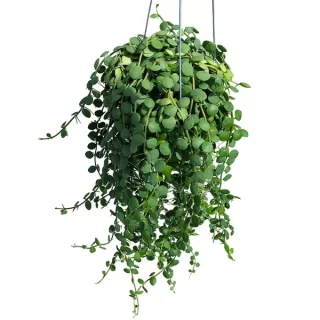
Dischidia nummularia (Pebble Beach/ Button Orchid)
Price range: ₹99.00 through ₹599.00Select options This product has multiple variants. The options may be chosen on the product pagePlant Size: Single plant | 2.5″ Pot Included he Dischidia nummularia, commonly known as the String of Nickels, Pebble Beach plant, or Button Orchid, is a charming epiphyte with trailing stems covered in small, round, succulent-like leaves. It’s a great choice for hanging baskets and is known for being relatively easy to care for, especially …
-
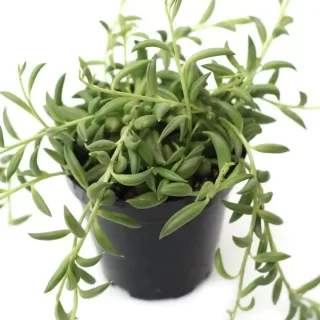
String of Bananas
Original price was: ₹450.00.₹249.00Current price is: ₹249.00.Add to cartSelling size: Mentioned in last Picture | Secure Packing The String of Bananas (Curio radicans or Senecio radicans) is a charming trailing succulent known for its long, cascading stems covered in plump, banana-shaped leaves. It’s a popular choice for hanging baskets and is generally easy to care for, especially for those who are new …
-
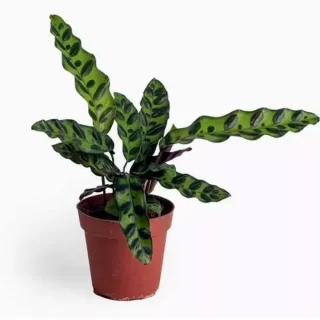
Calathiya Rattlesnake Plant
Price range: ₹125.00 through ₹549.00Select options This product has multiple variants. The options may be chosen on the product pageSelling size: Please Choose | Secure Packing | 2.5″-4″ Pot Included Calathiya rattlesnake is a plant easy to care for. However, there are a few measures and precautions you need to take to grow and maintain yours. Here’s a comprehensive guide for rattlesnake plant : Light Calathea Lancifolia prefers bright, indirect light. Like most variegated …
-
Philodendron Mexicanum
Original price was: ₹1,090.00.₹749.00Current price is: ₹749.00.Add to cartSelling size: Single Plant | Pot included The Philodendron mexicanum is a beautiful vining plant known for its long, arrow-shaped leaves with a striking deep maroon or reddish underside. As its name suggests, it is native to the tropical forests of Mexico. It’s a relatively easy-to-care-for plant, especially for those familiar with other vining philodendrons. …


 If you need any assistance, I'm always here. Have you found what you were looking for?
Reviews
There are no reviews yet.