
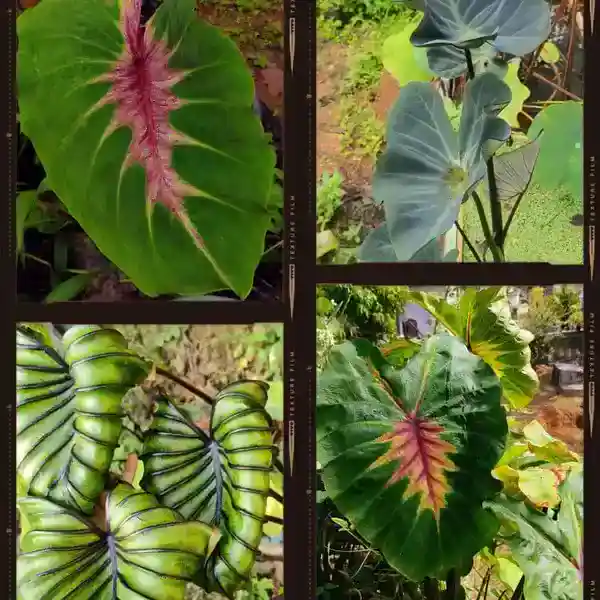
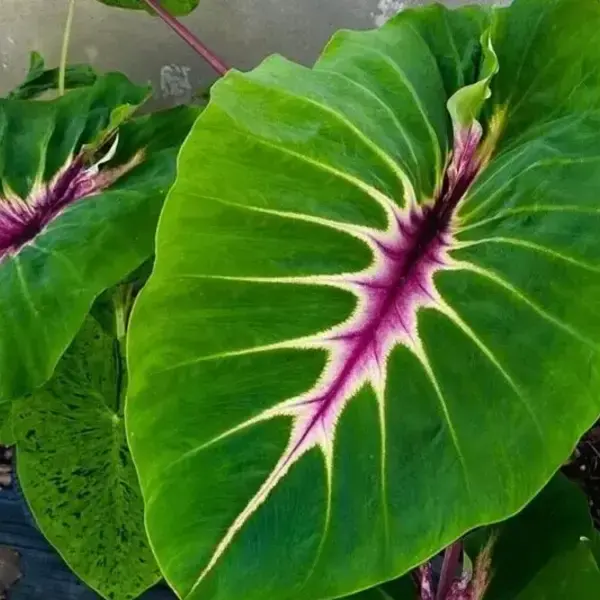
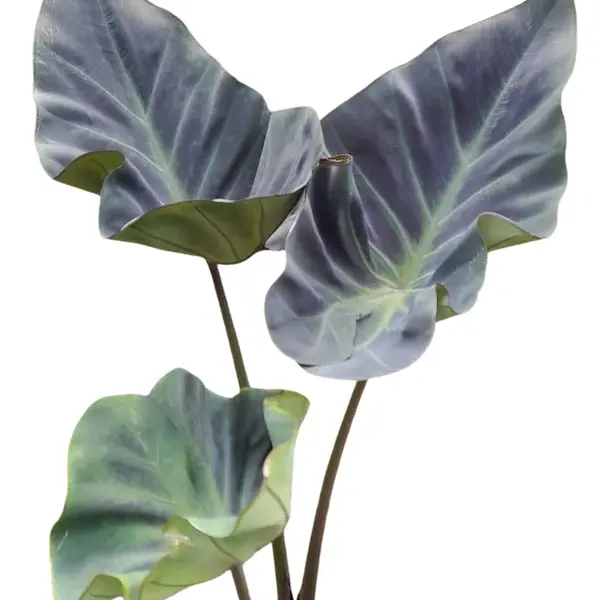

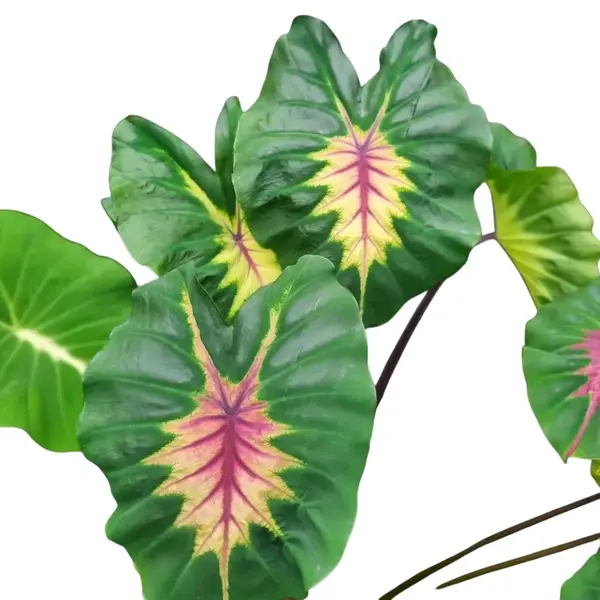
Colocasia 4 Varieties Pack
Original price was: ₹4,299.00.₹2,499.00Current price is: ₹2,499.00.
Selling Part : A Rhizome | Secure Packing | Free Delivery
Colocasia 4 Varieties Pack Combo Includes
- Colocasia Papua mains
- Colocasia kopeka
- Colocasia pharoph mask
- Colocasia Light Pillar
Colocasia plants, commonly known as Elephant Ears, are tropical perennials known for their large, dramatic, heart-shaped leaves. They are relatively easy to care for, thriving with the right conditions.
Here’s a comprehensive guide care for Colocasia :
Light
- Bright, indirect light is ideal. Colocasia plants love bright light but can also adapt to shadier conditions.
- Avoid direct sun, especially in the afternoon, as it can scorch and bleach the leaves.
- Varieties with darker leaves may need more sun to maintain their color.
- In low-light conditions, the plant may become “leggy” and topple over.
Water
- Colocasia plants are water lovers. They prefer consistently moist soil and can even be grown in boggy areas or shallow water.
- Water daily during the spring and summer growing seasons to keep the soil well-saturated.
- Do not let the soil dry out completely, as this can cause the leaves to wilt.
- While they love water, good drainage is still important to prevent root rot.
Soil
- Use rich, loamy, and well-draining soil. Colocasia thrives in soil that is heavy and fertile but also has good drainage.
- A mixture of clay or loam with compost is ideal. You can also add worm castings, as they help with water retention.
- A general-purpose potting mix with perlite or sand can also work well.
Fertilizer
- Colocasia are “heavy feeders” and benefit from regular fertilization during the growing season (spring and summer).
- Use a balanced, water-soluble fertilizer, such as a 20-20-20 ratio.
- Fertilize every 7-14 days for optimal growth.
- Stop fertilizing in the fall and winter as the plant enters dormancy.
Temperature and Humidity
- Colocasia are tropical plants and prefer warm temperatures, ideally between 68-86°F (20-30°C).
- They are sensitive to cold and can be damaged if temperatures drop below 50°F (10°C).
- In cooler climates (USDA zones 8 and below), they are often grown as annuals or overwintered indoors by digging up the corms.
- High humidity is essential. To increase humidity, you can mist the leaves regularly, use a humidifier, or place the plant in a naturally humid room like a bathroom or kitchen.
Other Care Tips
- Pruning: Remove any yellowing or damaged leaves at the base to keep the plant tidy and encourage new growth.
- Pests: Keep an eye out for common pests like aphids, spider mites, and mealybugs.
- Repotting: Repot every two to three years or when the roots become crowded. Choose a pot that is one size larger than the current one.
You must be logged in to post a review.
Related products
-
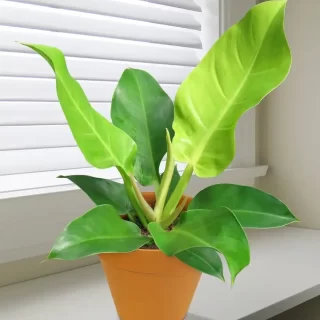
Philodendron Moonshine
Original price was: ₹1,250.00.₹249.00Current price is: ₹249.00.Add to cartSelling size: Single plant | Pot included | Secure Packing The Philodendron Moonshine (often also called ‘Moonlight’) is a popular hybrid known for its vibrant, almost glowing, chartreuse-colored leaves. It has an upright, self-heading growth habit, so unlike many vining philodendrons, it doesn’t need a trellis or pole. Here is a comprehensive guide to caring …
-
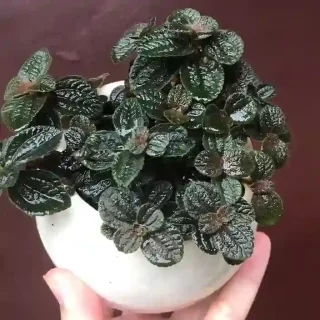
Pilea Repens, Black Panamiga
Original price was: ₹280.00.₹149.00Current price is: ₹149.00.Add to cartSize: Single Plant | Jiffy Bag Caring for a Pilea Ripens (also known as Black Panamiga) involves understanding its specific needs to ensure it thrives. Here’s a breakdown of Pilea Repens, Black Panamiga key care aspects: Key Care Points: Light: Pilea repens prefers bright, indirect sunlight. Direct sunlight can scorch its leaves. Rotating the plant …
-
Philodendron Xanadu
Original price was: ₹450.00.₹199.00Current price is: ₹199.00.Add to cartSelling size:Well rooted plant | 2.5″ Pot Included | Secure Packing The Philodendron Xanadu, now officially classified as Thaumatophyllum xanadu, is a fantastic and relatively easy-to-care-for houseplant. It’s known for its compact, bushy growth habit and deeply lobed, glossy green leaves that give it a sophisticated, tropical look. Here is a complete guide to caring …
-
Chlorophytum Spider Live Plant
Original price was: ₹249.00.₹99.00Current price is: ₹99.00.Add to cartSelling size: Well rooted Single plant | 2.5″ Pot included Chlorophytum Spider, also the Spider Plant is an impressive houseplant which is the perfect plant for any beginner. A NASA certified air purifier, its long, green foliage with white variegations look good in both hanging planters and as desktop setups. In favourable conditions, it blooms …
-
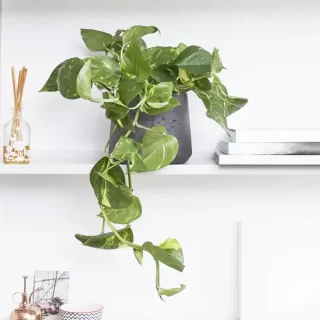
Golden Pothos
Original price was: ₹355.00.₹99.00Current price is: ₹99.00.Add to cartSelling size : Well rooted plant | 2.5″ pot included The Golden Pothos (Epipremnum aureum), also known as Devil’s Ivy, is one of the most popular and easiest houseplants to care for, making it an excellent choice for beginners. It’s a vining plant with heart-shaped leaves that are a vibrant green, often with splashes or …
-
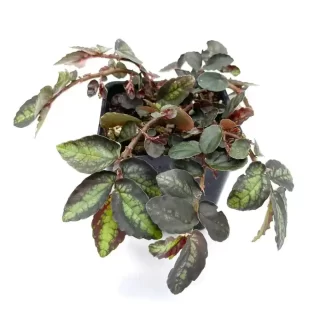
Pellionia repens var. pulchra
Original price was: ₹325.00.₹149.00Current price is: ₹149.00.Add to cartSelling size: Well rooted plant in a jiffy bag | Secure Packing The Pellionia repens var. pulchra, often called the Trailing Watermelon Begonia, is a beautiful and easy-to-care-for trailing plant. Its common name comes from the striking, patterned leaves that resemble the rind of a watermelon. Despite the name, it is not a true begonia …
-
Philodendron ‘Prince of Orange’
Price range: ₹199.00 through ₹620.00Select options This product has multiple variants. The options may be chosen on the product pageSelling Size : Single Plant | Pot Included | Secure Packing The Philodendron ‘Prince of Orange’ is a stunning and popular hybrid known for its vibrant, ever-changing leaf colors. New leaves emerge as a brilliant orange or coppery color, and as they mature, they transition to a lime green, then a deep, glossy green. It …
-
Scindapsus Pictus Exotica
Original price was: ₹380.00.₹99.00Current price is: ₹99.00.Add to cartSelling size: Single Plant | 2.5″ Pot Included The Scindapsus Pictus Exotica, also known as the silver pothos, is a houseplant with large, dark green leaves that have silver spots and mottling. Here’s a guide to caring for your Scindapsus pictus Exotica plant: Light: Prefers bright, indirect light. An east or west-facing window that’s about …



 If you need any assistance, I'm always here. Have you found what you were looking for?
Reviews
There are no reviews yet.