
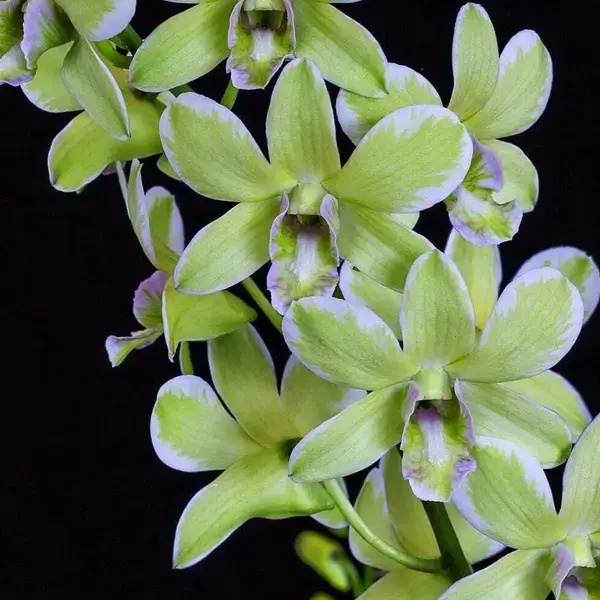
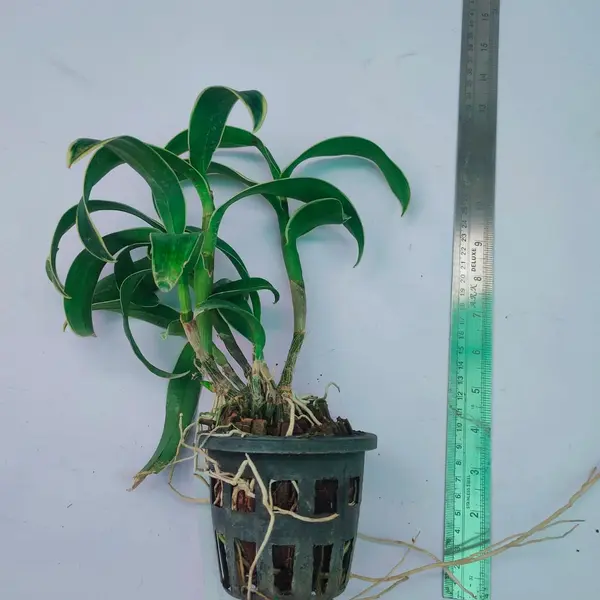
Dendrobium Variegated Green Blooming Stage
Original price was: ₹1,149.00.₹899.00Current price is: ₹899.00.
Selling size : Last image | Net pot included | Secure packing
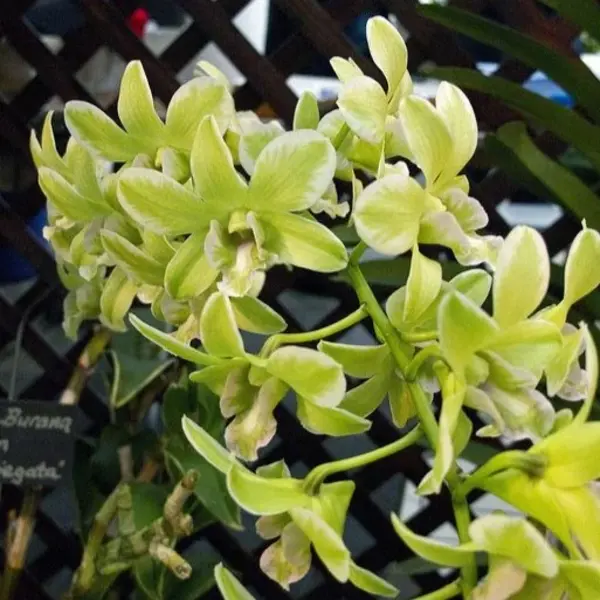
Dendrobium Variegated Green Blooming Stage are a large and diverse genus, and while the “variegated green blooming” aspect specifically refers to hybrids like ‘Burana Jade Variegated’ or ‘Burana Green ‘Variegata” which have variegated leaves and produce green-hued flowers, the general care principles for most Dendrobiums apply.
Here’s a comprehensive guide to caring for your Dendrobium Variegated Green Blooming Stage:
1. Light:
- Bright, Indirect Light is Key: Dendrobiums thrive in bright, indirect light. An east-facing window where they receive bright morning sun until noon, or a south-facing window with a sheer curtain to filter intense light, are ideal.
- Avoid Direct Sun: Direct, strong sunlight, especially during the hottest parts of the day (March to October in many regions), can scorch the variegated leaves, causing white or brown patches.
- Signs of Insufficient Light: If your orchid isn’t flowering, or if it produces many tiny offshoot plants (keikis) on young canes, it likely needs more light.
2. Temperature & Humidity:
- Warm Growing: Most Dendrobiums are warm-growing orchids.
- Daytime: Aim for 70°F to 85°F (20°C to 30°C).
- Nighttime: A crucial 10°F (6°C) drop, to around 60°F to 65°F (15°C to 18°C), is often beneficial for promoting blooming, especially for species that require a winter rest.
- Humidity: They prefer intermediate to high humidity levels, between 50% and 70%.
- Increasing Humidity: Use a humidifier or a humidity tray (a tray with pebbles and water, ensuring the pot isn’t sitting directly in water to prevent root rot). Misting can also help, especially in dry climates.
- Signs of Low Humidity: Brown leaf tips can indicate the air is too dry.
- Air Circulation: Good air circulation is vital to prevent fungal diseases. If your growing space is poorly ventilated, consider using a small oscillating fan. Avoid cold drafts.
3. Watering:
- Allow to Dry Slightly: Dendrobiums prefer to dry slightly between waterings. The potting media should become lightly damp before you water again. While they can tolerate “bone dry” conditions, consistent dryness will lead to cane shriveling.
- Frequent and Heavy Watering During Growth & Bloom: During active growth (spring to early fall) and especially during flowering, water frequently and heavily. Insufficient water during flowering can lead to bud blast (buds drying up and falling off).
- Reduced Watering in Winter: From fall through winter, as growth pauses and many Dendrobiums enter a dry rest, reduce watering. The goal is to water the root system as necessary without overwatering and causing root rot. Some deciduous Dendrobiums may require a completely dry rest.
- Morning Waterings: Always water in the morning to allow the leaves time to dry before night, which helps prevent bacterial growth.
- Water Quality: Use water low in alkalinity, such as rainwater, distilled water, or reverse osmosis water. If using tap water, be aware that mineral buildup will necessitate more frequent repotting.
- Draining: Ensure excellent drainage. Never let your orchid sit in standing water.
4. Fertilizing:
- Active Growth: During the active growing season (spring and summer), fertilize regularly.
- Bark Mix: If potted in a bark mix, fertilize every time you water, flushing with non-softened water once a month to rinse away salt and mineral buildup.
- Sphagnum Moss: If potted in sphagnum moss, fertilize every 3rd watering.
- Fertilizer Type: A balanced orchid fertilizer (e.g., NPK 20-20-20 or similar) is good for overall growth. For promoting blooms, a high-phosphorus fertilizer (e.g., NPK 0-52-34) can be used.
- Strength: Use a diluted solution (e.g., 1 gram per liter of water).
- Stop in Fall/Winter: Stop feeding in September to encourage the plant to enter its winter rest, which is essential for successful flowering in late winter or early spring.
- Never Fertilize Dry Plants: Do not fertilize a plant that is completely dry, as this can damage the roots.
5. Potting & Repotting:
- Potting Mix: Dendrobiums are epiphytes, meaning they grow on trees in their natural habitat. They need a well-draining, airy potting mix. Common options include orchid bark, coconut husk, or a mix of fir bark, peat moss, and perlite. Avoid regular potting soil.
- Pot Size: Dendrobiums prefer to be slightly “root-bound.” Choose a pot that is only slightly larger than the root ball. When repotting, select a pot large enough to accommodate four to six new canes. Clay pots are often preferred as they allow water to evaporate faster.
- Repotting Frequency: Repot every 2-3 years, or when the potting mix breaks down and no longer drains properly.
- When to Repot: The best time to repot is in the spring, after the plant has finished blooming.
- Process:
- Carefully remove the plant from its old pot and remove all old media.
- Trim off any dead or mushy roots (they will be brown or black and soft) and any dead canes.
- Position the plant with its oldest canes to the edge of the new pot.
- Spread the roots out and fill the pot with fresh potting medium, ensuring the plant is at the same height as in its previous pot. The mix should be about one inch below the top of the pot.
- Do not water the media for at least 3 days after repotting to allow any cuts or breaks in the roots to callous and prevent rotting.
6. Post-Bloom Care:
- Cut Flower Spikes: Once the blooms are done, cut the flower sprays just where they meet the canes.
- Do Not Remove Canes: Leafless or older Dendrobium canes (pseudobulbs) should not be removed as they store nutrients and water, and can even produce new flowers or keikis in the future.
7. Common Problems & Pests:
- Yellow Leaves: Can be a sign of overwatering or too much direct sunlight.
- No Bloom: Often due to insufficient light or lack of a proper winter rest period (temperature drop and reduced watering).
- Pests: Watch out for mealybugs, spider mites, and scale insects.
- Treatment: For mealybugs, a solution of 1:1 water and rubbing alcohol with a few drops of dish soap can be sprayed. For general pests, insecticidal soap is effective. Regularly inspect your plant, especially where leaves meet canes.
- Root Rot: Primarily caused by overwatering and/or poor drainage.
- Sunburn: White or brown patches on leaves from too much direct sun.
By providing consistent care tailored to its needs, your variegated green blooming Dendrobium should thrive and reward you with its unique foliage and beautiful green flowers!
You must be logged in to post a review.
Related products
-
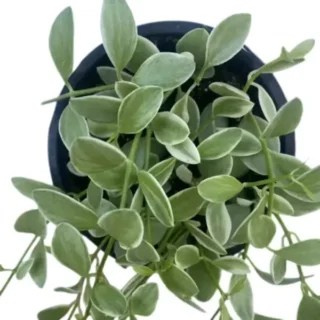
String Of Nickels (Dischidia nummularia)
Price range: ₹99.00 through ₹599.00Select options This product has multiple variants. The options may be chosen on the product pageSelling size: Well rooted plant in a Jiffy bag The Dischidia nummularia, commonly known as the String of Nickels or Button Orchid, is a delightful and easy-to-care-for trailing epiphyte. Its common name comes from its small, round, coin-shaped leaves that densely cover its long, slender stems. As a relative of the Hoya, it shares a similar …
-
Golden Sedum Plant
Original price was: ₹549.00.₹349.00Current price is: ₹349.00.Add to cartSelling size: Well rooted plan | 2.5″ pot included The Golden Sedum (Sedum adolphii) is a popular succulent known for its bright, fleshy, evergreen leaves that can take on a beautiful golden-yellow or even reddish-pink tint in bright sun. It has a trailing or spreading growth habit, making it a great choice for hanging baskets, …
-
Black zz plant, Raven ZZ Plant
Price range: ₹99.00 through ₹499.00Select options This product has multiple variants. The options may be chosen on the product pageSelling size: Please Choose (Single – Bushy) | 2.5″-5” Pot Included | Secure Packing The Black ZZ Plant, or Raven ZZ Plant (Zamioculcas zamiifolia ‘Raven’), is a popular, exceptionally resilient houseplant known for its striking, nearly black foliage. It shares the easy-care nature of the standard green ZZ plant, making it perfect for beginners or …
-
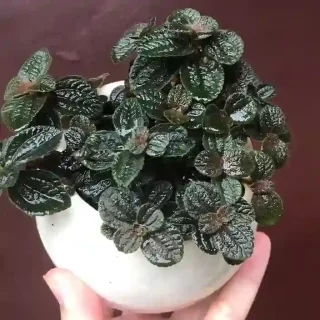
Pilea Repens, Black Panamiga
Original price was: ₹280.00.₹149.00Current price is: ₹149.00.Add to cartSize: Single Plant | Jiffy Bag Caring for a Pilea Ripens (also known as Black Panamiga) involves understanding its specific needs to ensure it thrives. Here’s a breakdown of Pilea Repens, Black Panamiga key care aspects: Key Care Points: Light: Pilea repens prefers bright, indirect sunlight. Direct sunlight can scorch its leaves. Rotating the plant …
-
Pellionia repens var. pulchra
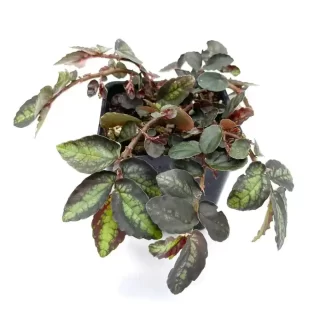
Original price was: ₹325.00.₹149.00Current price is: ₹149.00.Add to cartSelling size: Well rooted plant in a jiffy bag | Secure Packing The Pellionia repens var. pulchra, often called the Trailing Watermelon Begonia, is a beautiful and easy-to-care-for trailing plant. Its common name comes from the striking, patterned leaves that resemble the rind of a watermelon. Despite the name, it is not a true begonia …
-
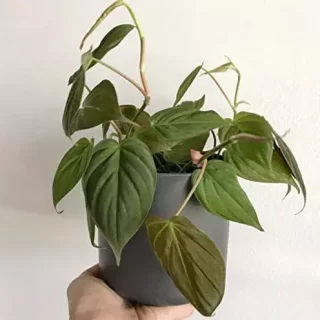
Philodendron Mican plant
Original price was: ₹650.00.₹99.00Current price is: ₹99.00.Add to cartSelling size: A well rooted plant | 2.5″ Pot Included The Philodendron Micans (Philodendron hederaceum ‘Micans’), also known as the Velvet-Leaf Philodendron, is a popular, easy-care trailing or climbing houseplant prized for its unique, velvety, heart-shaped leaves that emerge a beautiful chartreuse/pink and mature to a deep, iridescent, bronze-green with hints of purple. Here is …
-
Philodendron Xanadu
Original price was: ₹450.00.₹199.00Current price is: ₹199.00.Add to cartSelling size:Well rooted plant | 2.5″ Pot Included | Secure Packing The Philodendron Xanadu, now officially classified as Thaumatophyllum xanadu, is a fantastic and relatively easy-to-care-for houseplant. It’s known for its compact, bushy growth habit and deeply lobed, glossy green leaves that give it a sophisticated, tropical look. Here is a complete guide to caring …



 If you need any assistance, I'm always here. Have you found what you were looking for?
Reviews
There are no reviews yet.