
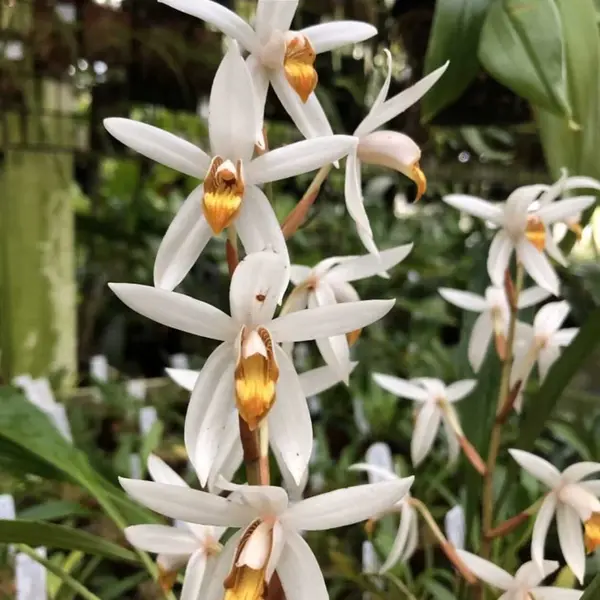
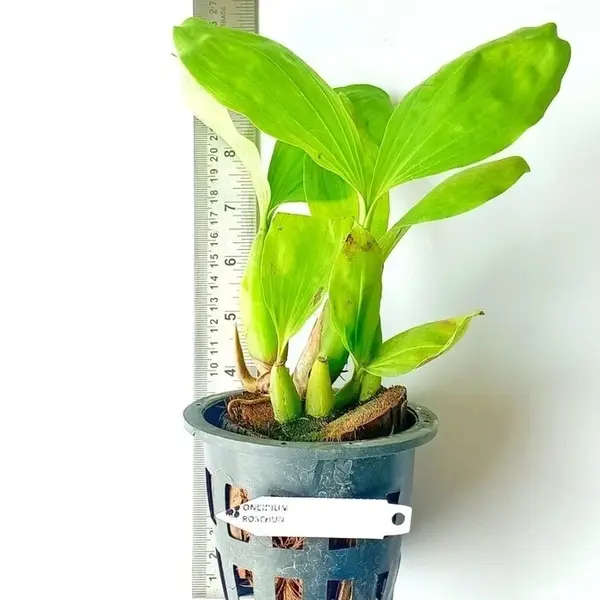
Ceologyn Patchastachya
Original price was: ₹1,699.00.₹1,399.00Current price is: ₹1,399.00.
Ceologyn Patchastachya is a fascinating orchid species, though information specifically on its care can be less abundant than for more common Coelogyne species like C. cristata or C. rochussenii. We can infer its care requirements based on general Coelogyne cultivation principles and its likely natural habitat.
Here’s a general guide for Ceologyn Patchastachya care:
Light:
- Bright, diffuse light: Like most Coelogyne species, C. patchastachya prefers bright, indirect light. Think of the light found under a tree canopy – not direct, scorching sun, but plenty of brightness.
- Avoid direct midday sun: Especially in hotter climates (like India), direct sun can easily scorch the leaves. East or west-facing windows are often ideal indoors. If growing outdoors, filtered light (e.g., under a shade cloth or a tree) is essential.
- Light intensity: Aim for around 20,000-40,000 lux (2,000-4,000 foot-candles). Too little light will result in dark green, floppy leaves and poor blooming; too much will cause yellowing or burnt spots.
Temperature and Humidity:
- Intermediate to Warm-growing: While some Coelogyne are cool growers (like C. cristata), many, especially those from lowland areas, prefer intermediate to warm conditions. Given the general range for Coelogyne species, aiming for:
- Daytime: 21°C to 27°C (70°F to 80°F)
- Nighttime: 15°C to 21°C (60°F to 70°F)
- Some species can tolerate brief periods of higher temperatures if humidity and air movement are good. Avoid temperatures below 10°C (50°F) for extended periods.
- High Humidity: Coelogyne generally thrive in high humidity, ideally around 60-80%.
- Indoors, use a humidity tray, humidifier, or group plants together.
- Good air circulation is critical to prevent fungal issues, especially with high humidity. Fans can be very beneficial.
Watering:
- Active Growth (Spring/Summer): Water heavily and frequently, allowing the potting mix to approach dryness but not become bone dry between waterings. The pseudobulbs should remain plump.
- Rest Period (Autumn/Winter): Many Coelogyne species benefit from a drier, cooler rest period after flowering or when new growths have matured. During this time, reduce watering significantly, only watering enough to prevent severe shriveling of the pseudobulbs. Some slight shriveling is normal.
- Quality of Water: Use good quality water, such as rainwater, distilled water, or reverse osmosis water, as Coelogyne can be sensitive to mineral buildup from hard tap water. Water in the morning so the leaves have time to dry.
Feeding:
- Active Growth: Fertilize regularly with a balanced orchid-specific fertilizer (e.g., 20-20-20) at a dilute strength (1/4 to 1/2 strength) every 1-2 weeks during the active growing season.
- Rest Period: Reduce or cease fertilization during the rest period.
- If using tap water, regular flushing of the potting mix and more frequent repotting may be necessary to prevent salt buildup.
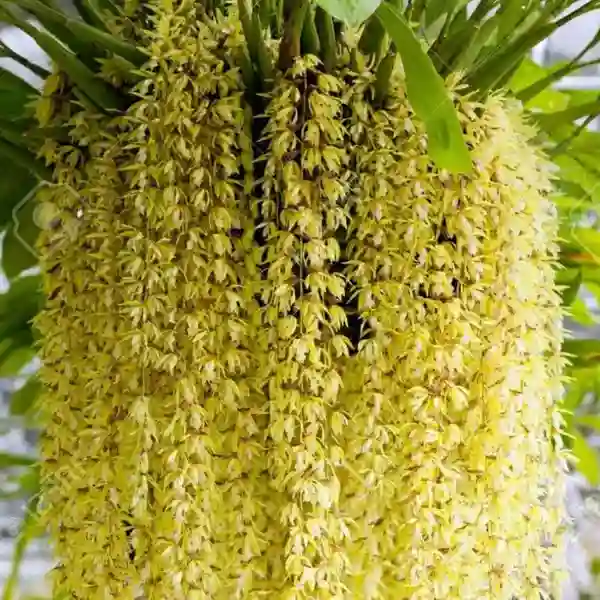
Potting and Repotting:
- Potting Medium: Coelogyne generally have relatively fine root systems. A well-draining, yet moisture-retentive mix is ideal. Common mixes include:
- Fine to medium fir bark with perlite.
- A mix of chopped tree fern fiber, perlite, cut sphagnum moss, and charcoal.
- Some growers successfully use sphagnum moss, especially in drier environments, but it requires careful watering to avoid rot.
- Container: Shallow pots or baskets are often preferred, especially for species with a creeping growth habit or pendulous flower spikes. Ensure good drainage.
- Repotting: Coelogyne are often sensitive to disturbance and can sulk or delay flowering for a year or two after repotting. Only repot when absolutely necessary, such as when the plant outgrows its pot, the mix breaks down, or the plant shows signs of decline due to old media. The best time to repot is when new root growth is just beginning. When dividing, aim for divisions of at least 3-5 pseudobulbs to ensure the plant recovers well.
Important Note: Since specific information on Coelogyne patchastachya is less common, always observe your plant closely. Its leaves, pseudobulbs, and overall vigor will tell you if the conditions are right or if adjustments are needed. Happy orchid growing!
You must be logged in to post a review.
Related products
-
Wandering Jew Plant
Original price was: ₹305.00.₹149.00Current price is: ₹149.00.Add to cartSelling size: This plant comes in a 2.5″ Square pot The Wandering Jew Plant, also known as the Tradescantia! They’re such vibrant and easy-to-love plants. To keep yours thriving, here’s a rundown of Wandering Jew Plant care needs: Light: They absolutely love bright, indirect sunlight. Think of a spot near an east- or west-facing window …
-
Philodendron Mican plant
Original price was: ₹650.00.₹99.00Current price is: ₹99.00.Add to cartSelling size: A well rooted plant | 2.5″ Pot Included The Philodendron Micans (Philodendron hederaceum ‘Micans’), also known as the Velvet-Leaf Philodendron, is a popular, easy-care trailing or climbing houseplant prized for its unique, velvety, heart-shaped leaves that emerge a beautiful chartreuse/pink and mature to a deep, iridescent, bronze-green with hints of purple. Here is …
-
Pilea involucrata ‘Norfolk’ – Friendship Plant
Original price was: ₹450.00.₹199.00Current price is: ₹199.00.Add to cartSize: Single Plant | 2.5″ Pot Included | Free Shipping The Pilea involucrata ‘Norfolk’, commonly known as the Friendship Plant, is a delightful houseplant celebrated for its unique, velvety, quilted foliage. The leaves have a rich texture and a beautiful color palette, with deep green and bronze tones on the upper surface and a reddish-purple …
-
Black zz plant, Raven ZZ Plant
Price range: ₹99.00 through ₹499.00Select options This product has multiple variants. The options may be chosen on the product pageSelling size: Please Choose (Single – Bushy) | 2.5″-5” Pot Included | Secure Packing The Black ZZ Plant, or Raven ZZ Plant (Zamioculcas zamiifolia ‘Raven’), is a popular, exceptionally resilient houseplant known for its striking, nearly black foliage. It shares the easy-care nature of the standard green ZZ plant, making it perfect for beginners or …
-
Pilea Repens, Black Panamiga
Original price was: ₹280.00.₹149.00Current price is: ₹149.00.Add to cartSize: Single Plant | Jiffy Bag Caring for a Pilea Ripens (also known as Black Panamiga) involves understanding its specific needs to ensure it thrives. Here’s a breakdown of Pilea Repens, Black Panamiga key care aspects: Key Care Points: Light: Pilea repens prefers bright, indirect sunlight. Direct sunlight can scorch its leaves. Rotating the plant …
-
Dischidia Ruscifolia (Million Hearts)
Price range: ₹199.00 through ₹499.00Select options This product has multiple variants. The options may be chosen on the product pagePlant Size: Single plant | 2.5″-6″ Pot Included The Dischidia Ruscifolia (Million Hearts), commonly known as the Million Hearts plant, is a delightful and easy-to-care-for trailing epiphyte. Its name comes from the abundance of small, heart-shaped leaves that densely cover its slender stems. As a member of the same family as Hoyas, its care …
-
Heliconia Variegated – Super Rare
Original price was: ₹2,599.00.₹1,099.00Current price is: ₹1,099.00.Add to cartPlant size: Single plant | Pot Included | Free shipping The Variegated Heliconia (often a cultivar of Heliconia psittacorum, like ‘Lady Di’ or ‘Golden Torch’) is a striking tropical plant known for its banana-like leaves splashed with stripes of cream, yellow, or white. It is a demanding plant, requiring specific tropical conditions to thrive, especially …
-
Pellionia repens var. pulchra
Original price was: ₹325.00.₹149.00Current price is: ₹149.00.Add to cartSelling size: Well rooted plant in a jiffy bag | Secure Packing The Pellionia repens var. pulchra, often called the Trailing Watermelon Begonia, is a beautiful and easy-to-care-for trailing plant. Its common name comes from the striking, patterned leaves that resemble the rind of a watermelon. Despite the name, it is not a true begonia …







 If you need any assistance, I'm always here. Have you found what you were looking for?
Reviews
There are no reviews yet.